Caraway Chad A, Gaitsch Hallie, Wicks Elizabeth E, Kalluri Anita, Kunadi Navya, Tyler Betty M
Hunterian Neurosurgical Research Laboratory, Department of Neurosurgery, Johns Hopkins University School of Medicine, Baltimore, MD 21205, USA.
NIH-Oxford-Cambridge Scholars Program, Wellcome-MRC Cambridge Stem Cell Institute and Department of Clinical Neurosciences, University of Cambridge, Cambridge CB2 1TN, UK.
Polymers (Basel). 2022 Jul 21;14(14):2963. doi: 10.3390/polym14142963.
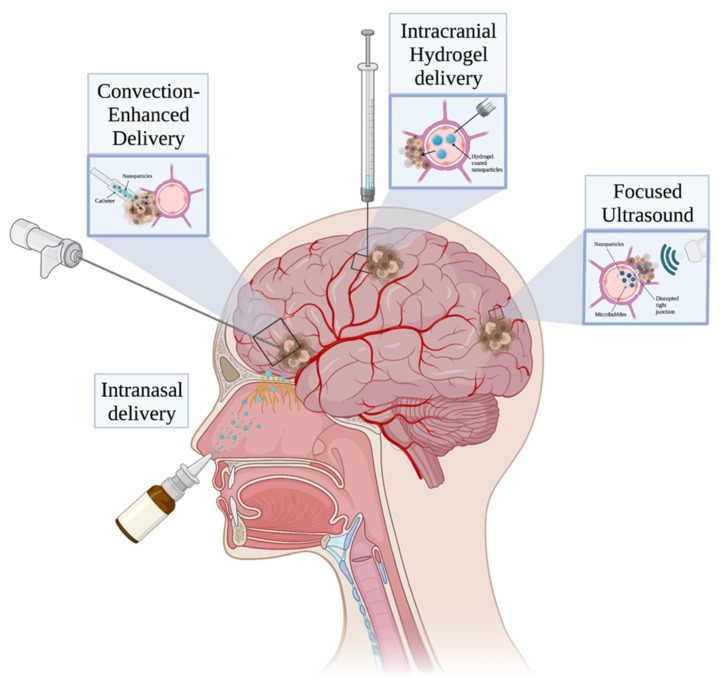
Translation of novel therapies for brain cancer into clinical practice is of the utmost importance as primary brain tumors are responsible for more than 200,000 deaths worldwide each year. While many research efforts have been aimed at improving survival rates over the years, prognosis for patients with glioblastoma and other primary brain tumors remains poor. Safely delivering chemotherapeutic drugs and other anti-cancer compounds across the blood-brain barrier and directly to tumor cells is perhaps the greatest challenge in treating brain cancer. Polymeric nanoparticles (NPs) are powerful, highly tunable carrier systems that may be able to overcome those obstacles. Several studies have shown appropriately-constructed polymeric NPs cross the blood-brain barrier, increase drug bioavailability, reduce systemic toxicity, and selectively target central nervous system cancer cells. While no studies relating to their use in treating brain cancer are in clinical trials, there is mounting preclinical evidence that polymeric NPs could be beneficial for brain tumor therapy. This review includes a variety of polymeric NPs and how their associated composition, surface modifications, and method of delivery impact their capacity to improve brain tumor therapy.
将新型脑癌治疗方法转化为临床应用至关重要,因为原发性脑肿瘤每年在全球导致超过20万例死亡。多年来,许多研究致力于提高生存率,但胶质母细胞瘤和其他原发性脑肿瘤患者的预后仍然很差。安全地将化疗药物和其他抗癌化合物穿过血脑屏障并直接递送至肿瘤细胞,可能是治疗脑癌面临的最大挑战。聚合物纳米颗粒(NPs)是强大的、高度可调节的载体系统,或许能够克服这些障碍。多项研究表明,构建合适的聚合物纳米颗粒可穿过血脑屏障,提高药物生物利用度,降低全身毒性,并选择性地靶向中枢神经系统癌细胞。虽然尚无关于其用于治疗脑癌的研究进入临床试验阶段,但越来越多的临床前证据表明,聚合物纳米颗粒可能有益于脑肿瘤治疗。本综述涵盖了多种聚合物纳米颗粒,以及它们的相关组成、表面修饰和递送方法如何影响其改善脑肿瘤治疗的能力。