Centre for Biomaterials and Tissue Engineering (CBIT), Universitat Politècnica de València, 46022 Valencia, Spain.
Digestive Endoscopy Unit, Digestive Diseases Department, La Fe Polytechnic Univesity Hospital, 46026 Valencia, Spain.
Sensors (Basel). 2022 Jul 12;22(14):5211. doi: 10.3390/s22145211.
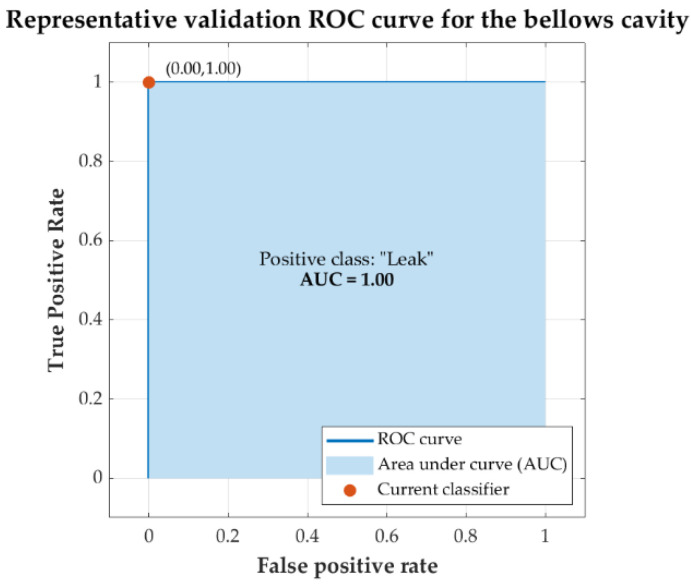
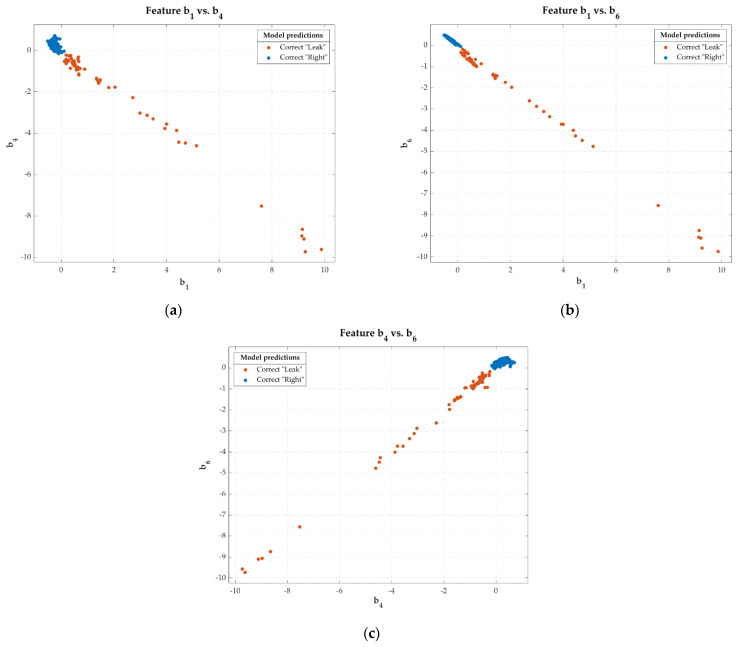
Current enteroscopy techniques present complications that are intended to be improved with the development of a new semi-automatic device called Endoworm. It consists of two different types of inflatable cavities. For its correct operation, it is essential to detect in real time if the inflatable cavities are malfunctioning (presence of air leakage). Two classification predictive models were obtained, one for each cavity typology, which must discern between the "" or "" states. The cavity pressure signals were digitally processed, from which a set of features were extracted and selected. The predictive models were obtained from the features, and a prior classification of the signals between the two possible states was used as input to different supervised machine learning algorithms. The accuracy obtained from the classification predictive model for cavities of the was 99.62%, while that of the was 100%, representing an encouraging result. Once the models are validated with data generated in animal model tests and subsequently in exploratory clinical tests, their incorporation in the software device will ensure patient safety during small bowel exploration.
目前的经内镜逆行胰胆管造影术技术存在一些并发症,而一种名为 Endoworm 的新型半自动设备的发展旨在改善这些并发症。它由两种不同类型的可充气腔组成。为了使其正确运行,实时检测可充气腔是否出现故障(是否存在空气泄漏)至关重要。获得了两种分类预测模型,一种用于每种腔体型,必须区分“正常”或“异常”状态。对腔压信号进行数字处理,从中提取并选择了一组特征。预测模型是从特征中获得的,并且对两个可能状态之间的信号进行了预先分类,作为输入提供给不同的监督机器学习算法。腔的分类预测模型的准确率为 99.62%,而 的准确率为 100%,这是一个令人鼓舞的结果。一旦这些模型通过在动物模型测试和随后的探索性临床测试中生成的数据进行验证,它们将被整合到软件设备中,以确保在小肠探索期间患者的安全。