Chansaenroj Jira, Suntronwong Nungruthai, Kanokudom Sitthichai, Assawakosri Suvichada, Yorsaeng Ritthideach, Vichaiwattana Preeyaporn, Klinfueng Sirapa, Wongsrisang Lakana, Srimuan Donchida, Thatsanatorn Thaksaporn, Thongmee Thanunrat, Auphimai Chompoonut, Nilyanimit Pornjarim, Wanlapakorn Nasamon, Sudhinaraset Natthinee, Poovorawan Yong
Center of Excellence in Clinical Virology, Department of Pediatrics, Faculty of Medicine, Chulalongkorn University, Bangkok 10330, Thailand.
Osteoarthritis and Musculoskeleton Research Unit, Department of Biochemistry, Faculty of Medicine, Chulalongkorn University, Bangkok 10330, Thailand.
Vaccines (Basel). 2022 Jul 3;10(7):1071. doi: 10.3390/vaccines10071071.
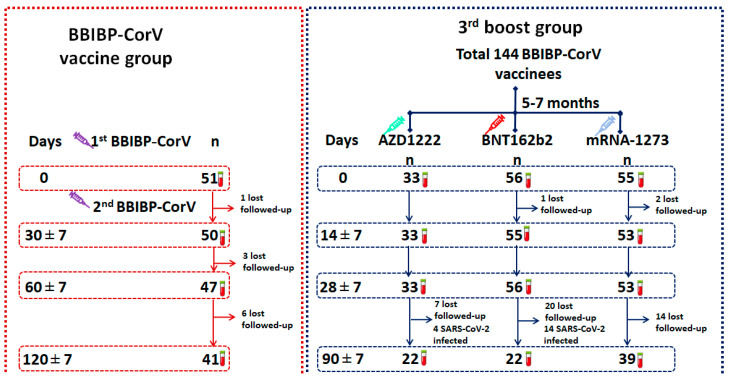
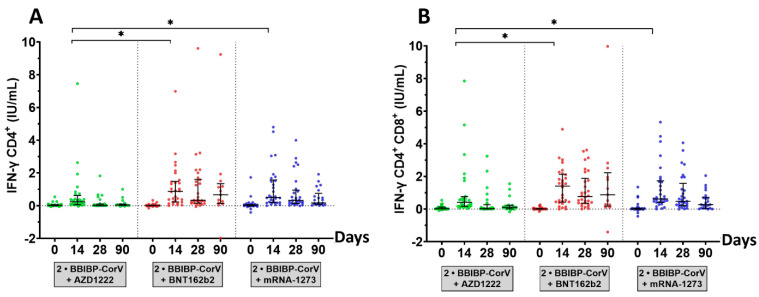
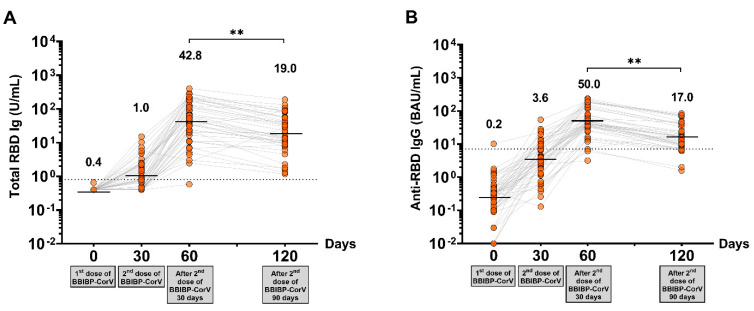
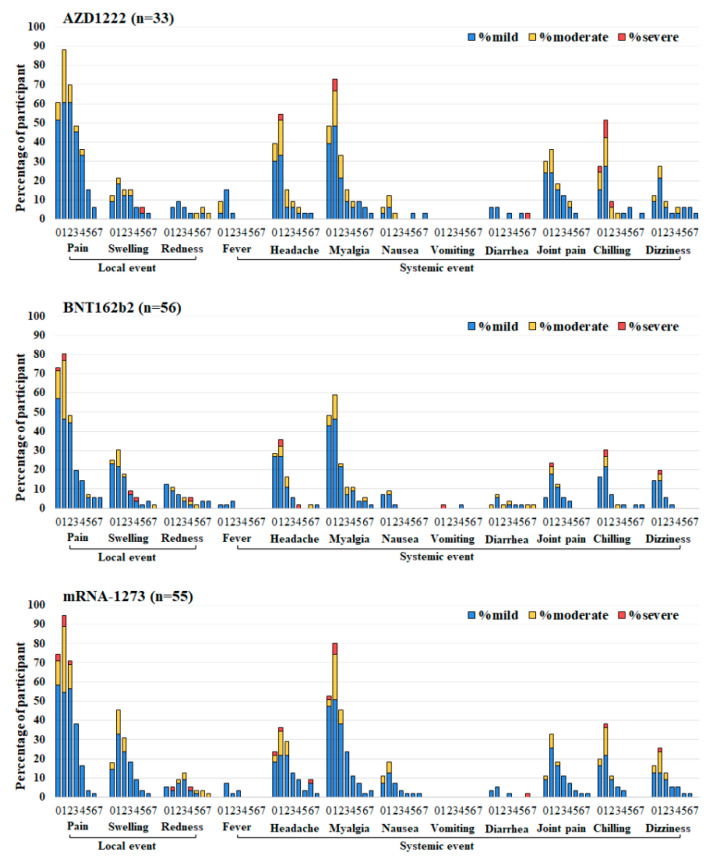
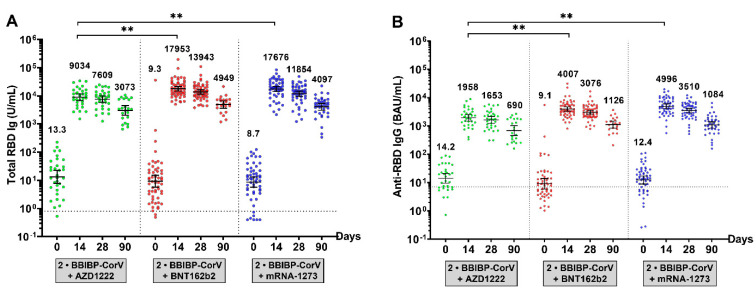
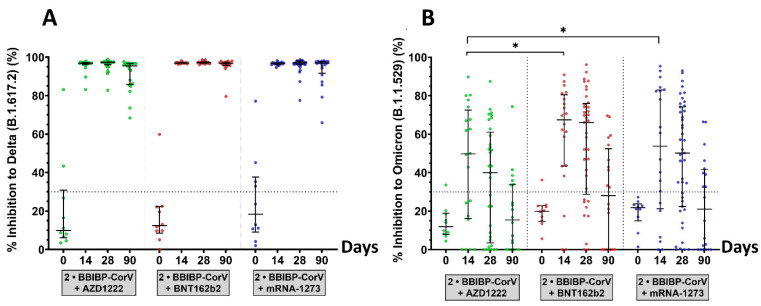
Coronavirus disease 2019 (COVID-19) booster vaccination is being comprehensively evaluated globally due to waning immunity and the emergence of new severe acute respiratory syndrome coronavirus 2 (SARS-CoV-2) variants. Therefore, this study aimed to evaluate antibody responses in individuals vaccinated with two doses of the BBIBP-CorV vaccine and to explore the boosting effect of the different vaccine platforms in BBIBP-CorV-primed healthy adults, including a viral vector vaccine (AZD122) and mRNA vaccines (BNT162b2 and mRNA-1273). The results showed that in the BBIBP-CorV prime group, the total receptor-binding domain (RBD) immunoglobulin (Ig) and anti-RBD IgG levels waned significantly at three months after receiving the second dose. However, after the booster, RBD-specific binding antibody levels increased. Neutralizing antibody measured by a surrogate neutralization test showed inhibition over 90% against the SARS-CoV-2 delta variant but less than 70% against the omicron variant after the third dose on day 28. All booster vaccines could induce the total IFN-ɣ T-cell response. The reactogenicity was acceptable and well-tolerated without serious adverse events. This study supports the administration of the third dose with either a viral vector or mRNA vaccine for BBIBP-CorV-primed individuals to stimulate antibody and T-cell responses.
由于免疫力下降以及新型严重急性呼吸综合征冠状病毒2(SARS-CoV-2)变体的出现,2019冠状病毒病(COVID-19)加强疫苗接种正在全球范围内进行全面评估。因此,本研究旨在评估接种两剂BBIBP-CorV疫苗的个体的抗体反应,并探索不同疫苗平台对以BBIBP-CorV为基础免疫的健康成年人的加强效果,其中包括一种病毒载体疫苗(AZD122)和mRNA疫苗(BNT162b2和mRNA-1273)。结果显示,在BBIBP-CorV基础免疫组中,接受第二剂疫苗三个月后,总受体结合域(RBD)免疫球蛋白(Ig)和抗RBD IgG水平显著下降。然而,加强接种后,RBD特异性结合抗体水平有所增加。通过替代中和试验测量的中和抗体在第28天接种第三剂疫苗后显示,对SARS-CoV-2德尔塔变体的抑制率超过90%,但对奥密克戎变体的抑制率低于70%。所有加强疫苗均可诱导总的IFN-ɣ T细胞反应。反应原性可接受且耐受性良好,未出现严重不良事件。本研究支持对以BBIBP-CorV为基础免疫的个体接种第三剂病毒载体疫苗或mRNA疫苗,以刺激抗体和T细胞反应。