Samkowski Jakub, Sklinda Katarzyna, Walecki Jerzy Michał
Department of Radiology, Centre of Postgraduate Medical Education, Central Clinical Hospital of the Ministry of Interior in Warsaw, Poland.
Pol J Radiol. 2022 Jun 6;87:e304-e310. doi: 10.5114/pjr.2022.117560. eCollection 2022.
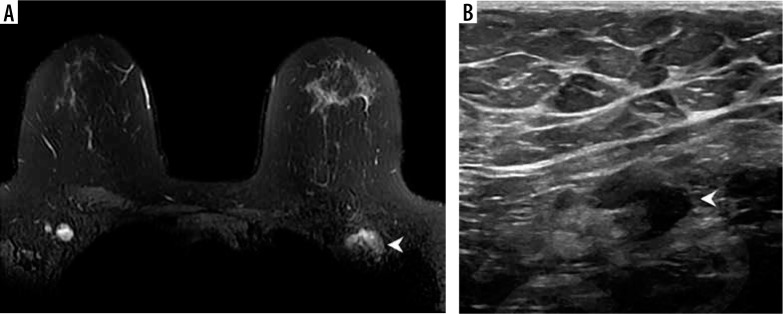
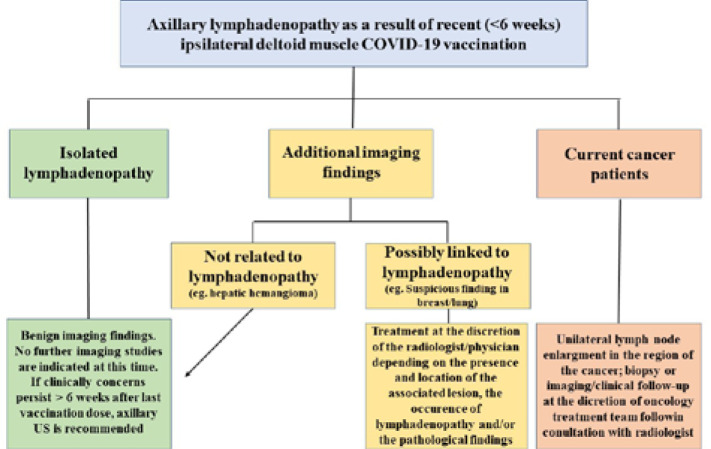
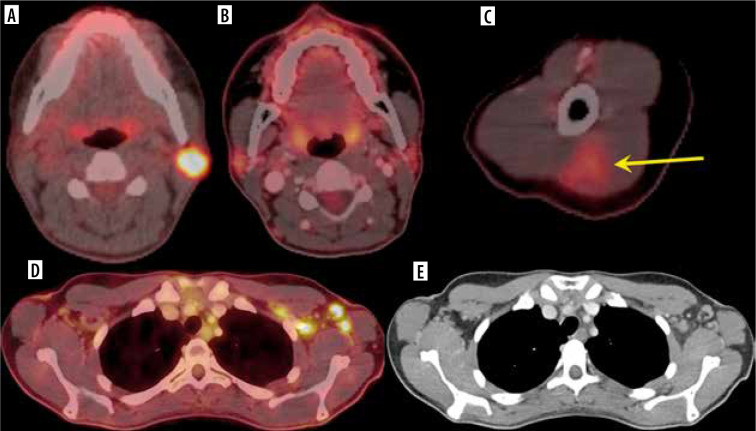
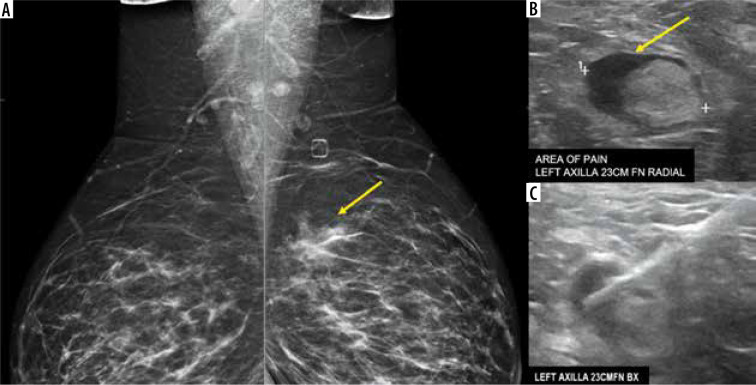
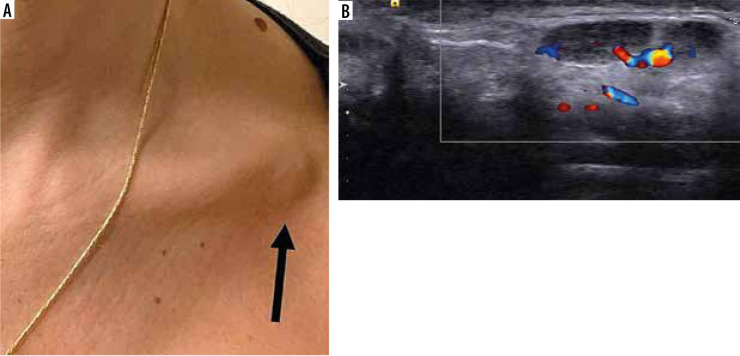
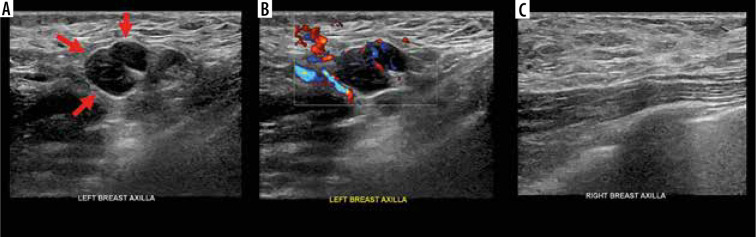
Initial clinical experience with COVID-19 vaccination suggests that approved COVID-19 mRNA vaccines induce a strong immune response and thus cause a significantly higher incidence of axillary lymphadenopathy compared with other vaccines. It can therefore be expected to complicate the diagnosis of patients with overt or suspected mali-gnancy, in whom it may be indistinguishable from malignant node involvement. There is a need for guidelines on the appropriate management of unilateral axillary lymph node enlargement. This article studies the available reports on vaccine-associated lymphadenopathy. It also presents a basic strategy for the assessment of axillary lymphadenopathy based on preliminary recommendations and an algorithm. According to these recommendations, screening should be scheduled before or at least 4-6 weeks after the last dose of the vaccine. This will allow reactive adenopathy to resolve and avoid unnecessary and costly axillary lymph node biopsy. Clear and effective communication between patients, radiologists, referring physician teams, and the general public is the way forward in the management of adenopathy following COVID-19 vaccination. Herein we present 5 cases of lymph node enlargement after mRNA vaccine administration from different authors. Their initial radiological diagnosis raised concerns that they might be metastases. Therefore, radiologists need to include COVID-19 vaccination in the differential diagnosis of patients with unilateral axillary adenopathy. Short-term follow-up of unilateral axillary adenopathy with recent COVID-19 vaccination is an appropriate recommendation.
COVID-19疫苗接种的初步临床经验表明,与其他疫苗相比,获批的COVID-19 mRNA疫苗可诱导强烈的免疫反应,从而导致腋窝淋巴结病的发病率显著更高。因此,可以预期它会使患有明显或疑似恶性肿瘤的患者的诊断复杂化,在这些患者中,它可能与恶性淋巴结受累难以区分。需要有关单侧腋窝淋巴结肿大适当管理的指南。本文研究了关于疫苗相关淋巴结病的现有报告。它还根据初步建议和算法提出了评估腋窝淋巴结病的基本策略。根据这些建议,筛查应安排在最后一剂疫苗接种前或至少接种后4至6周进行。这将使反应性淋巴结病消退,并避免不必要且昂贵的腋窝淋巴结活检。患者、放射科医生、转诊医生团队和公众之间清晰有效的沟通是COVID-19疫苗接种后淋巴结病管理的前进方向。在此,我们展示了来自不同作者的5例mRNA疫苗接种后淋巴结肿大的病例。他们最初的放射学诊断引发了对其可能是转移瘤的担忧。因此,放射科医生在单侧腋窝淋巴结病患者的鉴别诊断中需要考虑COVID-19疫苗接种情况。对近期接种COVID-19疫苗的单侧腋窝淋巴结病进行短期随访是一项合适的建议。