Fontecha Gustavo, Escobar Denis, Ortiz Bryan, Pinto Alejandra
Microbiology Research Institute, Universidad Nacional Autónoma de Honduras, Tegucigalpa 11101, Honduras.
Trop Med Infect Dis. 2022 Jul 26;7(8):149. doi: 10.3390/tropicalmed7080149.
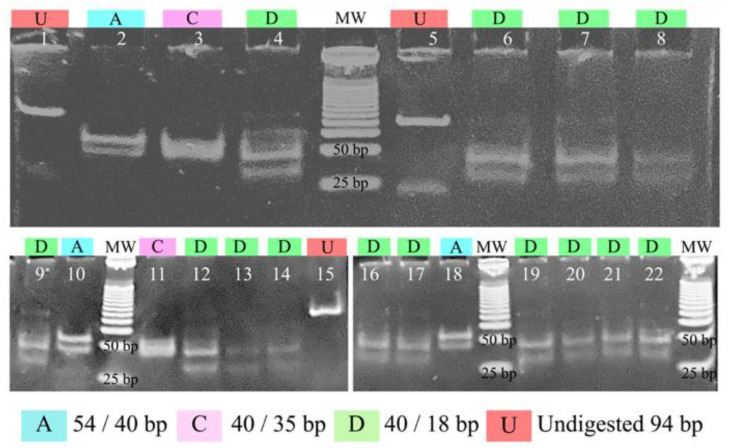
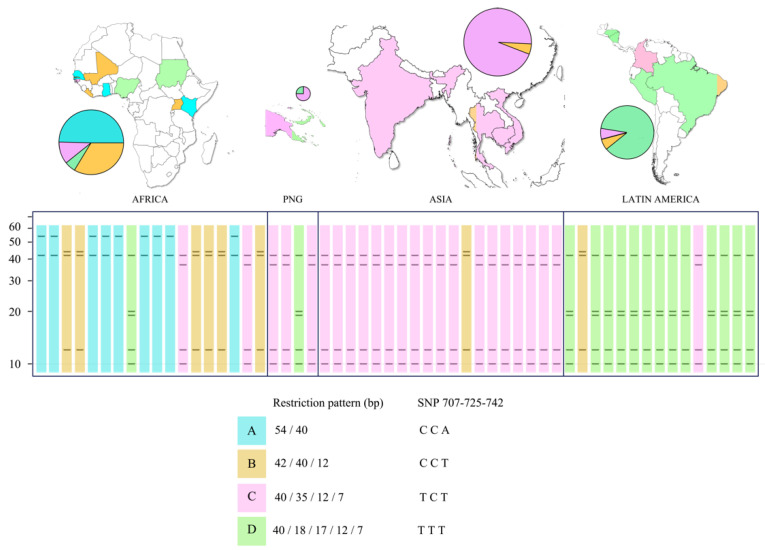
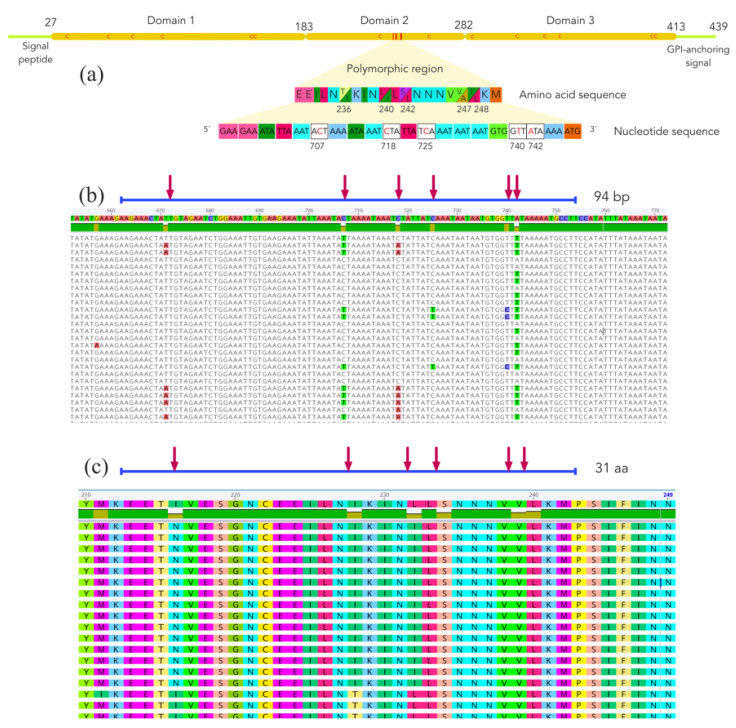
The elimination of malaria requires strengthening diagnosis and offering adequate and timely treatment. Imported cases of falciparum malaria represent a major challenge for pre-elimination areas, such as Central America, where chloroquine and primaquine continue to be used as first-line treatment. The gene has been previously described as a precise molecular marker to track the geographic origin of the parasite. The aim of this study was to design a simple and low-cost technique using the polymorphic region of to assess the geographic origin of strains. A PCR-RFLP technique was developed and evaluated using the enzyme that proved capable of discriminating, with reasonable precision, the geographical origin of the parasites. This method could be used by national surveillance laboratories and malaria elimination programs in countries such as Honduras and Nicaragua in cases of malaria where an origin outside the Central American isthmus is suspected.
消除疟疾需要加强诊断并提供充分及时的治疗。恶性疟原虫输入病例对中美洲等疟疾消除前地区构成重大挑战,在这些地区,氯喹和伯氨喹仍被用作一线治疗药物。该基因先前已被描述为追踪疟原虫地理起源的精确分子标记。本研究的目的是设计一种简单且低成本的技术,利用该基因的多态性区域来评估疟原虫菌株的地理起源。开发并评估了一种PCR-RFLP技术,该技术使用的酶能够以合理的精度区分疟原虫的地理起源。在洪都拉斯和尼加拉瓜等国,当怀疑疟疾病例起源于中美洲地峡以外地区时,国家监测实验室和疟疾消除计划可使用此方法。