Amawi Rema M, Murdoch Michael J
Sciences and Liberal Arts Department, Rochester Institute of Technology, Dubai 345019, United Arab Emirates.
Munsell Color Science Laboratory, Rochester Institute of Technology, Rochester, NY 14623, USA.
Pharmacy (Basel). 2022 Jul 13;10(4):82. doi: 10.3390/pharmacy10040082.
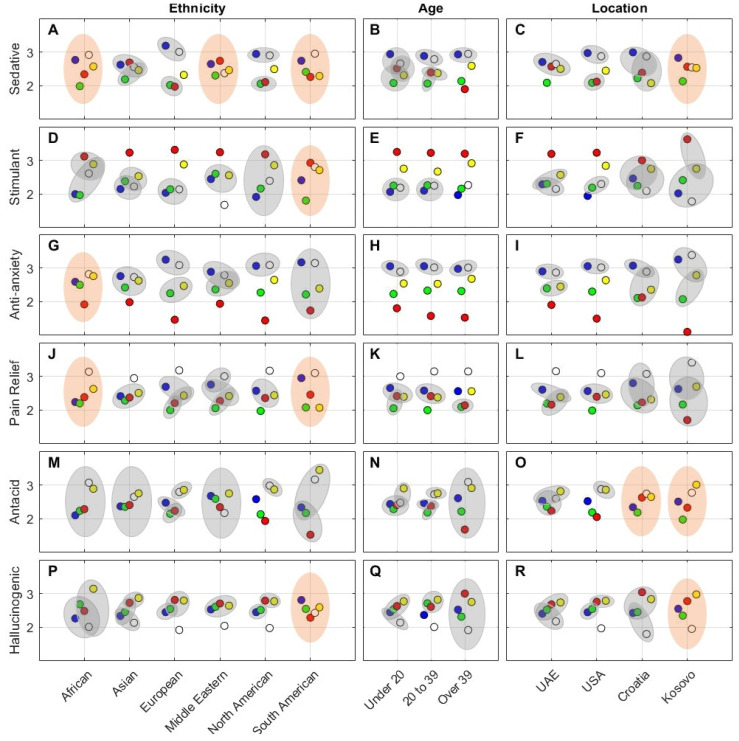
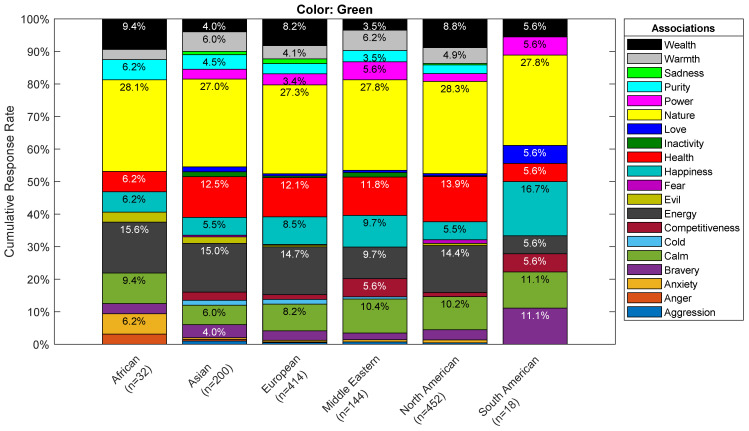
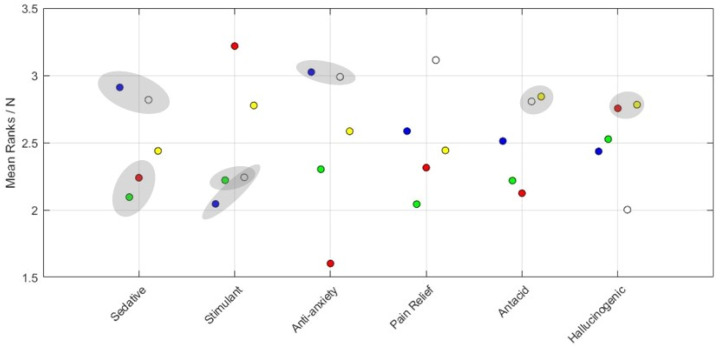
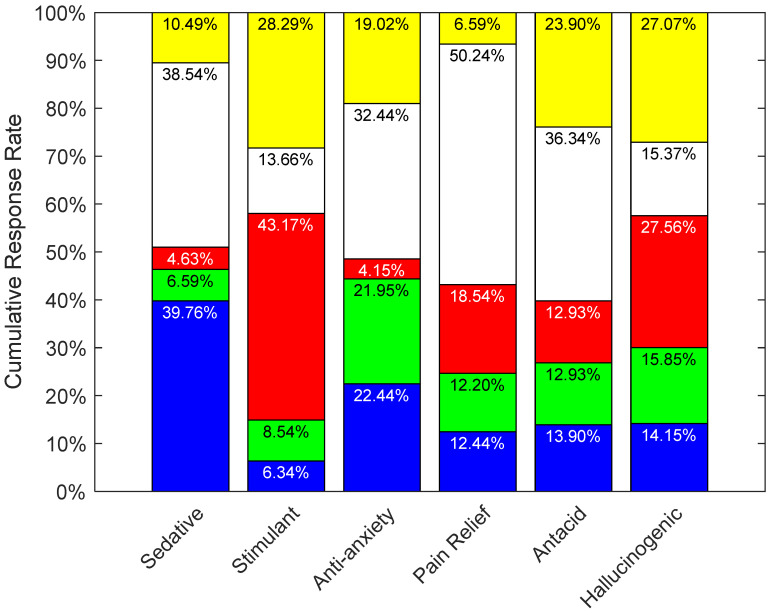
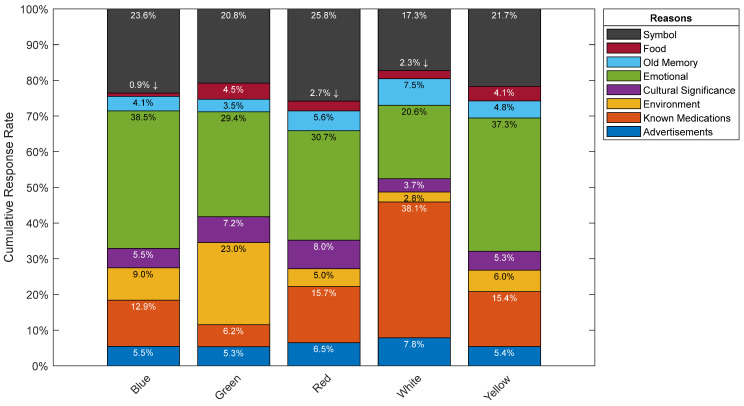
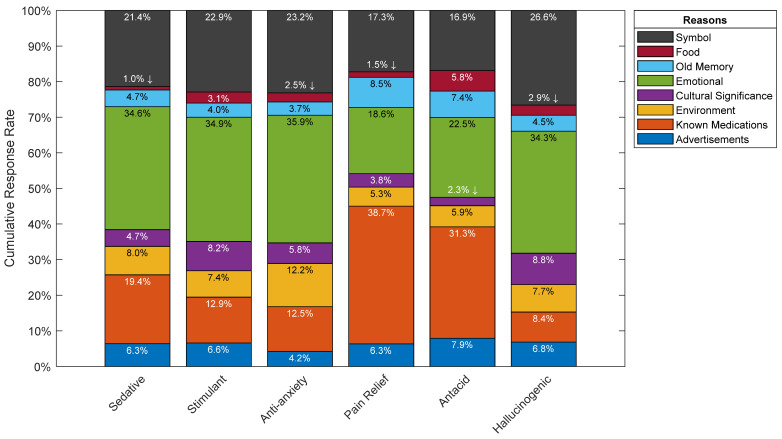
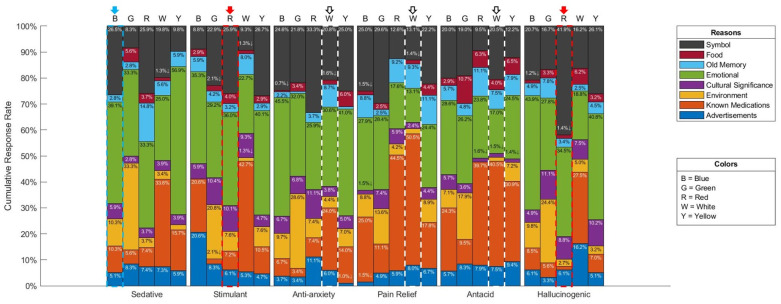
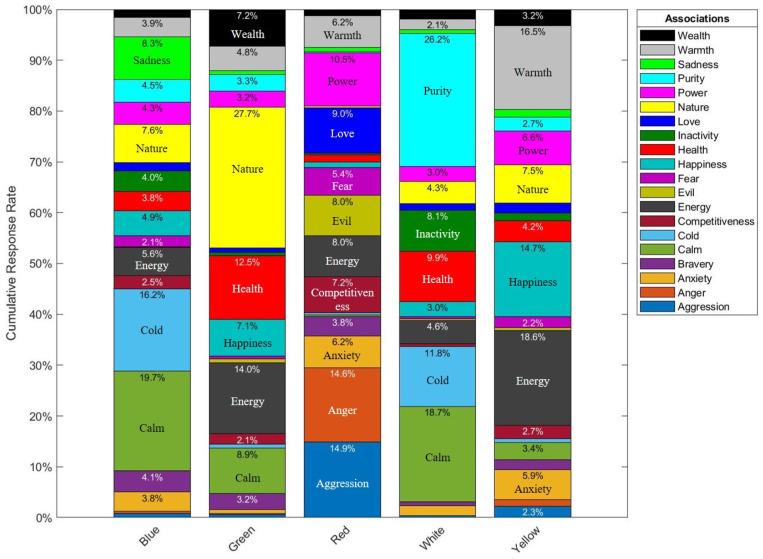
Colors influence our daily perceptions and expectations that manifest in a variety of ways. This research has three main objectives: to demonstrate the relationship between the colors of pills and their expected efficacies, to test this effect on a wide variety of demographics, thereby demonstrating their influence on choices made by participants. Finally, to understand the reasoning behind the choices made by participants, and the color associations exhibited. The results of a series of surveys showed clear similarities and differences across various demographics. The strongest and most consistent color associations were those of white with pain relief and red with stimulant efficacies. The color associations found were red with aggression and power, blue with calmness and serenity, white with calm and purity, yellow with energy, and green with environment and health. The findings of this study can help pharmaceutical companies, and medical practitioners, to better make, market, and prescribe pills, depending on the geographical location, ethnicity, and age group of the patient. This may also strengthen the perceived effects of the pills on patients overall by increasing their compliance rates.
颜色影响我们的日常认知和期望,且以多种方式表现出来。本研究有三个主要目标:证明药丸颜色与其预期疗效之间的关系,在广泛的人群中测试这种效果,从而证明其对参与者选择的影响。最后,了解参与者做出选择背后的推理以及所表现出的颜色联想。一系列调查结果显示,不同人群之间存在明显的异同。最强且最一致的颜色联想是白色与止痛、红色与刺激功效。所发现的颜色联想有红色与攻击性和力量、蓝色与平静和安宁、白色与平静和纯洁、黄色与活力、绿色与环境和健康。本研究的结果可以帮助制药公司和医生,根据患者的地理位置、种族和年龄组,更好地生产、营销和开处方药丸。这也可能通过提高患者的依从率来增强药丸对患者的总体感知效果。