Taha Medhat, Elazab Sara T, Badawy Alaa M, Saati Abdullah A, Qusty Naeem F, Al-Kushi Abdullah G, Sarhan Anas, Osman Amira, Farage Amira E
Department of Anatomy and Embryology, Faculty of Medicine, Mansoura University, Mansoura 35516, Egypt.
Department of Anatomy, Al-Qunfudah Medical College, Umm Al-Qura University, Al-Qunfudhah 28814, Saudi Arabia.
Pharmaceuticals (Basel). 2022 Jul 24;15(8):918. doi: 10.3390/ph15080918.
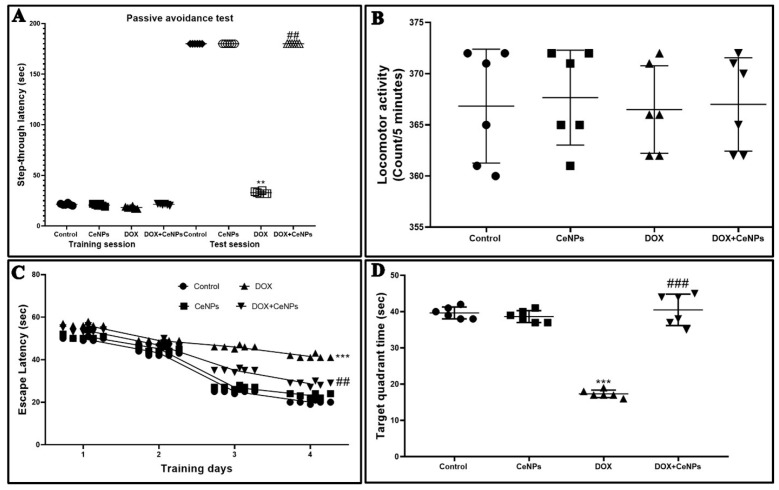
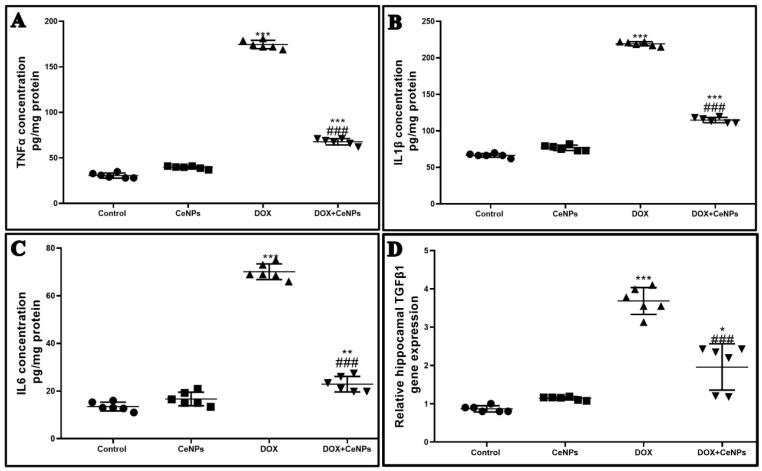
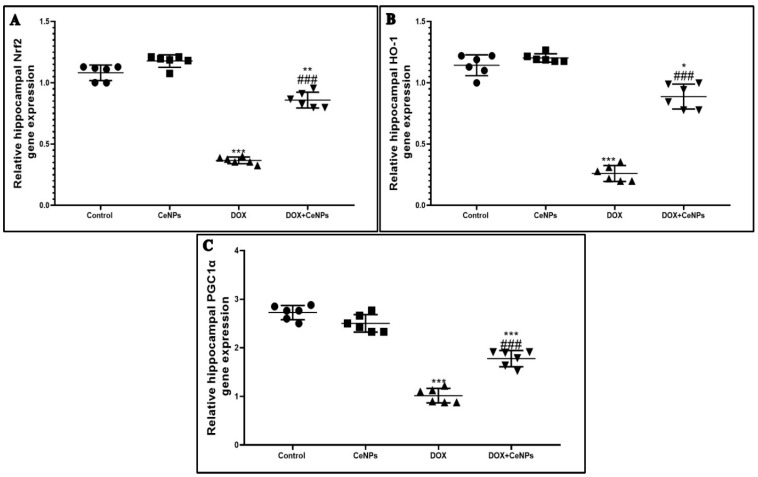
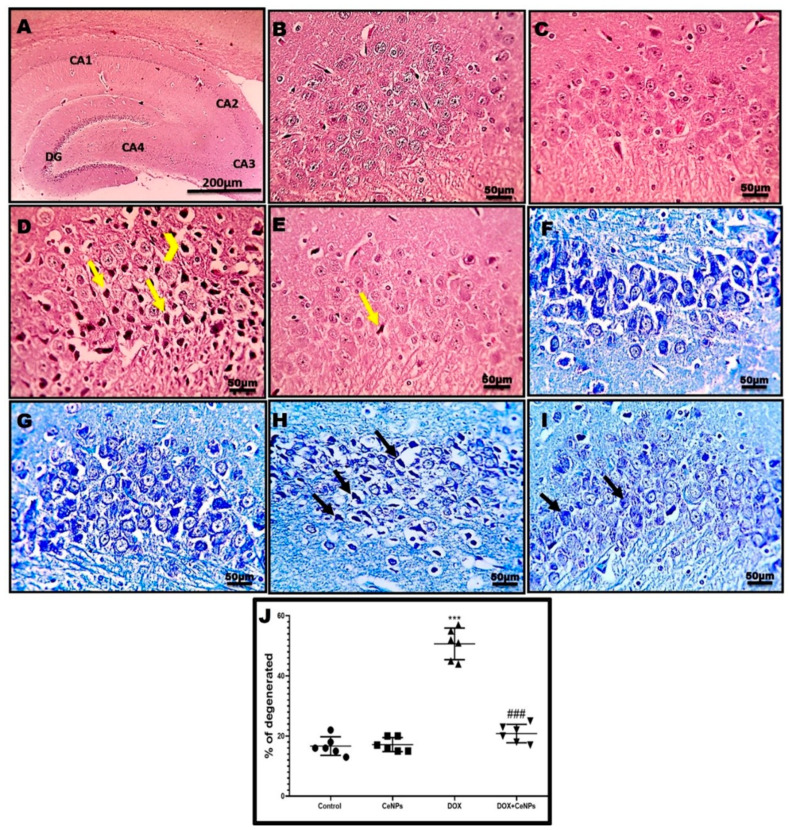
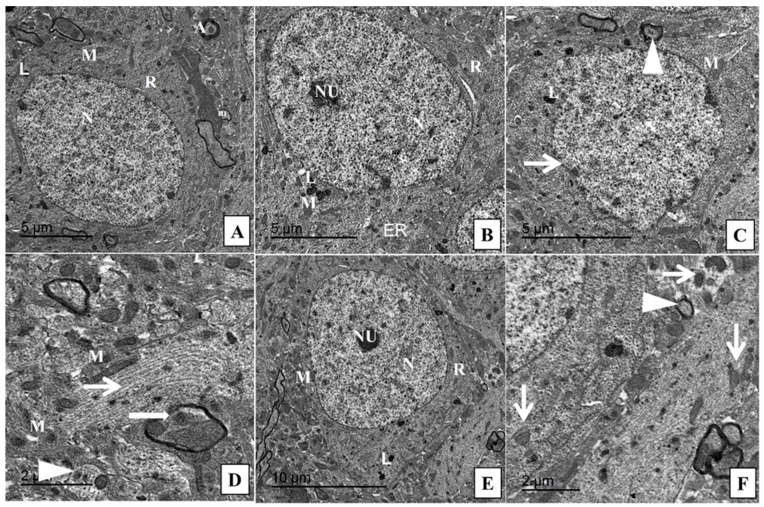
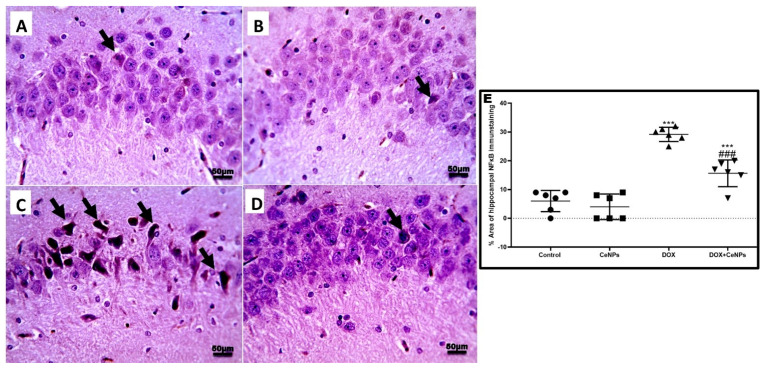
Chemo fog is one of the most serious health concerns encountered by cancer survivors receiving doxorubicin (DOX)-based chemotherapy. Oxidative stress, neuroinflammation, apoptosis and impairment of synaptic plasticity are regarded as the key factors implicated in DOX-induced cognitive impairment. This research aimed to assess the possible neuroprotective effect of cerium oxide nanoparticles (CeNPs) against DOX-induced neurotoxicity. Forty-eight rats were divided into four groups (12 rats/group): control group, CeNPs group (received oral CeNPs solution (35 mg/kg) daily for 4 weeks), and DOX group (were administered DOX intraperitoneally (2 mg/kg, once/week for 4 weeks)) and DOX+ CeNPs group. The findings revealed that CeNPs mitigated behavioral alterations in DOX-induced cognitive deficit. Additionally, CeNPs alleviated the histopathological abnormalities in hippocampus and ameliorated DOX-induced neuroinflammation by downregulating the expression of NF-κB, TNF-α, IL-1β and IL6. In addition, CeNPs antagonized the apoptosis through reducing the protein expression of cytochrome c and caspase 3. In addition, it stimulated the antioxidant defense, as indicated by upregulating the expression of the Nrf2, HO-1 and PGC-1α genes. CeNPs improved synaptic plasticity via acting on the BDNF. These actions were related through the modification of SIRT-1 expression. Based on the aforementioned results, CeNPs antagonized the doxorubicin-induced neurodegeneration by its antioxidant, anti-inflammatory and antiapoptotic effects, alongside its SIRT-1 mediated mechanisms.
化疗脑雾是接受基于阿霉素(DOX)化疗的癌症幸存者所面临的最严重健康问题之一。氧化应激、神经炎症、细胞凋亡和突触可塑性受损被认为是与DOX诱导的认知障碍相关的关键因素。本研究旨在评估氧化铈纳米颗粒(CeNPs)对DOX诱导的神经毒性可能具有的神经保护作用。48只大鼠被分为四组(每组12只):对照组、CeNPs组(每天口服CeNPs溶液(35mg/kg),持续4周)、DOX组(腹腔注射DOX(2mg/kg,每周一次,共4周))和DOX + CeNPs组。研究结果显示,CeNPs减轻了DOX诱导的认知缺陷中的行为改变。此外,CeNPs减轻了海马体的组织病理学异常,并通过下调NF-κB、TNF-α、IL-1β和IL6的表达改善了DOX诱导的神经炎症。此外,CeNPs通过降低细胞色素c和半胱天冬酶3的蛋白表达来对抗细胞凋亡。此外,如上调Nrf2、HO-1和PGC-1α基因的表达所示,它刺激了抗氧化防御。CeNPs通过作用于脑源性神经营养因子(BDNF)改善突触可塑性。这些作用通过SIRT-1表达的改变而相关联。基于上述结果,CeNPs通过其抗氧化、抗炎和抗凋亡作用以及SIRT-1介导的机制对抗了阿霉素诱导的神经退行性变。