State Key Laboratory of Cardiovascular Disease, Department of Cardiology, Fuwai Hospital, National Center of Cardiovascular Disease, Chinese Academy of Medical Sciences and Peking Union Medical College, Beijing, China (mainland).
Department of Cardiology, Beijing Anzhen Hospital, Capital Medical University, Beijing Institute of Heart Lung and Blood Vessel Disease, Beijing Key Laboratory of Precision Medicine of Coronary Atherosclerotic Disease, Clinical Center for Coronary Heart Disease, Capital Medical University, Beijing, China (mainland).
Med Sci Monit. 2019 Nov 21;25:8820-8835. doi: 10.12659/MSM.919721.
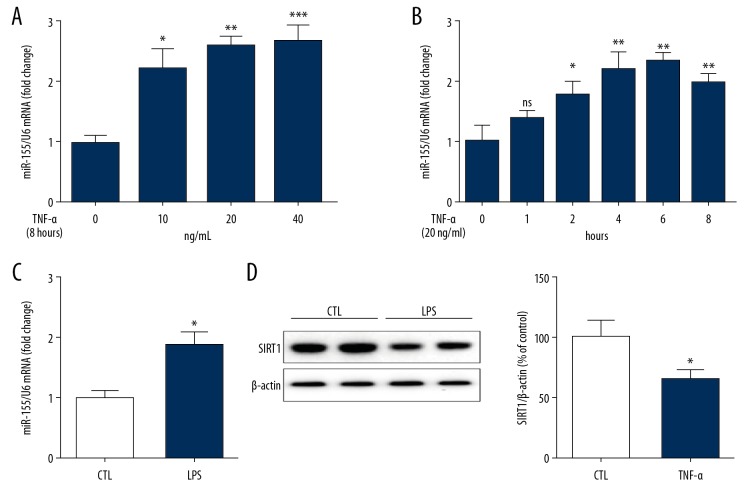
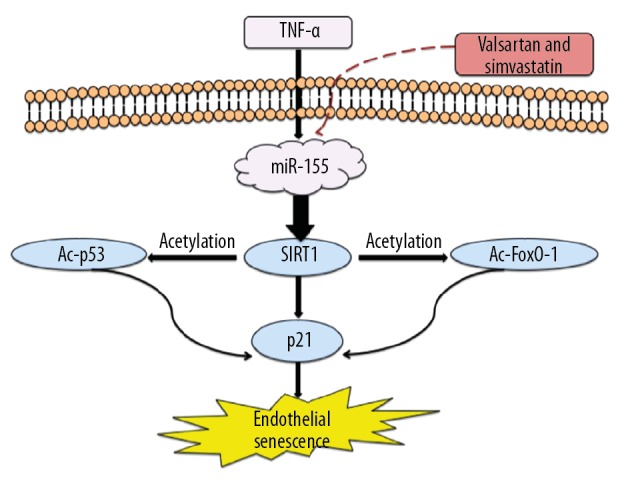
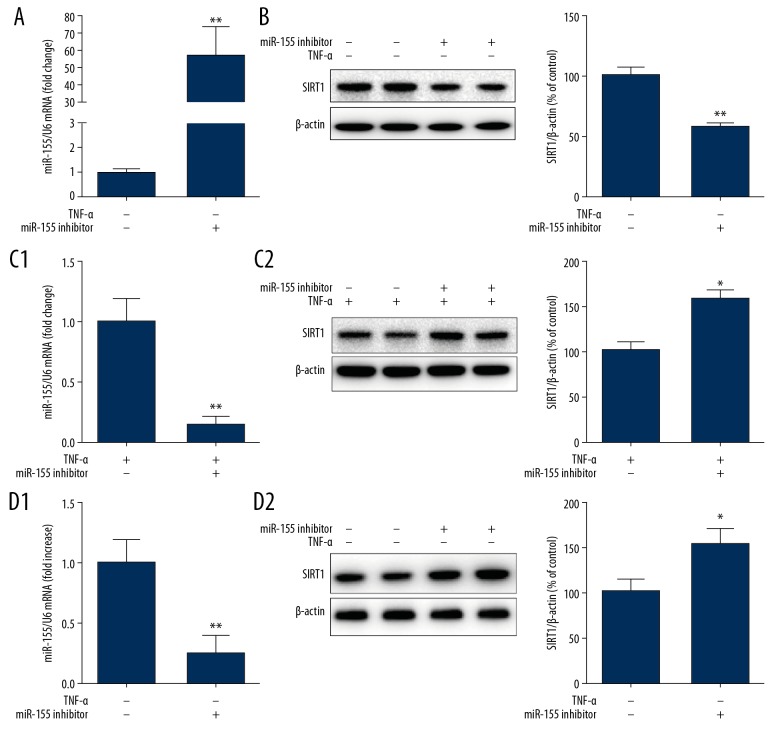
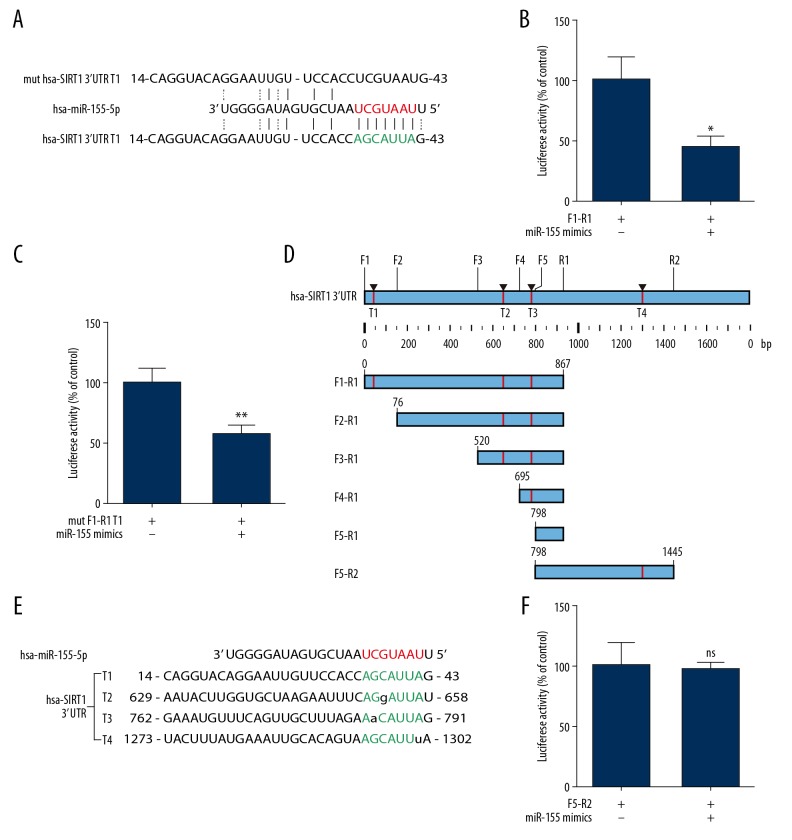
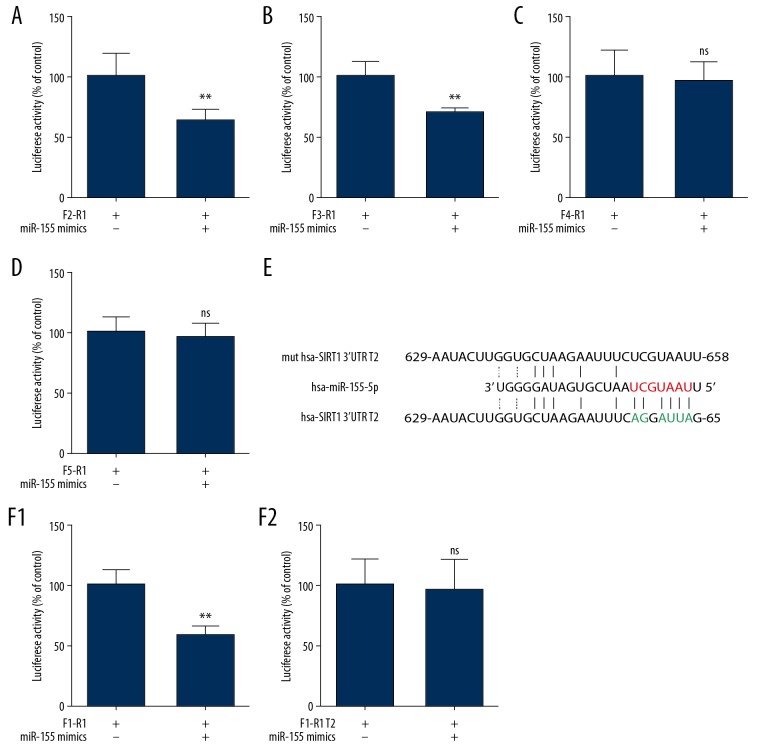
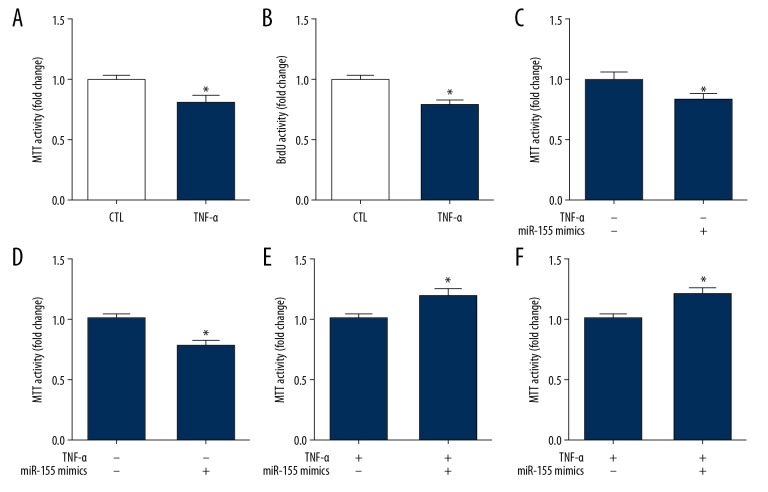
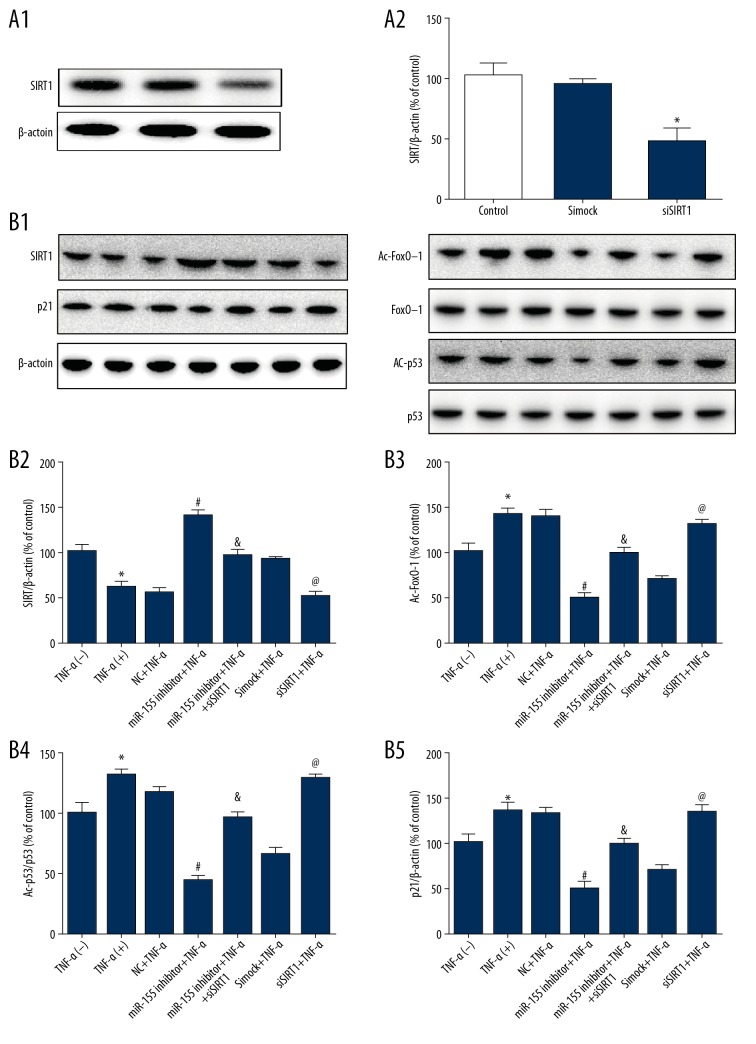
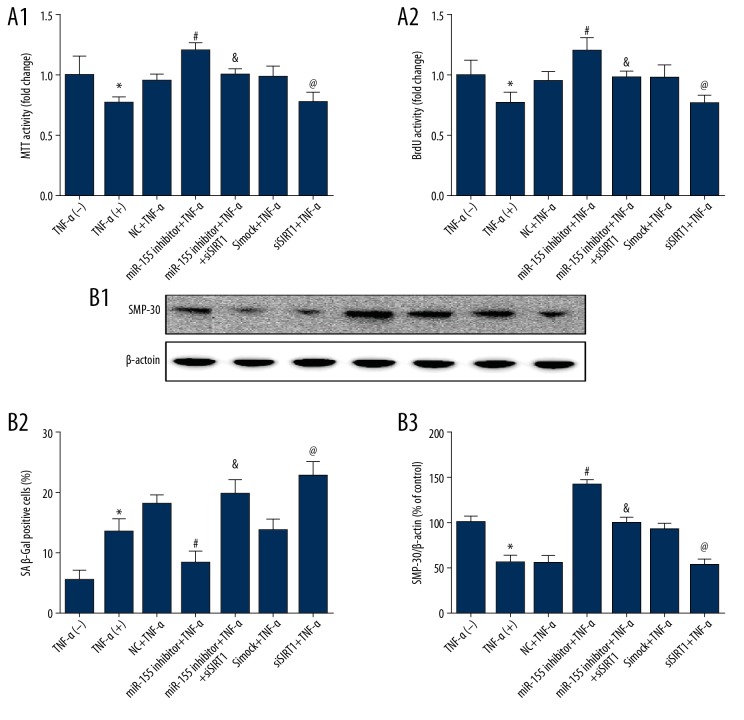
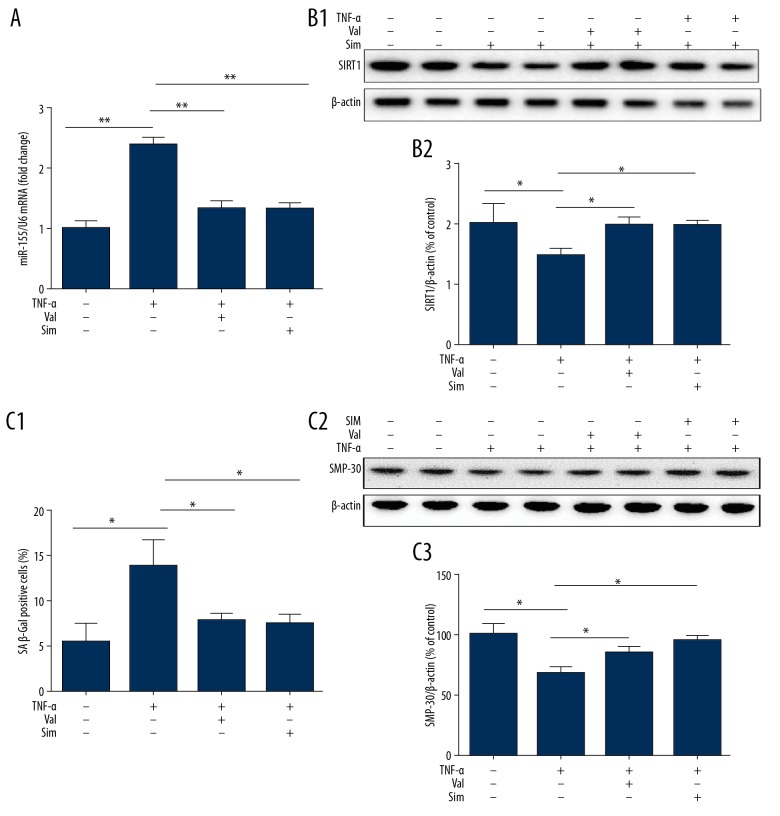
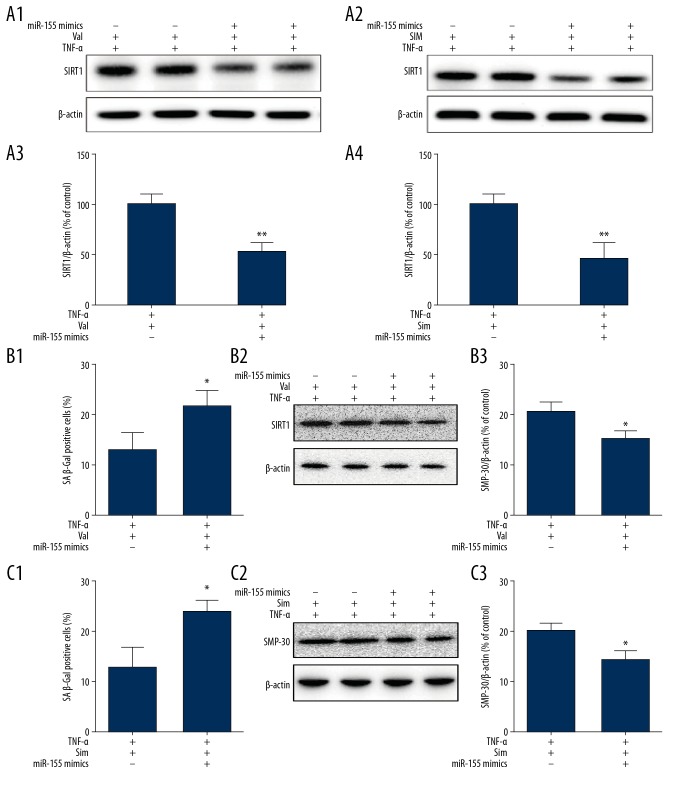
BACKGROUND Sirtuin1 (SIRT1) participates in a wide variety of cellular processes, but the molecular mechanism remains largely unknown. miR-155 is an element of the inflammatory signaling pathway in atherosclerosis. Therefore, we tested the hypothesis that TNF-alpha stimulates miR-155 to target SIRT1 and thereby regulates endothelial senescence, and we also explored the function of miR-155 as a regulator of cardiovascular diseases. MATERIAL AND METHODS TNF-alpha was used to stimulate human umbilical vein endothelial cells (HUVECs), after which protein and gene expression were assessed via Western blotting and RT-qPCR. miR-155 targeting of SIRT1 was confirmed via luciferase reporter assays, while MTT and senescence-associated ß-galactosidase (SA-ß-gal) assays were used for quantifying cellular proliferation and senescence. RESULTS We found that miR-155 was upregulated in response to TNF-alpha treatment, in addition to inducing marked changes in SIRT1/FoxO-1/p21 pathway protein level. When we overexpressed miR-155 mimics, SIRT1 was markedly reduced, whereas miR-155 inhibition had the opposite effect in TNF-alpha-treated cells. We additionally confirmed that miR-155 was able to directly bind to SIRT1 3'-UTR, and that inhibition of miR-155 reduced the ability of TNF-alpha to induce senescence in HUVECs, thereby leading to their enhanced proliferation. Simvastatin was associated with suppression of miR-155 expression in HUVECs following TNF-alpha treatment, and with a corresponding reduction in TNF-alpha-induced senescence, whereas miR-155 overexpression had the opposite effect. CONCLUSIONS Our findings suggest that TNF-alpha upregulates miR-155, which then targets SIRT1, suppressing its expression and driving HUVEC apoptosis. Simvastatin disrupted this senescence mechanism via the miR-155/SIRT1/FoxO-1/p21 pathway signaling. Hence, miR-155 is a possible therapeutic approach to endothelial senescence in the development of cardiovascular diseases.
Sirtuin1(SIRT1)参与多种细胞过程,但分子机制尚不清楚。miR-155 是动脉粥样硬化炎症信号通路的一个组成部分。因此,我们检验了这样一个假设,即 TNF-α 刺激 miR-155 靶向 SIRT1,从而调节内皮细胞衰老,我们还探讨了 miR-155 作为心血管疾病调节剂的功能。
用 TNF-α刺激人脐静脉内皮细胞(HUVEC),然后通过 Western blot 和 RT-qPCR 评估蛋白和基因表达。通过荧光素酶报告实验证实 miR-155 对 SIRT1 的靶向作用,同时使用 MTT 和衰老相关β-半乳糖苷酶(SA-β-gal)实验定量细胞增殖和衰老。
我们发现,miR-155 在内皮细胞中受到 TNF-α刺激的诱导而上调,同时导致 SIRT1/FoxO-1/p21 通路蛋白水平发生显著变化。当我们过表达 miR-155 模拟物时,SIRT1 明显减少,而在 TNF-α处理的细胞中抑制 miR-155 则产生相反的效果。我们还证实 miR-155 能够直接与 SIRT1 3'-UTR 结合,抑制 miR-155 可降低 TNF-α诱导 HUVEC 衰老的能力,从而增强其增殖。辛伐他汀与 TNF-α处理后的 HUVEC 中 miR-155 表达的抑制以及 TNF-α诱导的衰老的相应减少有关,而 miR-155 的过表达则产生相反的效果。
我们的研究结果表明,TNF-α上调 miR-155,然后靶向 SIRT1,抑制其表达并导致 HUVEC 凋亡。辛伐他汀通过 miR-155/SIRT1/FoxO-1/p21 通路信号破坏了这种衰老机制。因此,miR-155 可能是治疗心血管疾病中内皮细胞衰老的一种方法。