Atrial Fibrillation Network (AFNET), Muenster, Germany.
Department of Cardiology, University Heart & Vascular Center Hamburg, University Medical Center Hamburg-Eppendorf, Hamburg, Germany.
Europace. 2023 Feb 8;25(1):6-27. doi: 10.1093/europace/euac062.
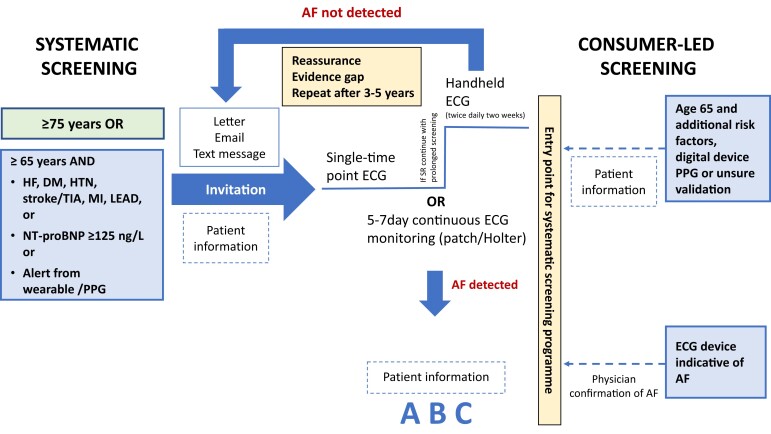
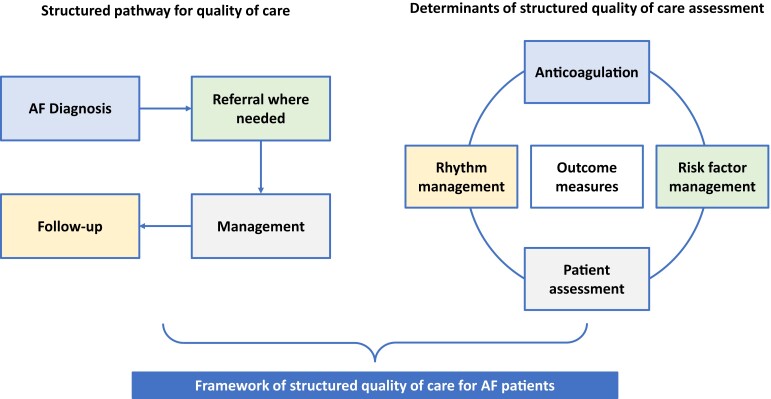
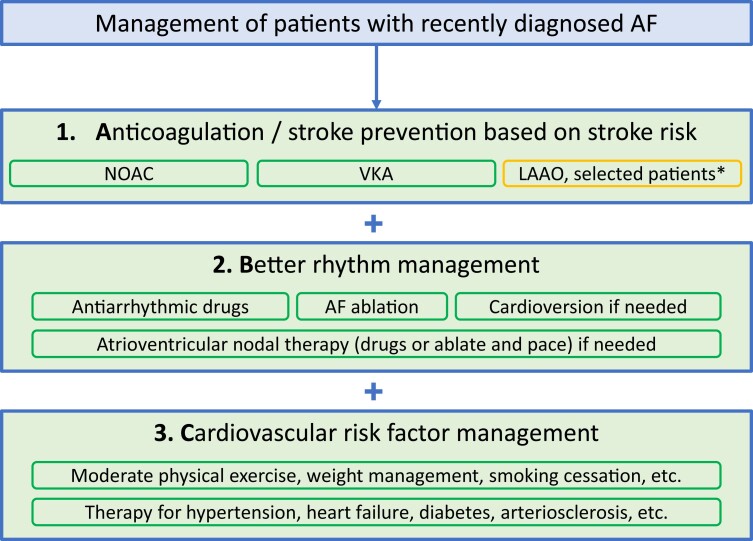
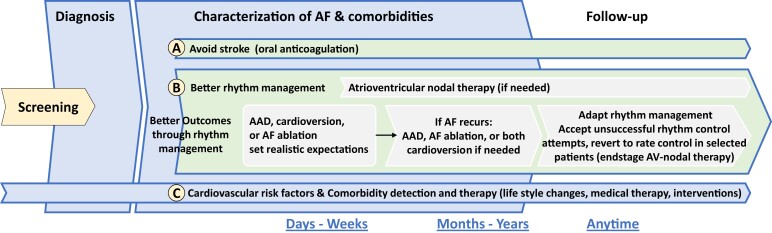
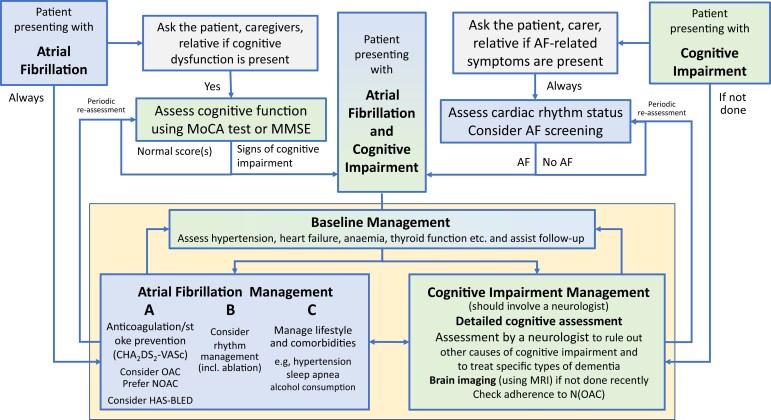
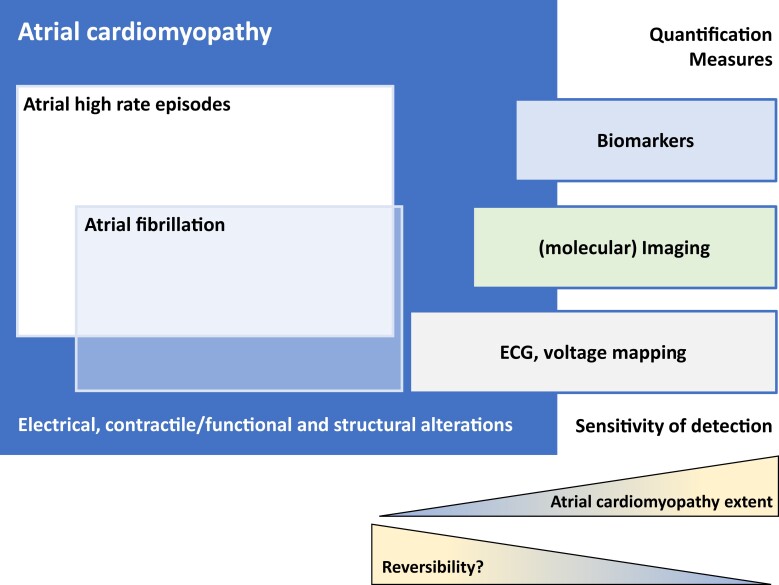
Despite marked progress in the management of atrial fibrillation (AF), detecting AF remains difficult and AF-related complications cause unacceptable morbidity and mortality even on optimal current therapy. This document summarizes the key outcomes of the 8th AFNET/EHRA Consensus Conference of the Atrial Fibrillation NETwork (AFNET) and the European Heart Rhythm Association (EHRA). Eighty-three international experts met in Hamburg for 2 days in October 2021. Results of the interdisciplinary, hybrid discussions in breakout groups and the plenary based on recently published and unpublished observations are summarized in this consensus paper to support improved care for patients with AF by guiding prevention, individualized management, and research strategies. The main outcomes are (i) new evidence supports a simple, scalable, and pragmatic population-based AF screening pathway; (ii) rhythm management is evolving from therapy aimed at improving symptoms to an integrated domain in the prevention of AF-related outcomes, especially in patients with recently diagnosed AF; (iii) improved characterization of atrial cardiomyopathy may help to identify patients in need for therapy; (iv) standardized assessment of cognitive function in patients with AF could lead to improvement in patient outcomes; and (v) artificial intelligence (AI) can support all of the above aims, but requires advanced interdisciplinary knowledge and collaboration as well as a better medico-legal framework. Implementation of new evidence-based approaches to AF screening and rhythm management can improve outcomes in patients with AF. Additional benefits are possible with further efforts to identify and target atrial cardiomyopathy and cognitive impairment, which can be facilitated by AI.
尽管心房颤动 (AF) 的治疗取得了显著进展,但检测 AF 仍然很困难,即使在最佳的当前治疗下,AF 相关并发症也会导致不可接受的发病率和死亡率。本文总结了心房颤动网络 (AFNET) 和欧洲心律协会 (EHRA) 的第 8 届 AFNET/EHRA 共识会议的关键结果。83 名国际专家于 2021 年 10 月在汉堡举行了为期两天的会议。基于最近发表和未发表的观察结果,在分组讨论和全体会议中进行的跨学科、混合讨论的结果总结在这份共识文件中,以支持通过指导预防、个体化管理和研究策略,改善 AF 患者的护理。主要结果是:(i) 新的证据支持简单、可扩展和务实的基于人群的 AF 筛查途径;(ii) 节律管理正在从旨在改善症状的治疗演变为预防 AF 相关结局的综合领域,特别是在最近诊断为 AF 的患者中;(iii) 对心房心肌病的更好描述可能有助于识别需要治疗的患者;(iv) 在 AF 患者中标准化评估认知功能可能会改善患者结局;以及 (v) 人工智能 (AI) 可以支持上述所有目标,但需要先进的跨学科知识和协作以及更好的医疗法律框架。实施基于新证据的 AF 筛查和节律管理方法可以改善 AF 患者的结局。通过进一步努力识别和靶向心房心肌病和认知障碍,可以实现额外的获益,而人工智能可以为此提供便利。