Department of Endocrinology and Metabolism, Graduate School of Medical Sciences, Kanazawa University, Kanazawa, Ishikawa, Japan.
Department of Gastroenterology, Graduate School of Medical Sciences, Kanazawa University Kanazawa, Ishikawa, Japan.
Diabetes Care. 2022 Sep 1;45(9):2064-2075. doi: 10.2337/dc21-2049.
Nonalcoholic fatty liver disease (NAFLD) is a liver phenotype of type 2 diabetes and obesity. Currently, the efficacy of sodium-glucose cotransporter 2 (SGLT2) inhibitors and sulfonylureas in liver pathology and hepatic gene expression profiles for type 2 diabetes with NAFLD are unknown.
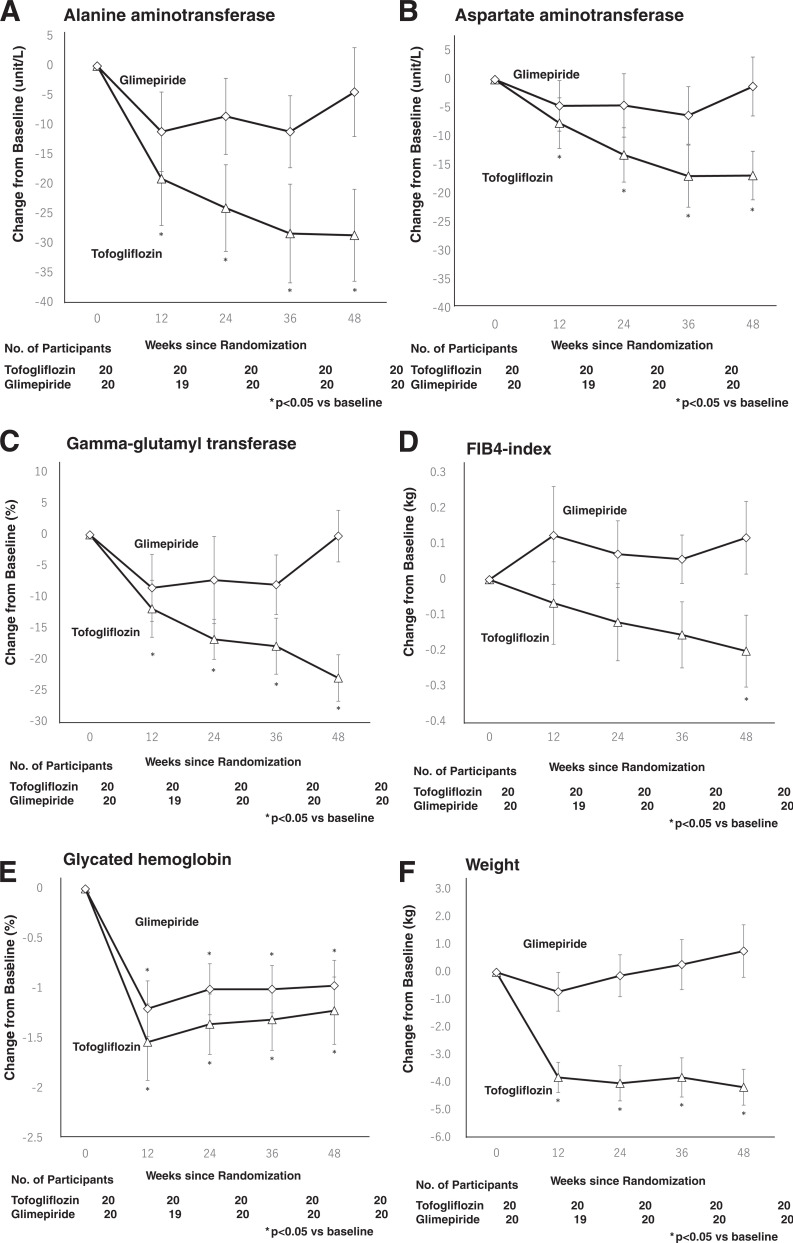
We conducted a 48 week, randomized, open-label, parallel-group trial involving participants with biopsy-confirmed NAFLD. A total of 40 participants were randomly assigned to receive once daily 20 mg tofogliflozin or 0.5 mg glimepiride. The primary outcome was the percentage of participants with at least an improvement in all individual scores for histological categories of steatosis, hepatocellular ballooning, lobular inflammation, and fibrosis by at least 1 point. The secondary end points were the changes in liver enzymes, metabolic markers, and hepatic gene expression profiles.
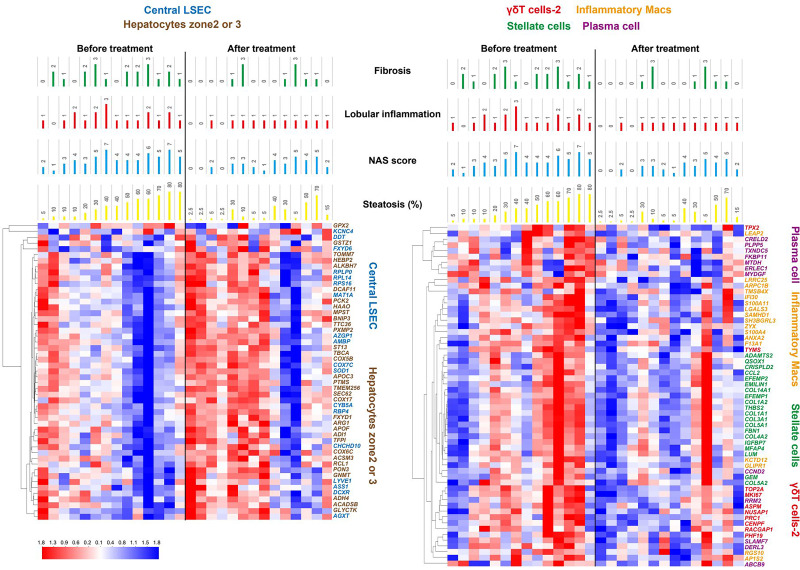
Fibrosis scores improved in the tofogliflozin group (60%, P = 0.001), whereas the change from baseline did not differ significantly between the groups (P = 0.172). The histological variables of steatosis (65%, P = 0.001), hepatocellular ballooning (55%, P = 0.002), and lobular inflammation (50%, P = 0.003) were improved in the tofogliflozin group, whereas only hepatocellular ballooning was improved in the glimepiride group (25%, P = 0.025). Hepatic gene expression profiling revealed histology-associated signatures in energy metabolism, inflammation, and fibrosis that were reversed with tofogliflozin.
Tofogliflozin and, to a lesser degree, glimepiride led to liver histological and metabolic improvement in participants with type 2 diabetes and NAFLD, with no significant difference between the agents. The hepatic expression of the genes involved in energy metabolism, inflammation, and fibrosis was well correlated with liver histological changes and rescued by tofogliflozin. We need further confirmation through long-term larger-scale clinical trials of SGLT2 inhibitors.
非酒精性脂肪性肝病(NAFLD)是 2 型糖尿病和肥胖的肝脏表型。目前,钠-葡萄糖共转运蛋白 2(SGLT2)抑制剂和磺酰脲类药物在 2 型糖尿病合并 NAFLD 的肝病理和肝基因表达谱中的疗效尚不清楚。
我们进行了一项为期 48 周的、随机、开放标签、平行组试验,纳入了经活检证实患有 NAFLD 的参与者。共有 40 名参与者被随机分配接受每日一次 20mg 托格列净或 0.5mg 格列美脲治疗。主要终点是至少有一名参与者的所有组织学分类(脂肪变性、肝细胞气球样变、肝小叶炎症和纤维化)的单个评分至少改善 1 分的比例。次要终点是肝酶、代谢标志物和肝基因表达谱的变化。
托格列净组的纤维化评分改善(60%,P=0.001),而两组间的基线变化差异无统计学意义(P=0.172)。托格列净组的脂肪变性(65%,P=0.001)、肝细胞气球样变(55%,P=0.002)和肝小叶炎症(50%,P=0.003)等组织学变量得到改善,而格列美脲组仅肝细胞气球样变得到改善(25%,P=0.025)。肝基因表达谱分析显示,能量代谢、炎症和纤维化相关的组织学特征与托格列净逆转相关。
托格列净和程度较轻的格列美脲可导致 2 型糖尿病合并 NAFLD 患者的肝脏组织学和代谢改善,两种药物之间无显著差异。与肝脏组织学变化相关的能量代谢、炎症和纤维化相关基因的肝脏表达可被托格列净很好地纠正。我们需要通过长期更大规模的 SGLT2 抑制剂临床试验进一步证实。