Department of Haematology, Oslo University Hospital, Oslo, Norway.
Institute of Clinical Medicine, University of Oslo, Oslo, Norway.
Haemophilia. 2022 Nov;28(6):885-890. doi: 10.1111/hae.14641. Epub 2022 Jul 27.
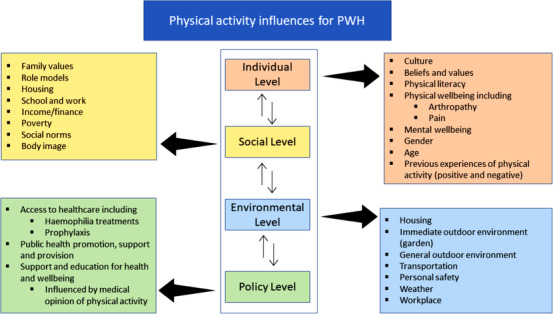
Haemophilia treatment has seen great advances in recent years with an accompanied reduced risk of physical activity (PA) related bleeds. Based on its known health benefits, people with haemophilia (PWH) are currently encouraged to regularly engage in PA. However, this may not always translate to increased levels of PA. In this narrative review we aim to provide a brief overview of what is currently understood regarding PA levels and influences for the three broad age groups of children and adolescents, adults and older adults. We also provide recommendations for members of the haemophilia team on important aspects related to promotion of PA in their clinical practice. We highlight that PA behaviour is multifactorial and that many PWH still have limited access to adequate care. Whilst some still face unique challenges to being more physically active, overall, the barriers and facilitators to activity are very similar to that of the general population.
近年来,血友病的治疗取得了重大进展,同时也降低了与体力活动(PA)相关的出血风险。鉴于其已知的健康益处,目前鼓励血友病患者(PWH)定期进行 PA。然而,这并不一定能转化为更高水平的 PA。在这篇叙述性综述中,我们旨在简要概述目前对三个广泛年龄组(儿童和青少年、成年人和老年人)的 PA 水平和影响因素的理解。我们还为血友病团队成员提供了一些建议,涉及在他们的临床实践中促进 PA 的重要方面。我们强调,PA 行为是多因素的,许多 PWH 仍然难以获得足够的护理。虽然有些人在更积极地参与体育活动方面仍面临独特的挑战,但总体而言,活动的障碍和促进因素与普通人群非常相似。