Department of Psychology, Open Universiteit, 6419, Heerlen, The Netherlands.
, Egelantierstraat 138, 3551GG, Utrecht, Netherlands.
Arch Sex Behav. 2022 Nov;51(8):3871-3886. doi: 10.1007/s10508-022-02357-w. Epub 2022 Jul 27.
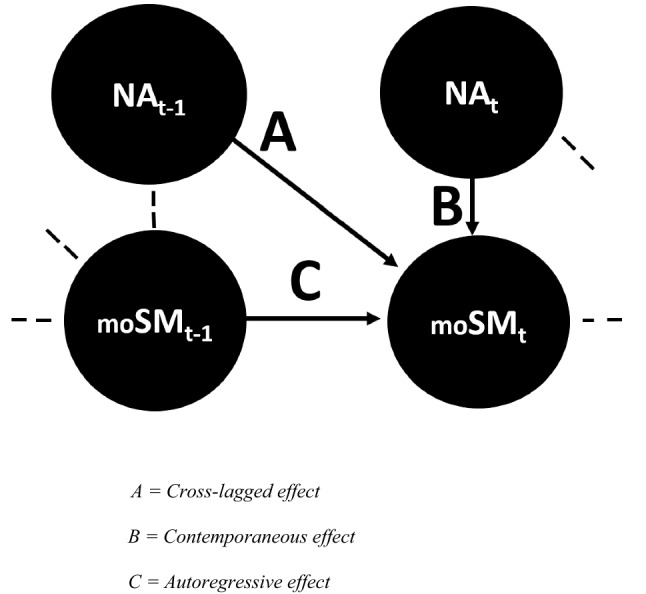
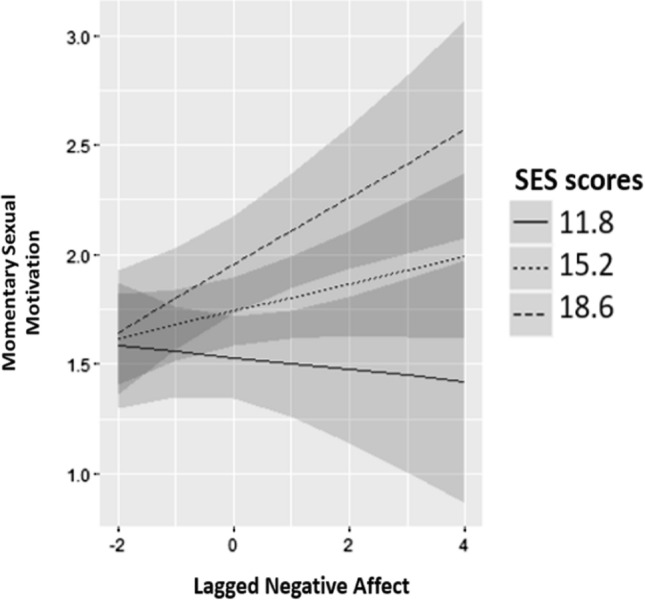
We investigated the effect of fluctuations in negative and positive affect on momentary sexual motivation in a sample of women and men in a steady relationship (n = 133). Sexual motivation was regarded as the aggregate of sexual desire, subjective sexual arousal and openness to sexual contact. Experience sampling methodology was used to collect up to 70 measurements per participant over a period of seven consecutive days of sexual motivation, and negative and positive affect. Using multilevel analysis, we investigated cross-level interactions between affect and trait measures as specified in the dual control model (DCM). This model postulates sexually excitatory and inhibitory mechanisms as relatively independent systems that together can explain individual differences in sexual motivation and behavior. Results implicated that any intensification of feelings, positive or negative, was associated with a momentary increase in sexual motivation for participants more prone to sexual excitation. In the lagged analysis, higher preceding negative affect, measured 1-2 h earlier, forecasted an increase in current sexual motivation for participants more prone to sexual excitation. The lagged analysis included the autoregressive effect or inertia of sexual motivation. Inertia reflects the extent to which sexual motivation lingers and persists at similar levels. Our findings showed that sexual motivation levels persisted less in individuals with higher sexual inhibition proneness due to threat of performance failure. This study demonstrated how experience sampling methodology can be used to extend research on associations between mood and sexual motivation and implicates that DCM factors moderate these associations.
我们在一个稳定关系的女性和男性样本中研究了负性和正性情绪波动对即时性性动机的影响(n=133)。性动机被视为性欲、主观性唤起和对性接触的开放性的总和。使用经验采样方法,在连续七天的性动机和负性及正性情绪期间,每个参与者最多可采集 70 次测量值。使用多层次分析,我们根据双控制模型(DCM)中指定的方法,研究了影响和特质测量之间的跨层次交互作用。该模型假定性兴奋和抑制机制是相对独立的系统,它们共同可以解释性动机和行为的个体差异。结果表明,对于更倾向于性兴奋的参与者,任何情绪的增强,无论是正性还是负性,都会导致即时性性动机的增加。在滞后分析中,在 1-2 小时前测量的较高的先前负性情绪预测了更倾向于性兴奋的参与者当前性动机的增加。滞后分析包括性动机的自回归效应或惯性。惯性反映了性动机在相似水平上持续和保持的程度。我们的研究结果表明,由于对表现失败的威胁,性抑制倾向较高的个体的性动机水平持续时间较短。本研究展示了经验采样方法如何用于扩展情绪与性动机之间关联的研究,并暗示 DCM 因素调节了这些关联。