Akhmetov Fedor, Medvedev Nikita, Makhotkin Igor, Ackermann Marcelo, Milov Igor
Industrial Focus Group XUV Optics, MESA+ Institute for Nanotechnology, University of Twente, Drienerlolaan 5, 7522 NB Enschede, The Netherlands.
Institute of Physics, Czech Academy of Sciences, Na Slovance 1999/2, 18221 Prague, Czech Republic.
Materials (Basel). 2022 Jul 26;15(15):5193. doi: 10.3390/ma15155193.
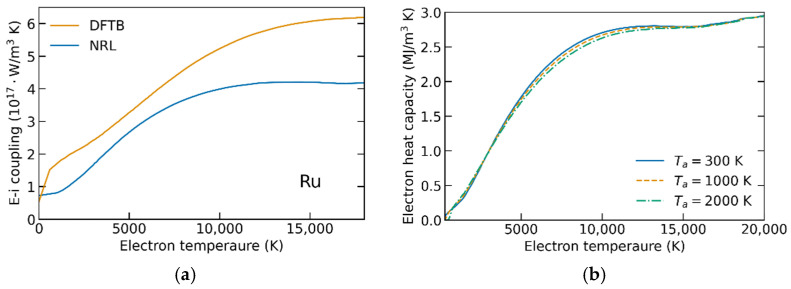
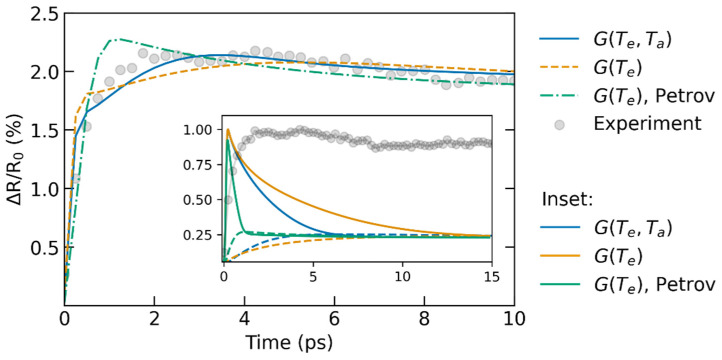
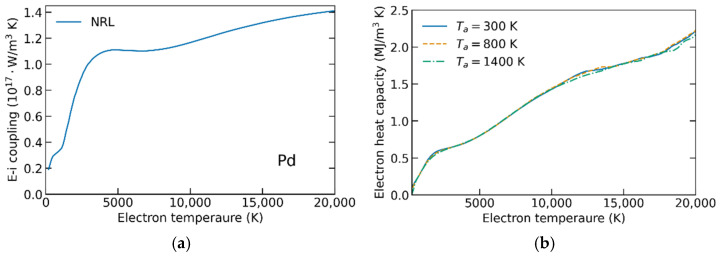
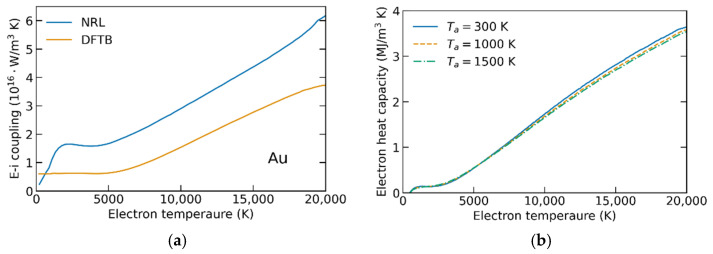
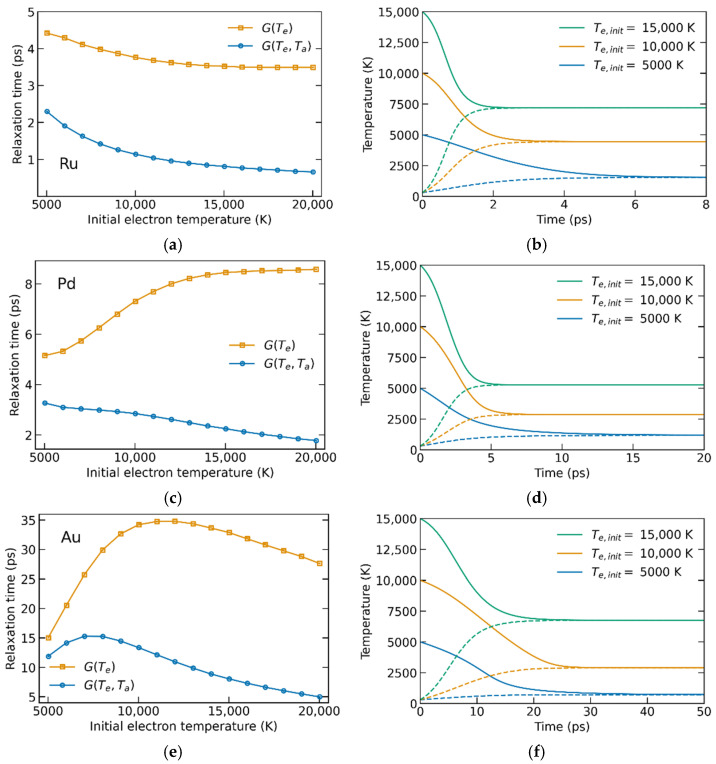
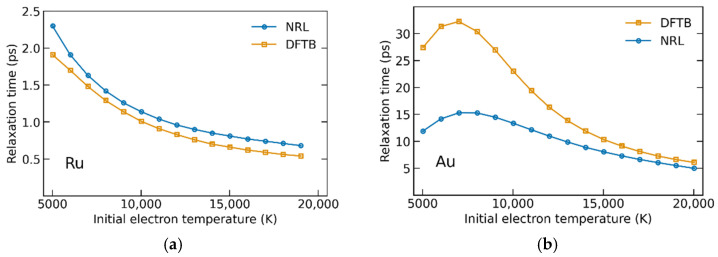
Ultrafast laser irradiation of metals can often be described theoretically with the two-temperature model. The energy exchange between the excited electronic system and the atomic one is governed by the electron-phonon coupling parameter. The electron-phonon coupling depends on both, the electronic and the atomic temperature. We analyze the effect of the dependence of the electron-phonon coupling parameter on the atomic temperature in ruthenium, gold, and palladium. It is shown that the dependence on the atomic temperature induces nonlinear behavior, in which a higher initial electronic temperature leads to faster electron-phonon equilibration. Analysis of the experimental measurements of the transient thermoreflectance of the laser-irradiated ruthenium thin film allows us to draw some, albeit indirect, conclusions about the limits of the applicability of the different coupling parametrizations.
金属的超快激光辐照通常可以用双温度模型进行理论描述。激发电子系统与原子系统之间的能量交换由电子 - 声子耦合参数决定。电子 - 声子耦合取决于电子温度和原子温度两者。我们分析了钌、金和钯中电子 - 声子耦合参数对原子温度的依赖性影响。结果表明,对原子温度的依赖性会引发非线性行为,其中较高的初始电子温度会导致更快的电子 - 声子平衡。对激光辐照钌薄膜瞬态热反射率的实验测量分析使我们能够得出一些关于不同耦合参数化适用性极限的结论,尽管这些结论是间接的。