Qu Guiwen, Huang Jinjian, Li Ze, Jiang Yungang, Liu Ye, Chen Kang, Xu Ziyan, Zhao Yun, Gu Guosheng, Wu Xiuwen, Ren Jianan
Research Institute of General Surgery, Jinling Hospital, School of Medicine, Southeast University, Nanjing, 210009, China.
School of Medicine, Nanjing University, Nanjing, 210093, China.
Mater Today Bio. 2022 Jul 14;16:100363. doi: 10.1016/j.mtbio.2022.100363. eCollection 2022 Dec.
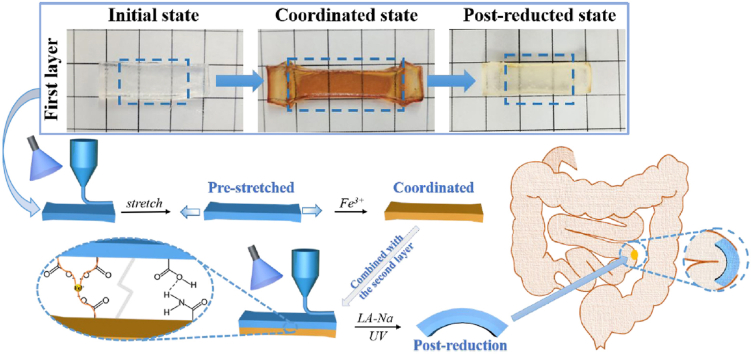
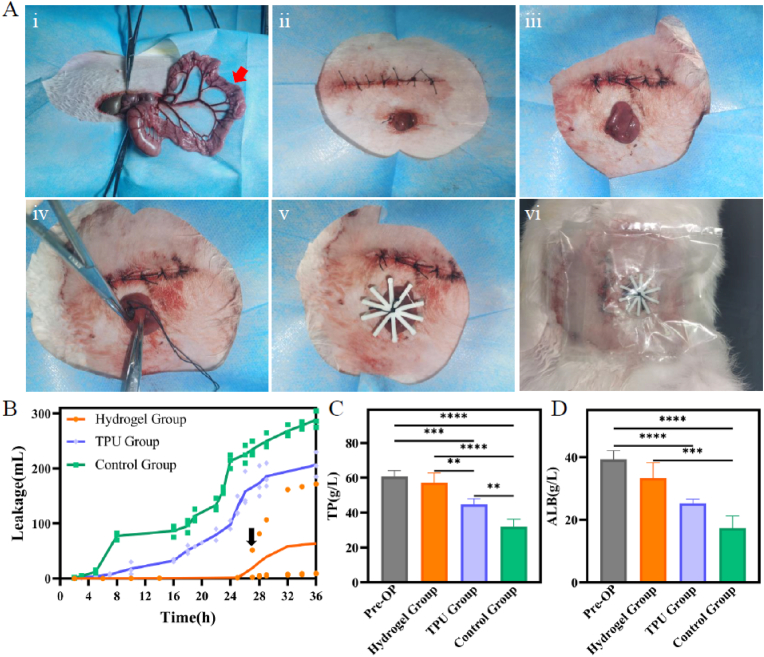
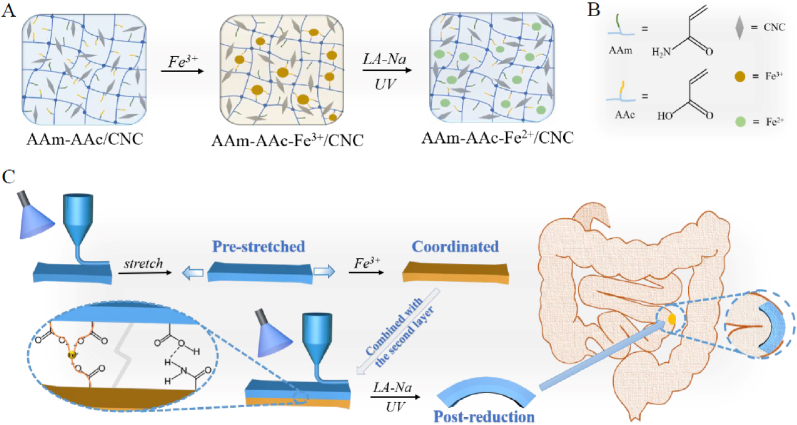
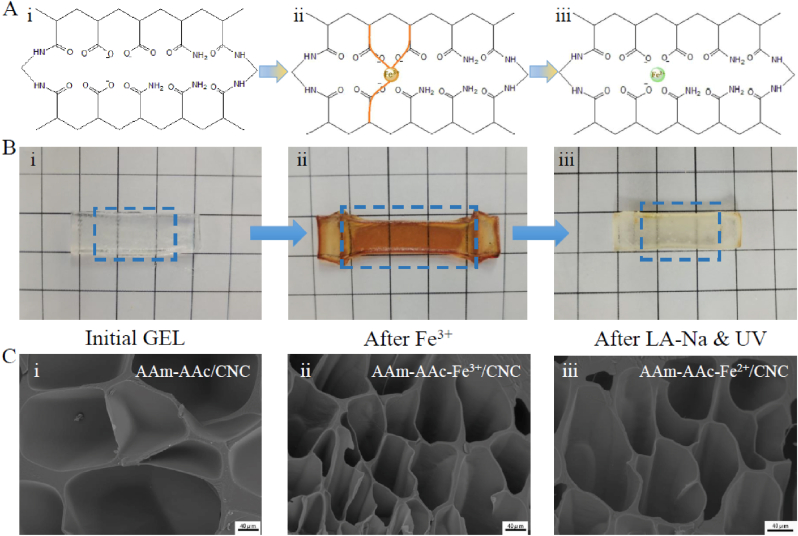
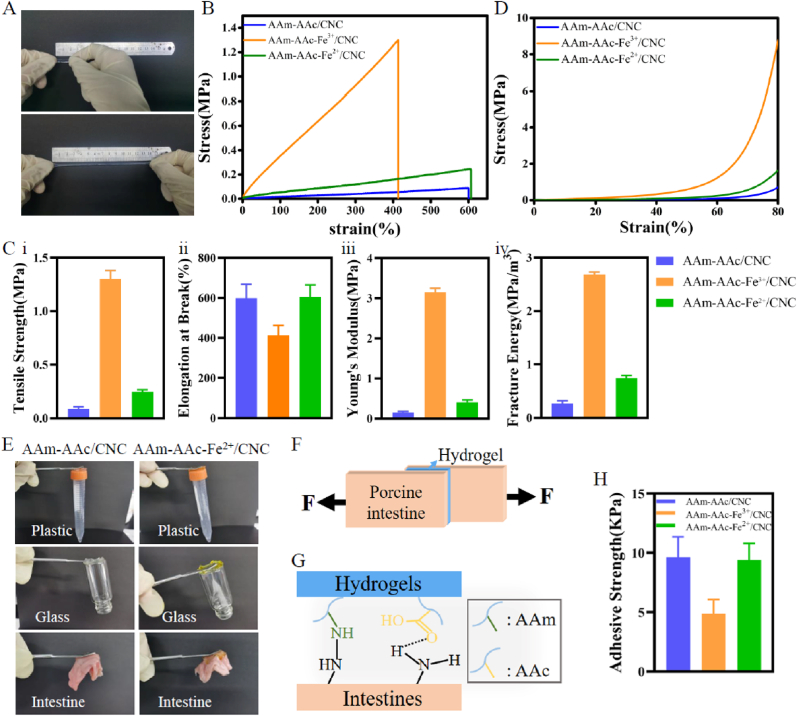
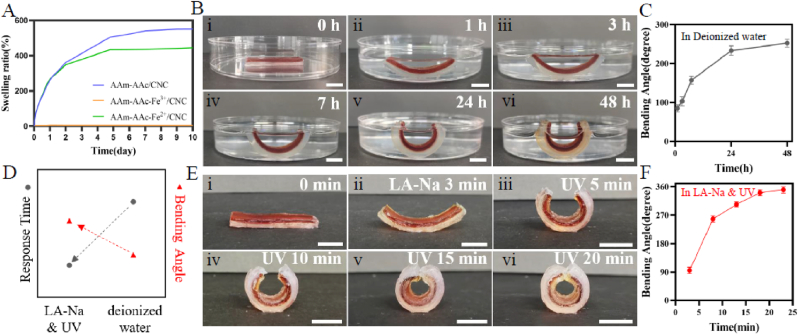
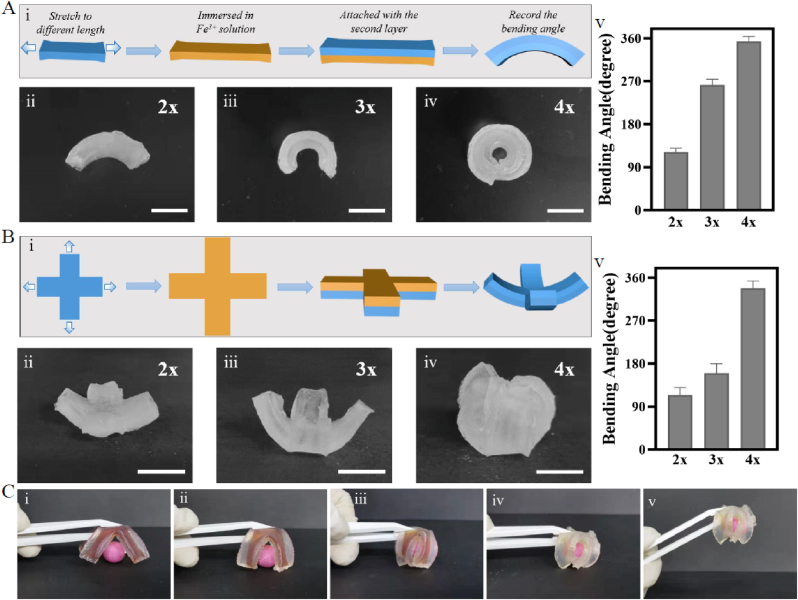
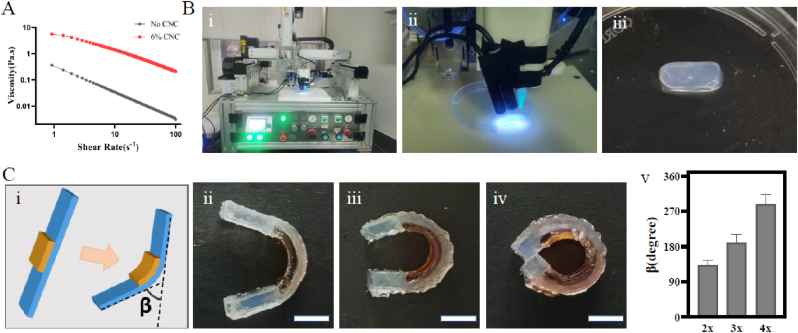
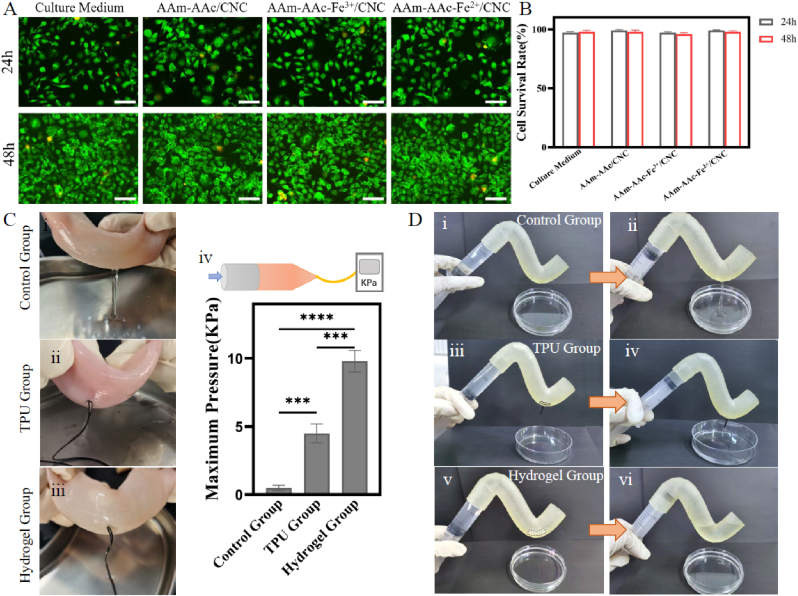
Recently, four-dimensional (4D) shape-morphing structures, which can dynamically change shape over time, have attracted much attention in biomedical manufacturing. The 4D printing has the capacity to fabricate dynamic construction conforming to the natural bending of biological tissues, superior to other manufacturing techniques. In this study, we presented a multi-responsive, flexible, and biocompatible 4D-printed bilayer hydrogel based on acrylamide-acrylic acid/cellulose nanocrystal (AAm-AAc/CNC) network. The first layer was first stretched and then formed reversible coordination with Fe to maintain this pre-stretched length; it was later combined with a second layer. The deformation process was actuated by the reduction of Fe to Fe in the first layer which restored it to its initial length. The deformation condition was to immerse the 4D construct in sodium lactate (LA-Na) and then expose it to ultraviolet (UV) light until maximal deformation was realized. The bending degree of this 4D construct can be programmed by modifying the pre-stretched lengths of the first layer. We explored various deformation steps in simple and complex constructs to verify that the 4D bilayer hydrogel can mimic the curved morphology of the intestines. The bilayer hydrogel can also curve in deionized water due to anisotropic volume change yet the response time and maximum bending degree was inferior to deformation in LA-Na and UV light. Finally, we made a 4D-printed bilayer hydrogel stent to test its closure effect for enteroatmospheric fistulas (EAFs) and . The results illustrate that the hydrogel plays a role in the temporary closure of EAFs. This study offers an effective method to produce curved structures and expands the potential applications of 4D printing in biomedical fields.
最近,能够随时间动态改变形状的四维(4D)形状变形结构在生物医学制造领域备受关注。4D打印能够制造出符合生物组织自然弯曲的动态结构,优于其他制造技术。在本研究中,我们提出了一种基于丙烯酰胺 - 丙烯酸/纤维素纳米晶体(AAm - AAc/CNC)网络的多响应、柔性且生物相容的4D打印双层水凝胶。第一层先被拉伸,然后与铁形成可逆配位以保持该预拉伸长度;随后它与第二层结合。变形过程由第一层中铁从高价态还原为低价态触发,这使其恢复到初始长度。变形条件是将4D结构体浸入乳酸钠(LA - Na)中,然后暴露于紫外光(UV)下,直至实现最大变形。这种4D结构体的弯曲程度可通过改变第一层的预拉伸长度来编程。我们在简单和复杂结构体中探索了各种变形步骤,以验证4D双层水凝胶能够模拟肠道的弯曲形态。双层水凝胶在去离子水中也会因各向异性体积变化而弯曲,但其响应时间和最大弯曲程度不如在LA - Na和紫外光下的变形。最后,我们制作了一个4D打印双层水凝胶支架,以测试其对肠造口瘘(EAFs)的闭合效果。结果表明,该水凝胶在EAFs的临时闭合中发挥作用。本研究提供了一种制造弯曲结构的有效方法,并拓展了4D打印在生物医学领域的潜在应用。