Yao Kui, Zheng Heng, Li Tao
Department of Obstetrics and Gynecology, Key Laboratory of Birth Defects and Related Diseases of Women and Children (Sichuan University), Ministry of Education, West China Second University Hospital, Sichuan University, Chengdu, China.
Front Oncol. 2022 Jul 11;12:942380. doi: 10.3389/fonc.2022.942380. eCollection 2022.
For gynecological cancer patients, the beneficial effect of metformin use remains controversial due to inconsistent results of published articles. By conducting a meta-analysis, we aimed to evaluate the effect of metformin in reducing the risk and improving the survival of gynecological cancer among women with diabetes mellitus (DM).
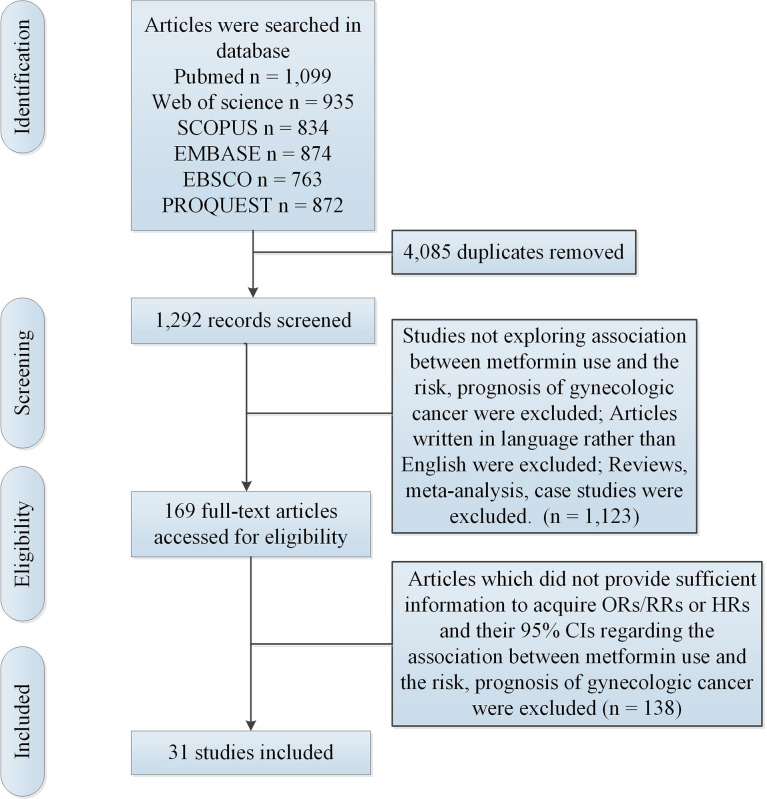
Articles exploring association between metformin use and the risk, as well as prognosis of gynecologic cancer in DM, were searched in the databases: PubMed, Web of Science, SCOPUS, EMBASE, EBSCO, and PROQUEST. Articles were published before May 2022. All the studies were conducted using STATA 12.0 software.
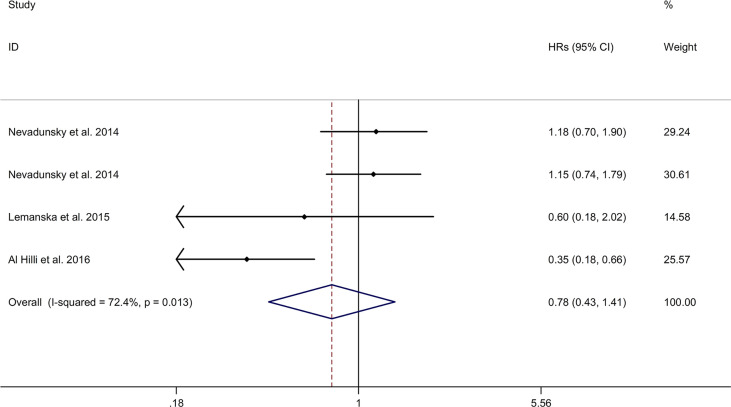
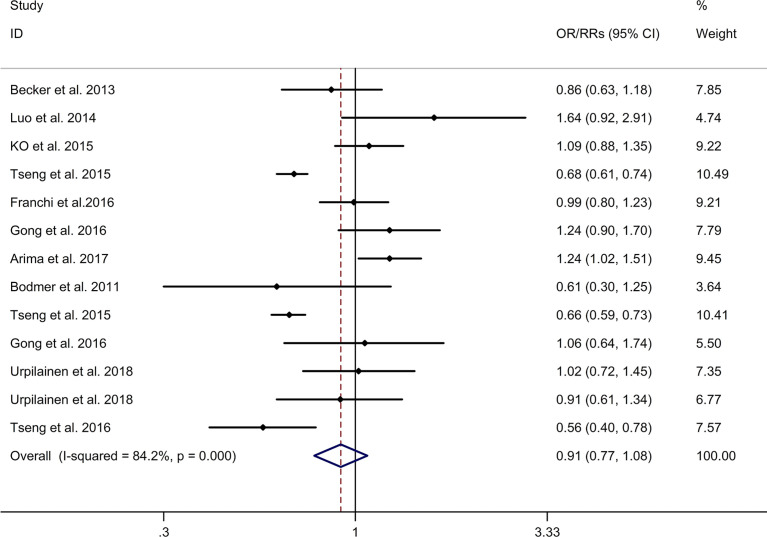
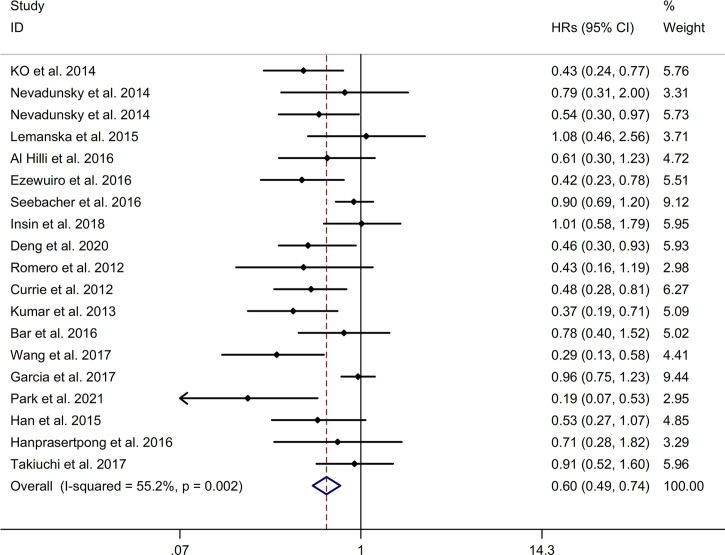
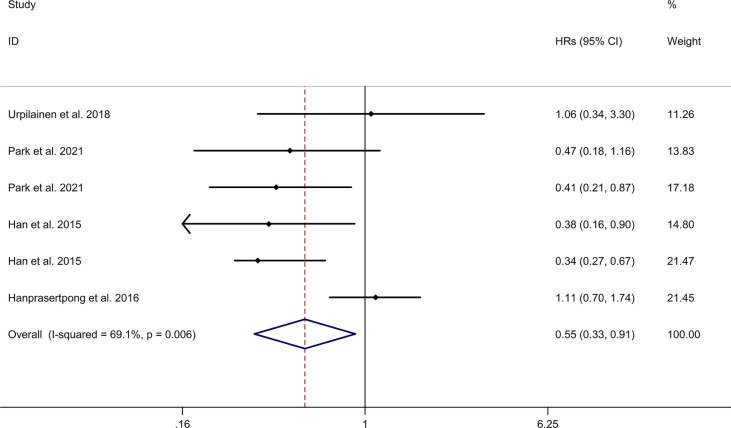
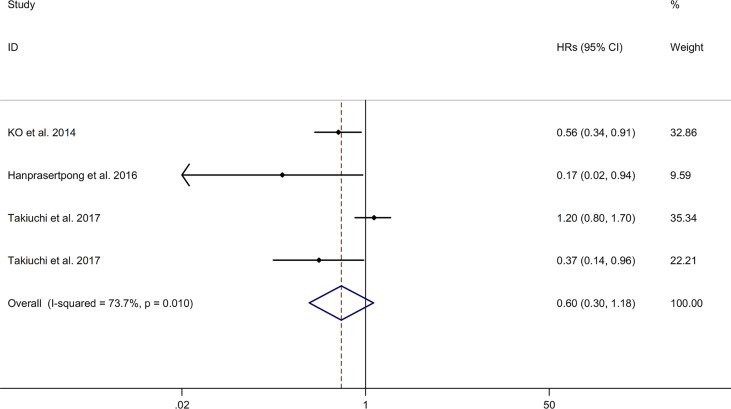
The meta-analysis showed no significant association between metformin use and risk of gynecologic cancer in DM with a random effects model [odds ratio (ORs)/relative risk (RR) = 0.91, 95% confidence intervals (CI) 0.77 to 1.08, I = 84.2%, < 0.001]. Metformin use was associated with reduced overall survival (OS) and progression-free survival (PFS) of gynecologic cancer in DM with random effects models [OS: hazard ratio (HR) = 0.60, 95% CI 0.49-0.74, I = 55.2%, = 0.002; PFS: HR = 0.55, 95% CI 0.33-0.91, I = 69.1%, = 0.006], whereas no significant association was showed between metformin use and recurrence-free survival (RFS), as well as cancer-specific survival (CSS) of gynecologic cancer in DM with random effects models (RFS: HR = 0.60, 95% CI 0.30-1.18, I = 73.7%, = 0.010; CSS: HR = 0.78, 95% CI 0.43-1.41, I = 72.4%, = 0.013).
In conclusion, this meta-analysis indicated that metformin may be a useful adjuvant agent for gynecological cancer with DM, especially for patients with ovarian cancer and endometrial cancer.
对于妇科癌症患者,由于已发表文章结果不一致,二甲双胍使用的有益效果仍存在争议。通过进行一项荟萃分析,我们旨在评估二甲双胍在降低糖尿病(DM)女性患妇科癌症风险及改善其生存率方面的作用。
在PubMed、科学网、Scopus、EMBASE、EBSCO和ProQuest数据库中检索探讨二甲双胍使用与DM患者妇科癌症风险以及预后之间关联的文章。文章发表于2022年5月之前。所有研究均使用STATA 12.0软件进行。
荟萃分析显示,采用随机效应模型时,二甲双胍使用与DM患者患妇科癌症风险之间无显著关联[比值比(ORs)/相对风险(RR)=0.91,95%置信区间(CI)为0.77至1.08,I² = 84.2%,P < 0.001]。采用随机效应模型时,二甲双胍使用与DM患者妇科癌症的总生存期(OS)和无进展生存期(PFS)降低相关[OS:风险比(HR)=0.60,95% CI为0.49 - 0.74,I² = 55.2%,P = 0.002;PFS:HR = 0.55,95% CI为0.33 - 0.91,I² = 69.1%,P = 0.006],而采用随机效应模型时,二甲双胍使用与DM患者妇科癌症的无复发生存期(RFS)以及癌症特异性生存期(CSS)之间未显示出显著关联(RFS:HR = 0.60,95% CI为0.30 - 1.18,I² = 73.7%,P = 0.010;CSS:HR = 0.78,95% CI为0.43 - 1.41,I² = 72.4%,P = 0.013)。
总之,这项荟萃分析表明,二甲双胍可能是DM合并妇科癌症患者的一种有用辅助药物,尤其是对于卵巢癌和子宫内膜癌患者。