Yang Yi, Gong Zaicheng, Lu Yi, Lu Xubin, Zhang Jilei, Meng Ye, Peng Yalan, Chu Shuangfeng, Cao Wenqiang, Hao Xiaoli, Sun Jie, Wang Heng, Qin Aijian, Wang Chengming, Shang Shaobin, Yang Zhangping
Jiangsu Co-innovation Center for Prevention and Control of Important Animal Infectious Diseases and Zoonoses, College of Veterinary Medicine, Yangzhou University, Yangzhou, China.
International Corporation Laboratory of Agriculture and Agricultural Products Safety, Yangzhou University, Yangzhou, China.
Front Microbiol. 2022 Jul 11;13:946463. doi: 10.3389/fmicb.2022.946463. eCollection 2022.
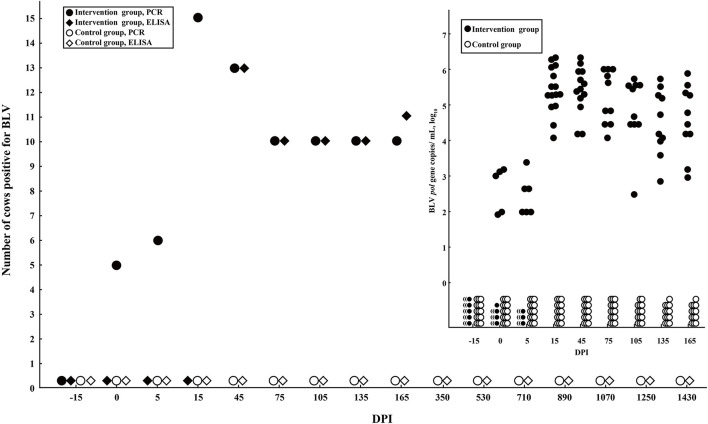
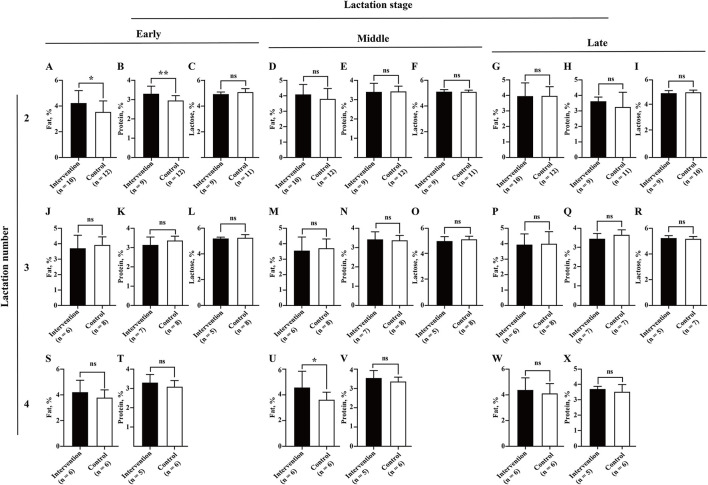
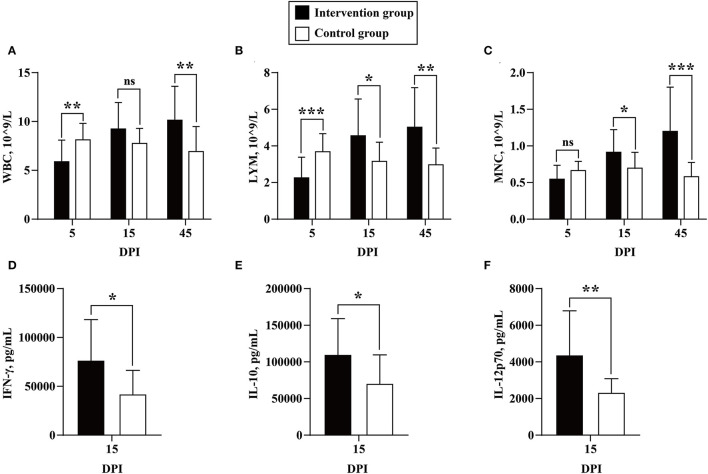
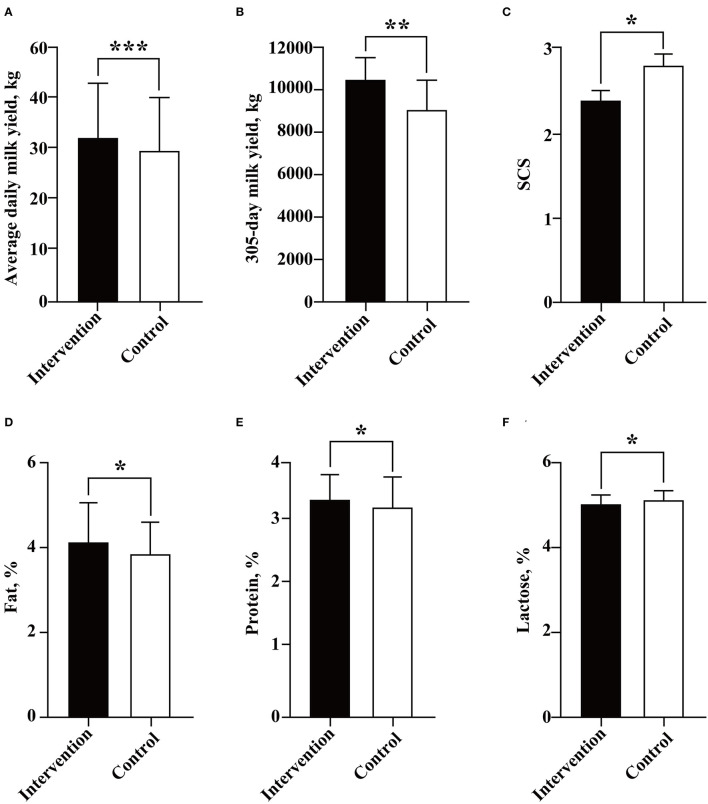
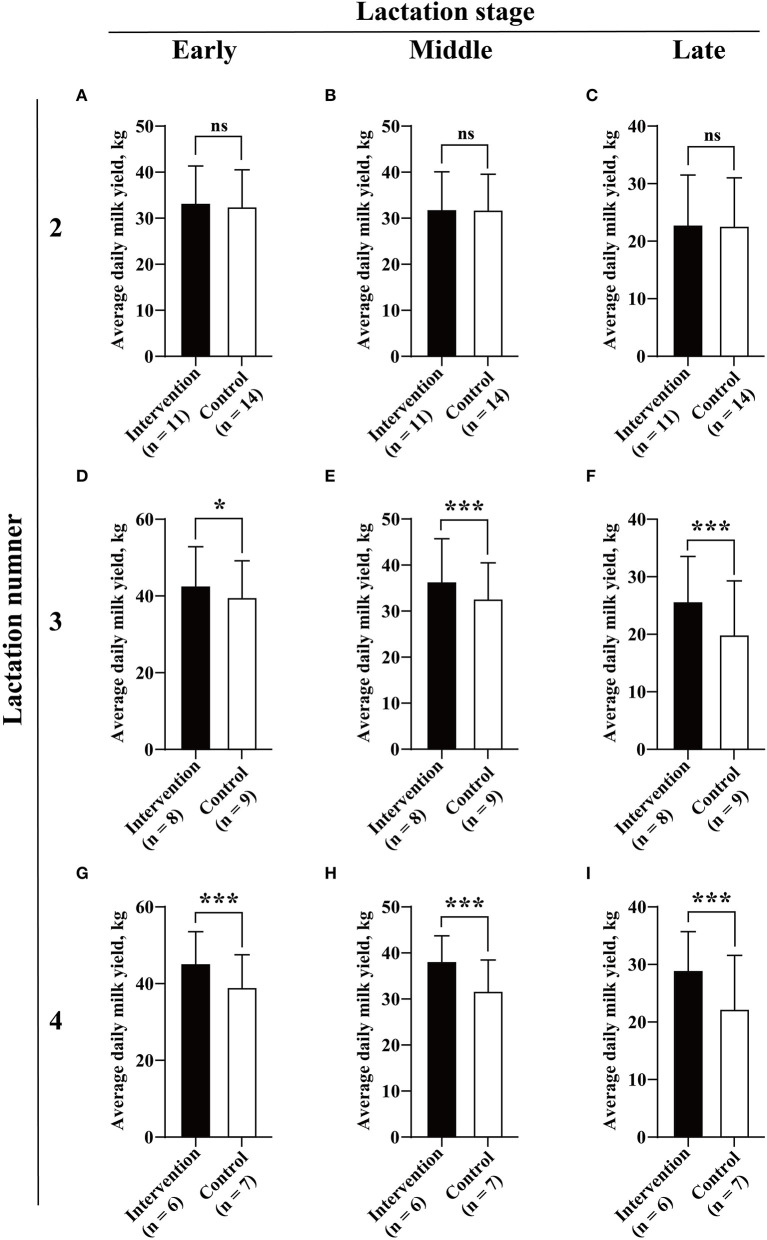
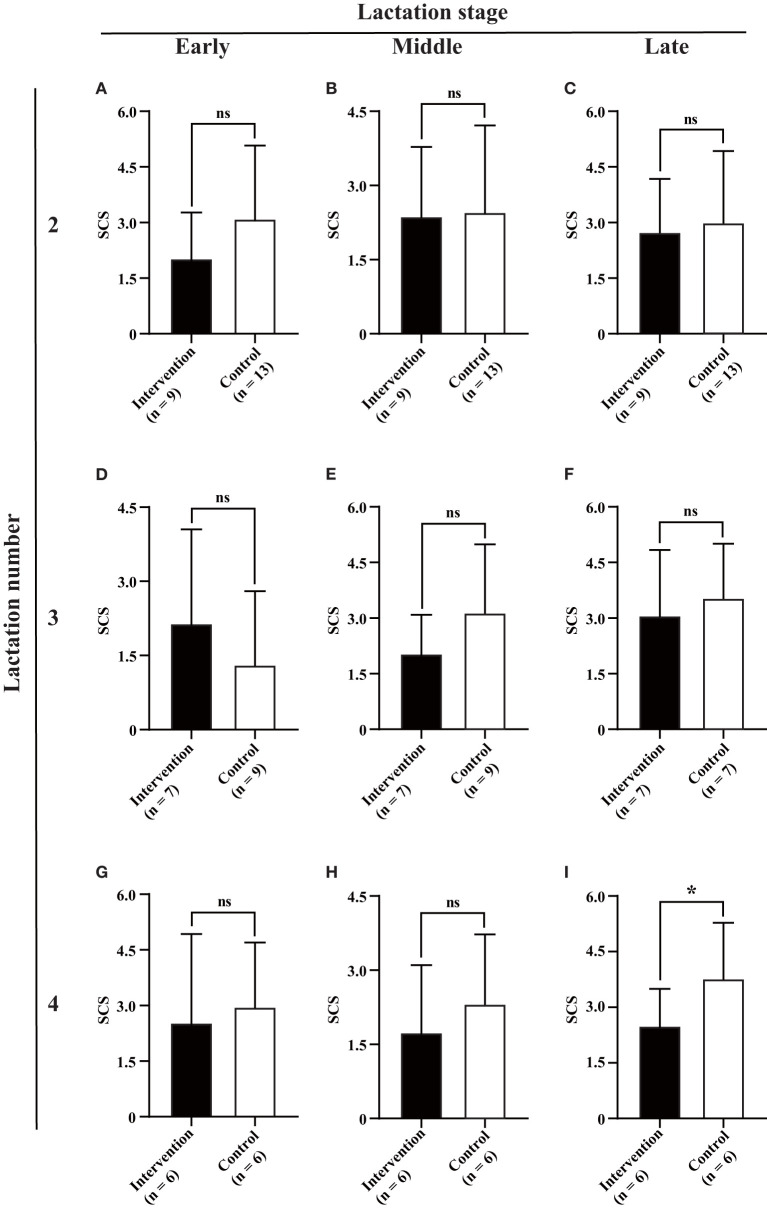
Bovine leukemia virus (BLV) is widespread in global cattle populations, but the effects of its infection on milk quantity and quality have not been clearly elucidated in animal models. In this study, 30 healthy first-lactation cows were selected from ≈2,988 cows in a BLV-free farm with the same criteria of parity, age, lactation number, as well as milk yield, SCS, and composition (fat, protein, and lactose). Subsequently, these cows were randomly assigned to the intervention ( = 15) or control ( = 15) group, and reared in different cowsheds. Cows in the intervention group were inoculated with 1 × phosphate-buffered solution (PBS) resuspended in peripheral blood mononuclear cells (PBMC) from a BLV-positive cow, while the controls were inoculated with the inactivated PBMC from the same individual. From June 2016 to July 2021, milk weight (kg) was automatically recorded by milk sensors, and milk SCS and composition were originated from monthly performed dairy herd improvement (DHI) testing. Fluorescence resonance energy transfer (FRET)-qPCR and ELISA showed that cows in the intervention group were successfully infected with BLV, while cows in the control group were free of BLV for the entire period. At 45 days post-inoculation (DPI), the numbers of whole blood cells (WBCs) ( = 0.010), lymphocytes (LYMs) ( = 0.002), and monocytes (MNCs) ( = 0.001) and the expression levels of IFN-γ ( = 0.013), IL-10 ( = 0.031), and IL-12p70 ( = 0.008) increased significantly in the BLV infected cows compared to the non-infected. In lactation numbers 2-4, the intervention group had significantly higher overall milk yield ( < 0.001), fat ( = 0.031), and protein ( = 0.050) than the control group, while milk SCS ( = 0.038) and lactose ( = 0.036) decreased significantly. Further analysis indicated that BLV infection was associated with increased milk yield at each lactation stage in lactation numbers 3-4 ( = 0.021 or < 0.001), but not with SCS and milk composition. Together, this 4-year longitudinal study revealed that artificial inoculation of BLV increased the milk yield in cows in this BLV challenge model.
牛白血病病毒(BLV)在全球牛群中广泛传播,但其感染对牛奶产量和质量的影响在动物模型中尚未得到明确阐明。在本研究中,从一个无BLV的农场中约2988头奶牛中,按照相同的胎次、年龄、泌乳次数以及产奶量、体细胞评分(SCS)和成分(脂肪、蛋白质和乳糖)标准,挑选出30头健康的头胎泌乳奶牛。随后,将这些奶牛随机分为干预组(n = 15)或对照组(n = 15),并在不同的牛舍饲养。干预组奶牛接种了用来自一头BLV阳性奶牛的外周血单个核细胞(PBMC)重悬于1×磷酸盐缓冲溶液(PBS)中的混悬液,而对照组则接种了来自同一个体的灭活PBMC。从2016年6月至2021年7月,通过牛奶传感器自动记录牛奶重量(kg),牛奶SCS和成分数据来自每月进行的奶牛群改良(DHI)检测。荧光共振能量转移(FRET)-qPCR和ELISA结果显示,干预组奶牛成功感染了BLV,而对照组奶牛在整个期间均未感染BLV。接种后45天(DPI),与未感染的奶牛相比,BLV感染奶牛的全血细胞(WBC)数量(P = 0.010)、淋巴细胞(LYM)数量(P = 0.002)和单核细胞(MNC)数量(P = 0.001)以及IFN-γ(P = 0.013)、IL-10(P = 0.031)和IL-12p70(P = 0.008)的表达水平显著增加。在第2至4胎次泌乳期,干预组的总产奶量(P < 0.001)、脂肪含量(P = 0.031)和蛋白质含量(P = 0.050)显著高于对照组,而牛奶SCS(P = 0.038)和乳糖含量(P = 0.036)显著降低。进一步分析表明,BLV感染与第3至4胎次泌乳期各泌乳阶段的产奶量增加相关(P = 0.021或P < 0.001),但与SCS和牛奶成分无关。总之,这项为期4年的纵向研究表明,在这个BLV挑战模型中,人工接种BLV可提高奶牛的产奶量。