Yao Jiaqi, Miao Yifan, Zhang Yumei, Zhu Lv, Chen Huan, Wu Xiajia, Yang Yue, Dai Xiaoyu, Hu Qian, Wan Meihua, Tang Wenfu
Department of Integrated Traditional Chinese and Western Medicine, West China Hospital, Sichuan University, Chengdu, China.
Department of Traditional Chinese Medicine, Xiang'an Hospital of Xiamen University, School of Medicine, Xiamen University, Xiamen, China.
Front Pharmacol. 2022 Jul 11;13:922130. doi: 10.3389/fphar.2022.922130. eCollection 2022.
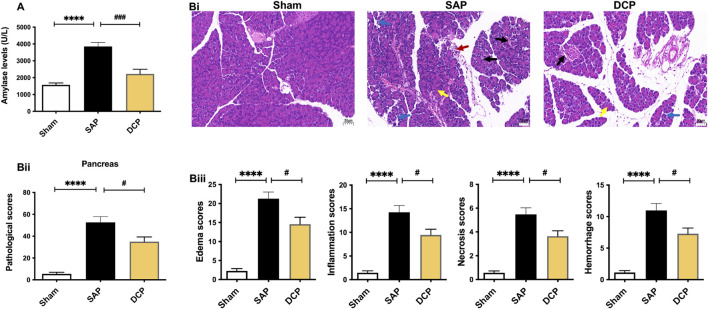
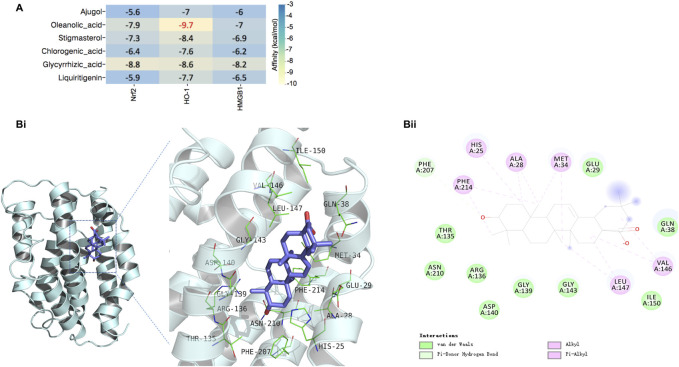
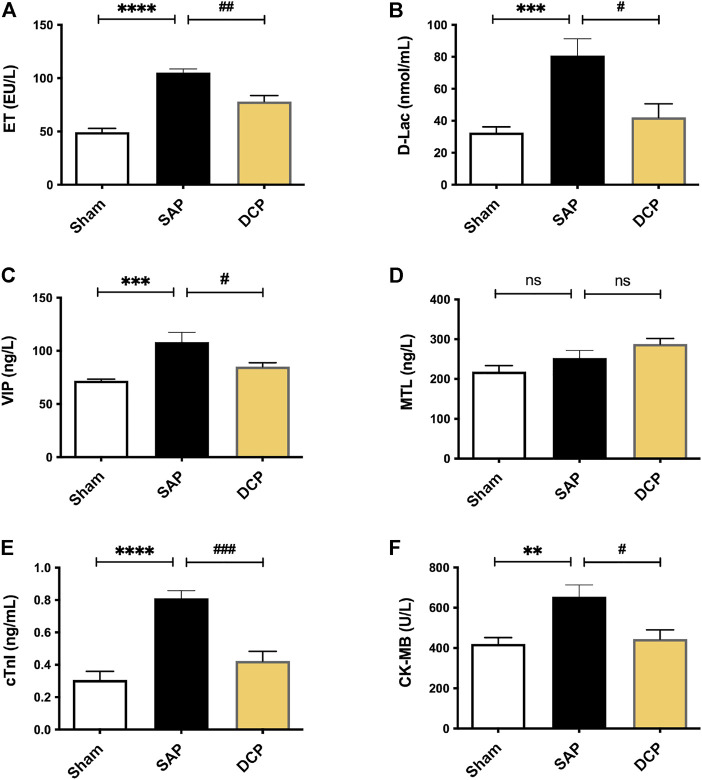
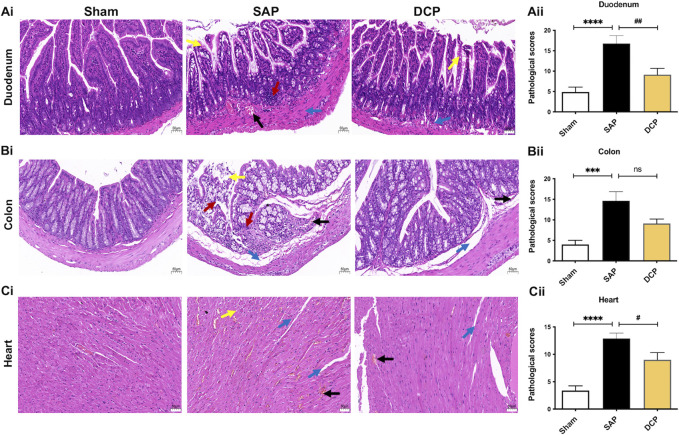
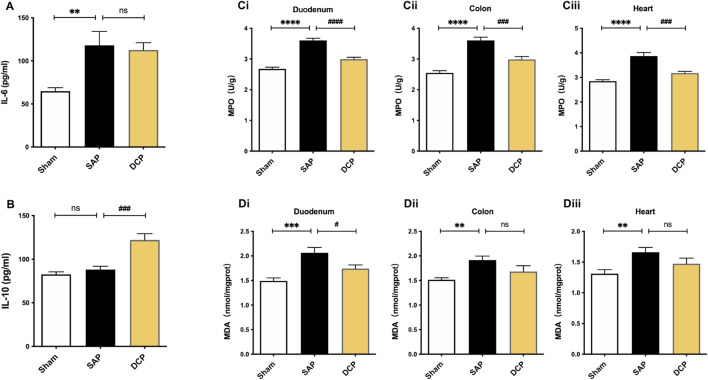
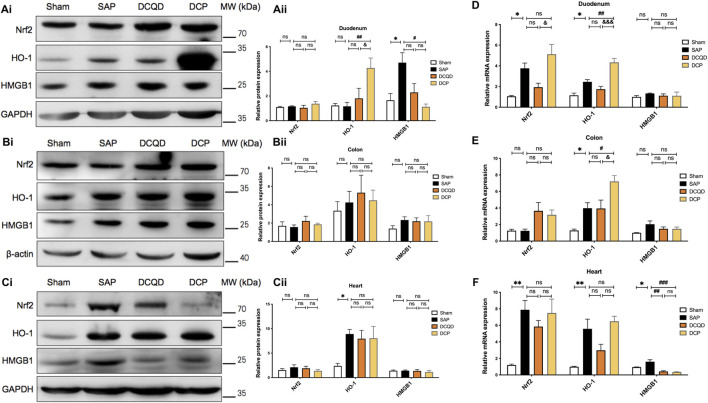
Dao-Chi powder (DCP) has been widely used in the treatment of inflammatory diseases in the clinical practice of traditional Chinese medicine, but has not been used in acute pancreatitis (AP). This study aimed to evaluate the effect of DCP on severe AP (SAP) and SAP-associated intestinal and cardiac injuries. To this end, an SAP animal model was established by retrograde injection of 3.5% taurocholic acid sodium salt into the biliopancreatic ducts of rats. Intragastric DCP (9.6 g/kg.BW) was administered 12 h after modeling. The pancreas, duodenum, colon, heart and blood samples were collected 36 h after the operation for histological and biochemical detection. The tissue distributions of the DCP components were determined and compared between the sham and the SAP groups. Moreover, molecular docking analysis was employed to investigate the interactions between the potential active components of DCP and its targets (Nrf2, HO-1, and HMGB1). Consequently, DCP treatment decreased the serum levels of amylase and the markers of gastrointestinal and cardiac injury, further alleviating the pathological damage in the pancreas, duodenum, colon, and heart of rats with SAP. Mechanistically, DCP rebalanced the pro-/anti-inflammatory cytokines and inhibited MPO activity and MDA levels in these tissues. Furthermore, Western blot and RT-PCR results showed that DCP intervention enhanced the expression of Nrf2 and HO-1 in the duodenum and colon of rats with SAP, while inhibiting the expression of HMGB1 in the duodenum and heart. HPLC-MS/MS analysis revealed that SAP promoted the distribution of ajugol and oleanolic acid to the duodenum, whereas it inhibited the distribution of liquiritigenin to the heart and ajugol to the colon. Molecular docking analysis confirmed that the six screened components of DCP had relatively good binding affinity with Nrf2, HO-1, and HMGB1. Among these, oleanolic acid had the highest affinity for HO-1. Altogether, DCP could alleviated SAP-induced intestinal and cardiac injuries inhibiting the inflammatory responses and oxidative stress partially through regulating the Nrf2/HO-1/HMGB1 signaling pathway, thereby providing additional supportive evidence for the clinical treatment of SAP.
导赤散(DCP)在中医临床实践中已被广泛用于治疗炎症性疾病,但尚未用于急性胰腺炎(AP)的治疗。本研究旨在评估DCP对重症急性胰腺炎(SAP)及SAP相关肠和心脏损伤的影响。为此,通过向大鼠胆胰管逆行注射3.5%牛磺胆酸钠建立SAP动物模型。建模后12小时给予胃内DCP(9.6 g/kg体重)。术后36小时采集胰腺、十二指肠、结肠、心脏和血液样本进行组织学和生化检测。测定并比较假手术组和SAP组之间DCP成分的组织分布。此外,采用分子对接分析研究DCP潜在活性成分与其靶点(Nrf2、HO-1和HMGB1)之间的相互作用。结果显示,DCP治疗降低了淀粉酶水平以及胃肠道和心脏损伤标志物水平,进一步减轻了SAP大鼠胰腺、十二指肠、结肠和心脏的病理损伤。机制上,DCP重新平衡了促炎/抗炎细胞因子,并抑制了这些组织中的MPO活性和MDA水平。此外,蛋白质免疫印迹和RT-PCR结果表明,DCP干预增强了SAP大鼠十二指肠和结肠中Nrf2和HO-1的表达,同时抑制了十二指肠和心脏中HMGB1的表达。HPLC-MS/MS分析显示,SAP促进了紫背金盘醇和齐墩果酸向十二指肠的分布,而抑制了甘草素向心脏的分布以及紫背金盘醇向结肠的分布。分子对接分析证实,DCP筛选出的六种成分与Nrf2、HO-1和HMGB1具有相对较好的结合亲和力。其中,齐墩果酸对HO-1的亲和力最高。总之,DCP可减轻SAP诱导的肠和心脏损伤,部分通过调节Nrf2/HO-1/HMGB1信号通路抑制炎症反应和氧化应激,从而为SAP的临床治疗提供额外的支持证据。