Department of Microbiology and Applied Biotechnology, Institute of Genetics and Biotechnology, Hungarian University of Agriculture and Life Sciences, Agribiotechnology and Precision Breeding for Food Security National Laboratory, Gödöllő, Hungary.
Department of Microbiology and Applied Biotechnology, Institute of Genetics and Biotechnology, Hungarian University of Agriculture and Life Sciences, Gödöllő, Hungary.
PLoS One. 2022 Jul 28;17(7):e0271414. doi: 10.1371/journal.pone.0271414. eCollection 2022.
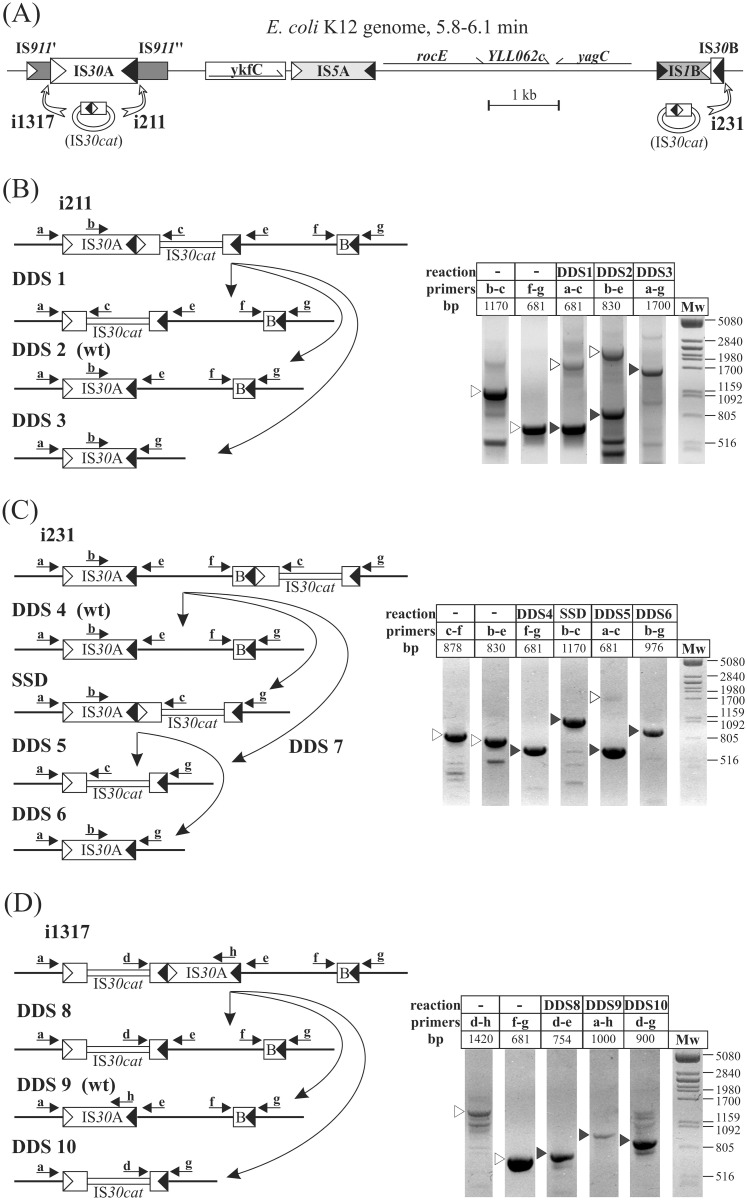
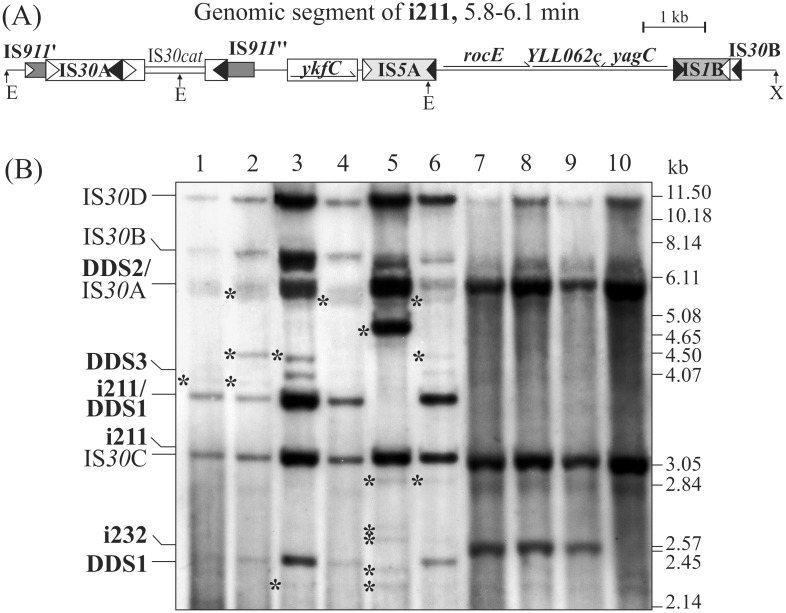
The E. coli element IS30 has adopted the copy-out-paste-in transposition mechanism that is prevalent in a number of IS-families. As an initial step, IS30 forms free circular transposition intermediates like IS minicircles or tandem IS-dimers by joining the inverted repeats of a single element or two, sometimes distantly positioned IS copies, respectively. Then, the active IR-IR junction of these intermediates reacts with the target DNA, which generates insertions, deletions, inversions or cointegrates. The element shows dual target specificity as it can insert into hot spot sequences or next to its inverted repeats. In this study the pathways of rearrangements of transposition-derived cointegrate-like structures were examined. The results showed that the probability of further rearrangements in these structures depends on whether the IS elements are flanked by hot spot sequences or take part in an IR-IR junction. The variability of the deriving products increases with the number of simultaneously available IRs and IR-IR joints in the cointegrates or the chromosome. Under certain conditions, the parental structures whose transposition formed the cointegrates are restored and persist among the rearranged products. Based on these findings, a novel dynamic model has been proposed for IS30, which possibly fits to other elements that have adopted the same transposition mechanism. The model integrates the known transposition pathways and the downstream rearrangements occurring after the formation of different cointegrate-like structures into a complex network. Important feature of this network is the presence of "feedback loops" and reversible transposition rearrangements that can explain how IS30 generates variability and preserves the original genetic constitution in the bacterial population, which contributes to the adaptability and evolution of host bacteria.
大肠杆菌元件 IS30 采用了复制-粘贴-插入的转位机制,这种机制在许多 IS 家族中都很普遍。作为初始步骤,IS30 通过连接单个元件或两个元件的反向重复序列,分别形成自由的圆形转位中间体,如 IS 微小环或串联 IS-二聚体。然后,这些中间体的活性 IR-IR 接头与靶 DNA 反应,产生插入、缺失、倒位或 cointegrates。该元件表现出双重靶特异性,因为它可以插入热点序列或其反向重复序列附近。在这项研究中,检查了转位衍生 cointegrate 样结构的重排途径。结果表明,这些结构中进一步重排的可能性取决于 IS 元件是否被热点序列侧翼包围或是否参与 IR-IR 接头。衍生产物的可变性随着 cointegrates 或染色体中同时可用的 IR 和 IR-IR 接头的数量而增加。在某些条件下,形成 cointegrates 的转位的亲本结构被恢复,并在重排产物中存在。基于这些发现,提出了一个新的 IS30 动态模型,该模型可能适用于采用相同转位机制的其他元件。该模型将已知的转位途径和形成不同 cointegrate 样结构后的下游重排整合到一个复杂的网络中。该网络的重要特征是存在“反馈循环”和可逆转位重排,这可以解释 IS30 如何产生变异性并在细菌群体中保留原始的遗传构成,这有助于宿主细菌的适应性和进化。