Lopes-Rocha Ana, Bezerra Thiago Ohno, Zanotto Roberta, Lages Nascimento Inda, Rodrigues Angela, Salum Cristiane
Núcleo Interdisciplinar em Neurociência Aplicada, Centro de Matemática, Computação e Cognição, Universidade Federal do ABC, São Bernardo do Campo, Brazil.
Front Pharmacol. 2022 Jul 12;13:924955. doi: 10.3389/fphar.2022.924955. eCollection 2022.
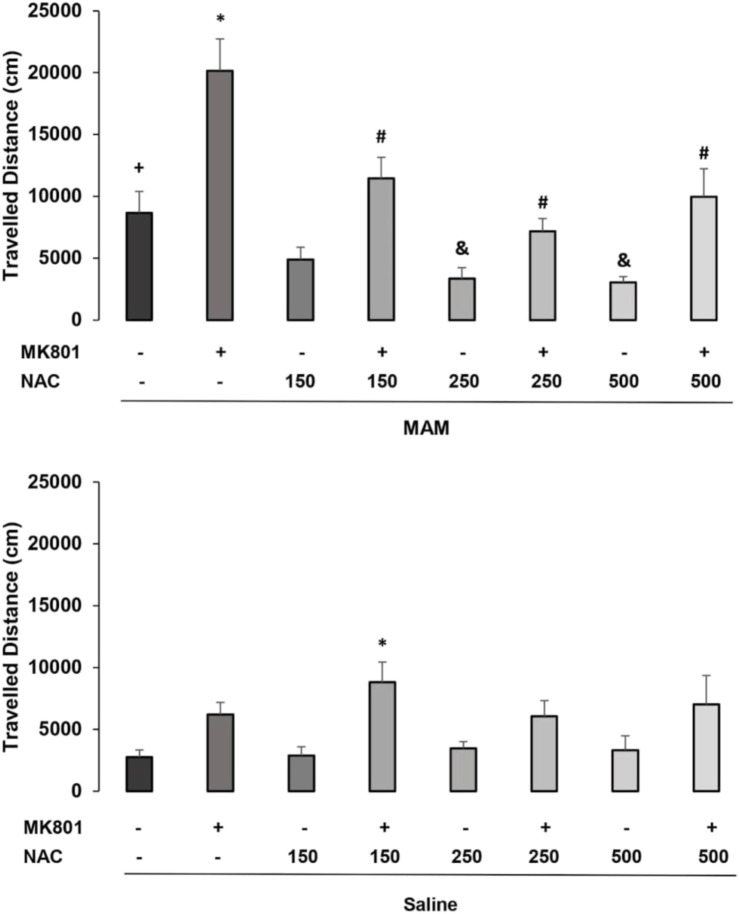
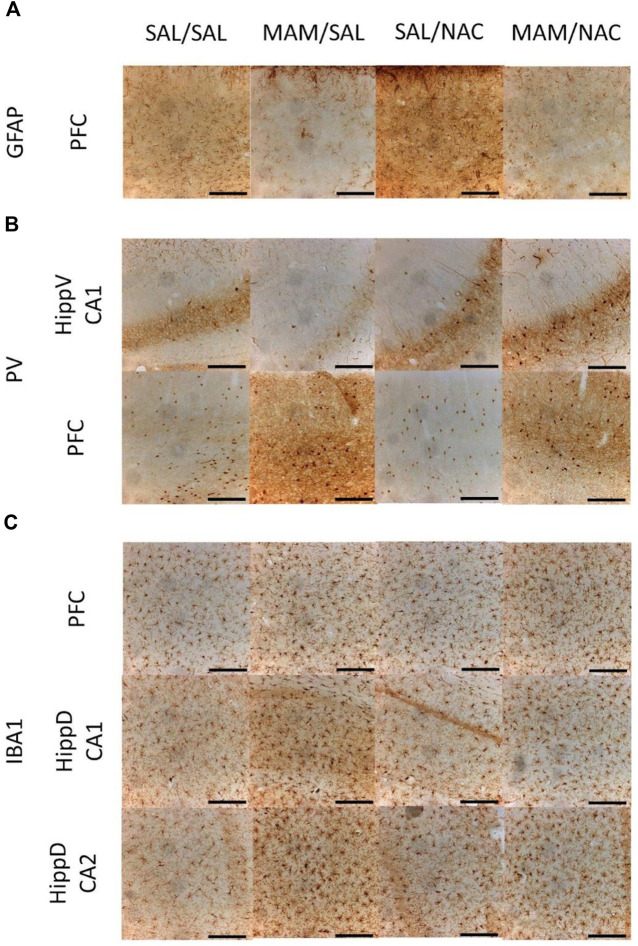
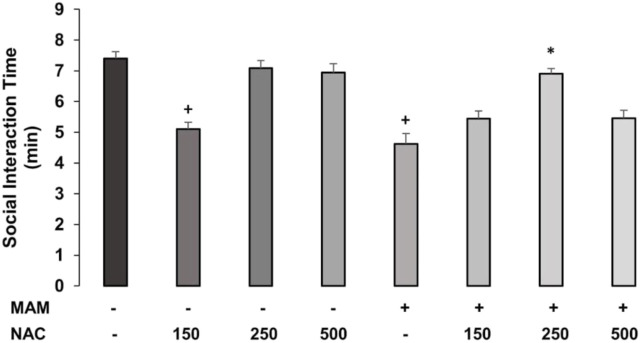
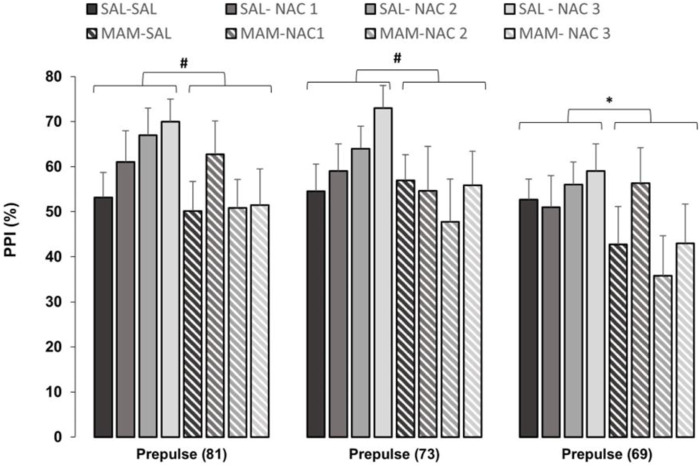
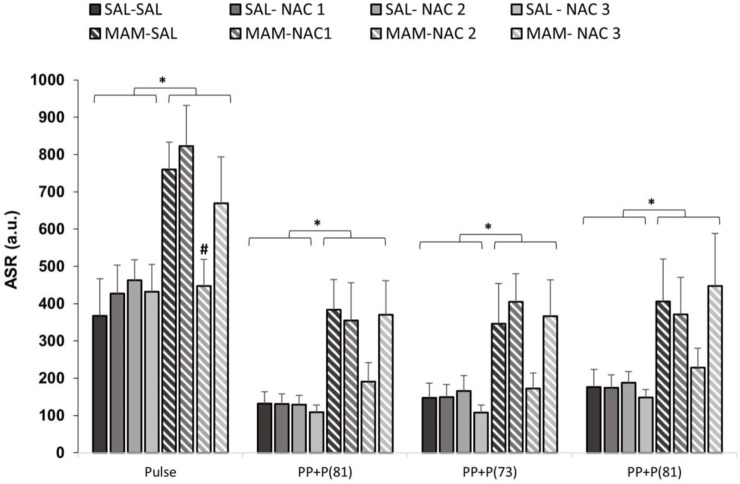
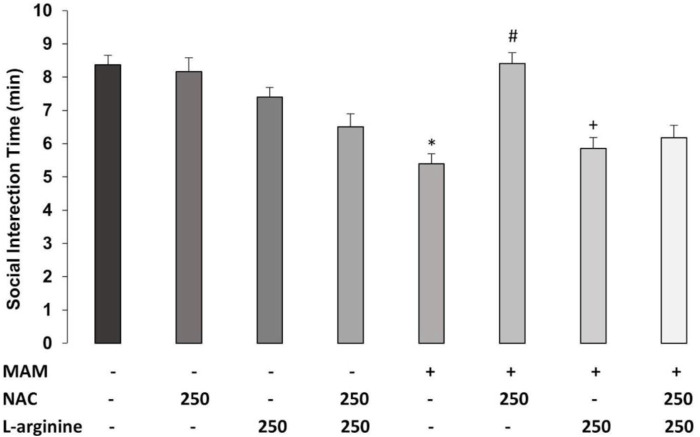
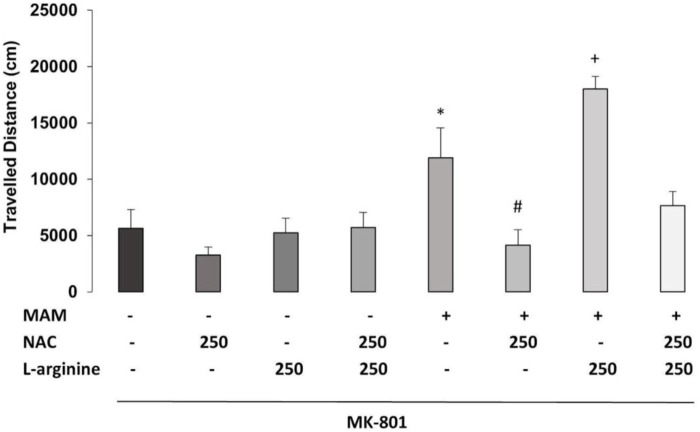
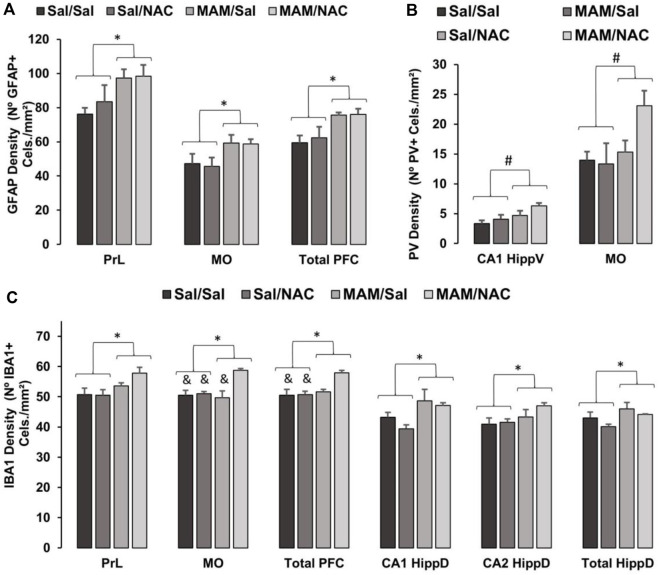
The disruption of neurodevelopment is a hypothesis for the emergence of schizophrenia. Some evidence supports the hypothesis that a redox imbalance could account for the developmental impairments associated with schizophrenia. Additionally, there is a deficit in glutathione (GSH), a main antioxidant, in this disorder. The injection of metilazoximetanol acetate (MAM) on the 17th day of gestation in Wistar rats recapitulates the neurodevelopmental and oxidative stress hypothesis of schizophrenia. The offspring of rats exposed to MAM treatment present in early adulthood behavioral and neurochemical deficits consistent with those seen in schizophrenia. The present study investigated if the acute and chronic (250 mg/kg) treatment during adulthood with N-acetyl-L-cysteine (NAC), a GSH precursor, can revert the behavioral deficits [hyperlocomotion, prepulse inhibition (PPI), and social interaction (SI)] in MAM rats and if the NAC-chronic-effects could be canceled by L-arginine (250 mg/kg, i.p, for 5 days), nitric oxide precursor. Analyses of markers involved in the inflammatory response, such as astrocytes (glial fibrillary acid protein, GFAP) and microglia (binding adapter molecule 1, Iba1), and parvalbumin (PV) positive GABAergic, were conducted in the prefrontal cortex [PFC, medial orbital cortex (MO) and prelimbic cortex (PrL)] and dorsal and ventral hippocampus [CA1, CA2, CA3, and dentate gyrus (DG)] in rats under chronic treatment with NAC. MAM rats showed decreased time of SI and increased locomotion, and both acute and chronic NAC treatments were able to recover these behavioral deficits. L-arginine blocked NAC behavioral effects. MAM rats presented increases in GFAP density at PFC and Iba1 at PFC and CA1. NAC increased the density of Iba1 cells at PFC and of PV cells at MO and CA1 of the ventral hippocampus. The results indicate that NAC recovered the behavioral deficits observed in MAM rats through a mechanism involving nitric oxide. Our data suggest an ongoing inflammatory process in MAM rats and support a potential antipsychotic effect of NAC.
神经发育障碍是精神分裂症发病的一种假说。一些证据支持氧化还原失衡可能是导致精神分裂症相关发育障碍的原因这一假说。此外,在这种疾病中,主要抗氧化剂谷胱甘肽(GSH)存在不足。在妊娠第17天给Wistar大鼠注射醋酸甲氯唑醇(MAM)再现了精神分裂症的神经发育和氧化应激假说。暴露于MAM治疗的大鼠后代在成年早期出现与精神分裂症患者一致的行为和神经化学缺陷。本研究调查了成年期用GSH前体N-乙酰-L-半胱氨酸(NAC)进行急性和慢性(250mg/kg)治疗是否能逆转MAM大鼠的行为缺陷[运动亢进、前脉冲抑制(PPI)和社交互动(SI)],以及L-精氨酸(250mg/kg,腹腔注射,持续5天)(一氧化氮前体)是否能消除NAC的慢性影响。对慢性NAC治疗的大鼠前额叶皮质[PFC、内侧眶额皮质(MO)和前边缘皮质(PrL)]以及背侧和腹侧海马体[CA1、CA2、CA3和齿状回(DG)]中参与炎症反应的标志物进行了分析,这些标志物包括星形胶质细胞(胶质纤维酸性蛋白,GFAP)、小胶质细胞(结合衔接分子1,Iba1)和小白蛋白(PV)阳性的γ-氨基丁酸能神经元。MAM大鼠的SI时间减少,运动增加,急性和慢性NAC治疗均能恢复这些行为缺陷。L-精氨酸阻断了NAC的行为效应。MAM大鼠PFC区的GFAP密度以及PFC和CA1区的Iba1增加。NAC增加了PFC区Iba1细胞的密度以及腹侧海马体MO和CA1区PV细胞的密度。结果表明,NAC通过一种涉及一氧化氮的机制恢复了MAM大鼠中观察到的行为缺陷。我们的数据表明MAM大鼠中存在持续的炎症过程,并支持NAC的潜在抗精神病作用。