Sabo Bishir, Abdullahi Auwal, Badaru Umaru Muhammad, Saeys Wim, Truijen Steven
Department of Physiotherapy, Bayero University Kano, 70001 Kano, Nigeria.
Department of Physiotherapy, Ahmadu Bello University Teaching Hospital, Zaria, Nigeria.
Transl Neurosci. 2022 Jul 14;13(1):181-190. doi: 10.1515/tnsci-2022-0228. eCollection 2022 Jan 1.
The aim of this study is to determine the factors that affect patients' ability to carry out high dose of massed practice.
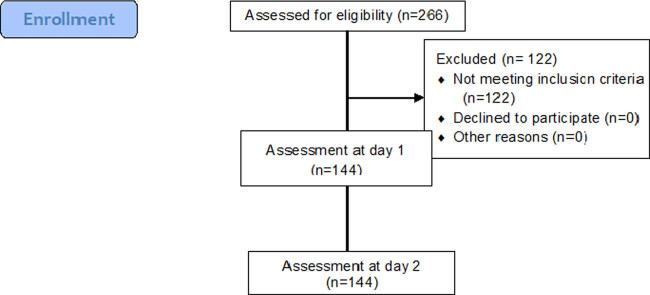
Patients with stroke were included in the study if they had no severe impairment in motor and cognitive functions. Dose of massed practice, motor function, perceived amount and quality of use of the arm in the real world, wrist and elbow flexors spasticity, dominant hand stroke, presence of shoulder pain, and central post-stroke pain were assessed on the first day. Dose of massed practice was assessed again on the second day. The data were analyzed using descriptive statistics and linear multiple regression.
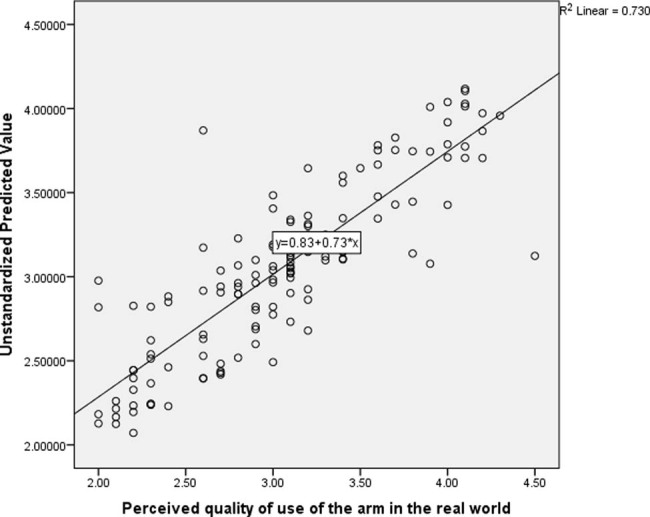
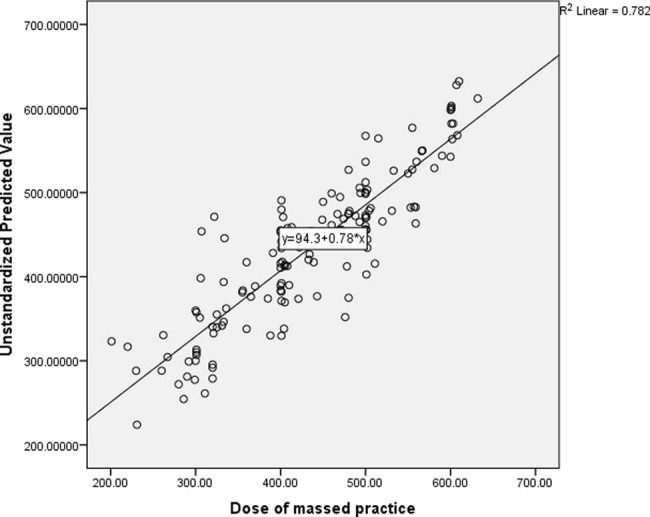
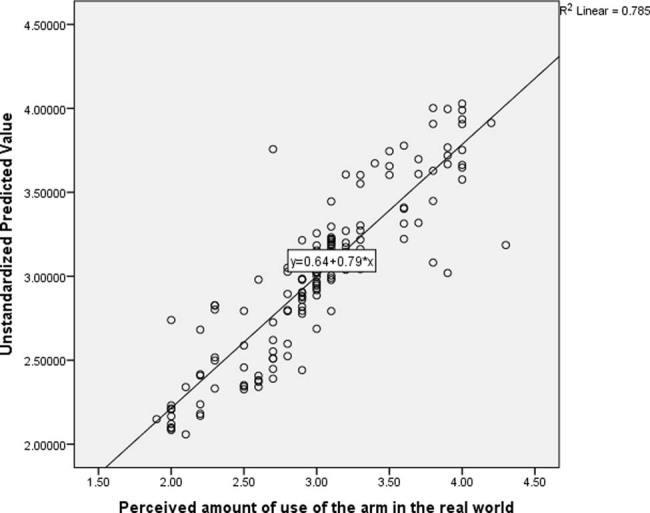
Only motor function ( -0.310, = 0.787, < 0.001), perceived amount of use ( 0.300, = 0.823; 95% CI = 0.34-107.224, = 0.049), severity of shoulder pain ( -0.155, = -0.472, = 0.019), wrist flexors spasticity ( -0.154, = -0.421, = 0.002), age ( -0.129, = -0.366, = 0.018), dominant hand stroke ( -0.091, = -0.075, = 0.041), and sex ( -0.090, = -0.161, = 0.036) significantly influenced patients' ability to carry out high dose of massed practice.
Many factors affect patients' ability to carry out high dose of massed practice. Understanding these factors can help in designing appropriate rehabilitation.
本研究旨在确定影响患者进行高剂量集中练习能力的因素。
如果中风患者在运动和认知功能方面没有严重损伤,则纳入本研究。在第一天评估集中练习剂量、运动功能、现实世界中手臂的使用感知量和质量、手腕和肘部屈肌痉挛、优势手中风、肩部疼痛的存在以及中风后中枢性疼痛。在第二天再次评估集中练习剂量。使用描述性统计和线性多元回归分析数据。
只有运动功能(β=-0.310,t=-0.787,P<0.001)、使用感知量(β=0.300,t=0.823;95%CI=0.34-107.224,P=0.049)、肩部疼痛严重程度(β=-0.155,t=-0.472,P=0.019)、手腕屈肌痉挛(β=-0.154,t=-0.421,P=0.002)、年龄(β=-0.129,t=-0.366,P=0.018)、优势手中风(β=-0.091,t=-0.075,P=0.041)和性别(β=-0.090,t=-0.161,P=0.036)显著影响患者进行高剂量集中练习的能力。
许多因素影响患者进行高剂量集中练习的能力。了解这些因素有助于设计适当的康复方案。