Kim Jung Hyun, Oh Byung-Mo, Seo Han Gil, Hyun Sung Eun, Han Jong Tae, Kang Dae Hee, Lee Woo Hyung
Department of Rehabilitation Medicine, Seoul National University Hospital, Seoul, Republic of Korea.
Biomedical Research Institute, Seoul National University Hospital, Seoul, Republic of Korea Korea.
PLoS One. 2024 Dec 30;19(12):e0310178. doi: 10.1371/journal.pone.0310178. eCollection 2024.
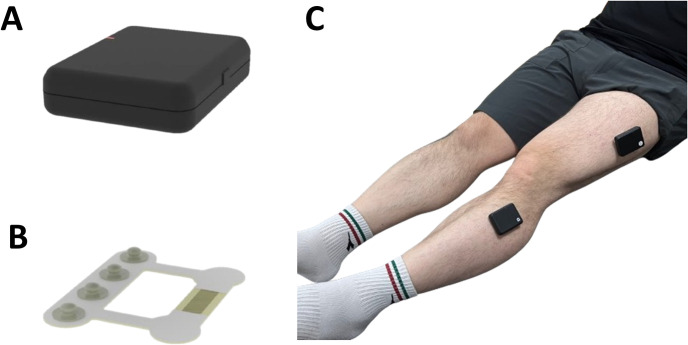
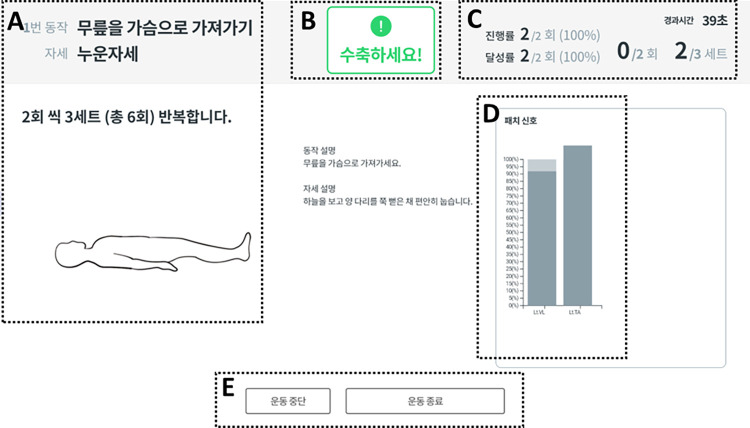
The dosage and intensity of physical therapy are crucial factors influencing the motor recovery of the hemiplegic lower limb in patients with subacute stroke. Biofeedback using wearable sensors may provide opportunities for patients with stroke to effectively guide self-exercises with monitoring of muscular activities in hemiplegic lower limbs. This study aims to explore the feasibility and safety of in-bed self-exercises based on electromyography sensor feedback in patients with subacute stroke.
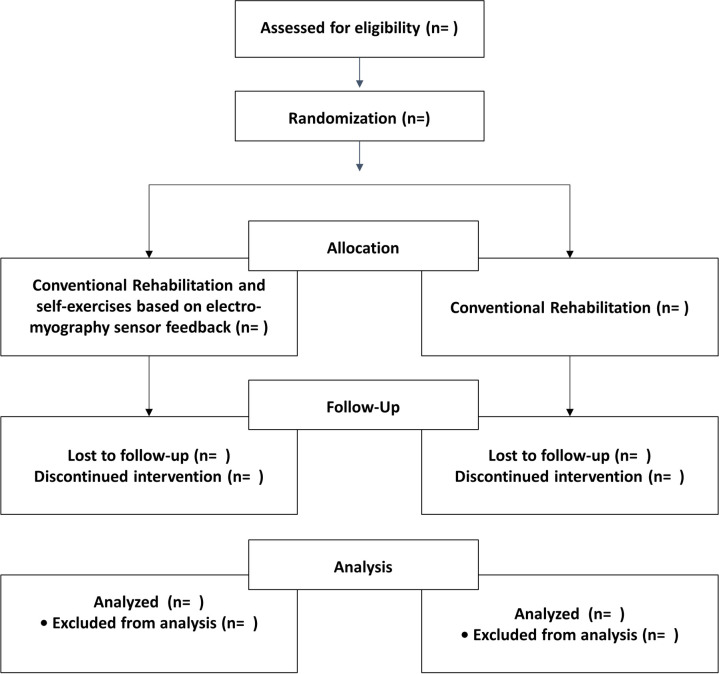
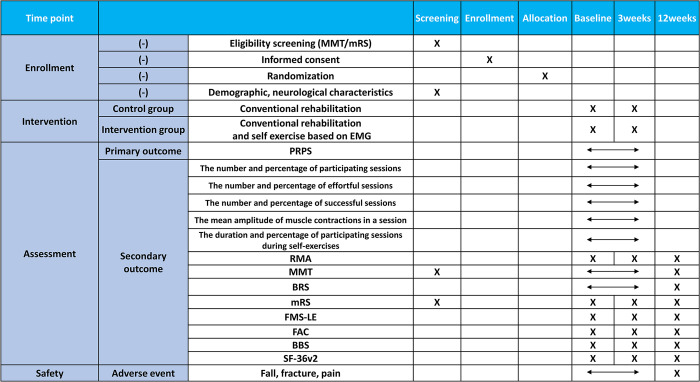
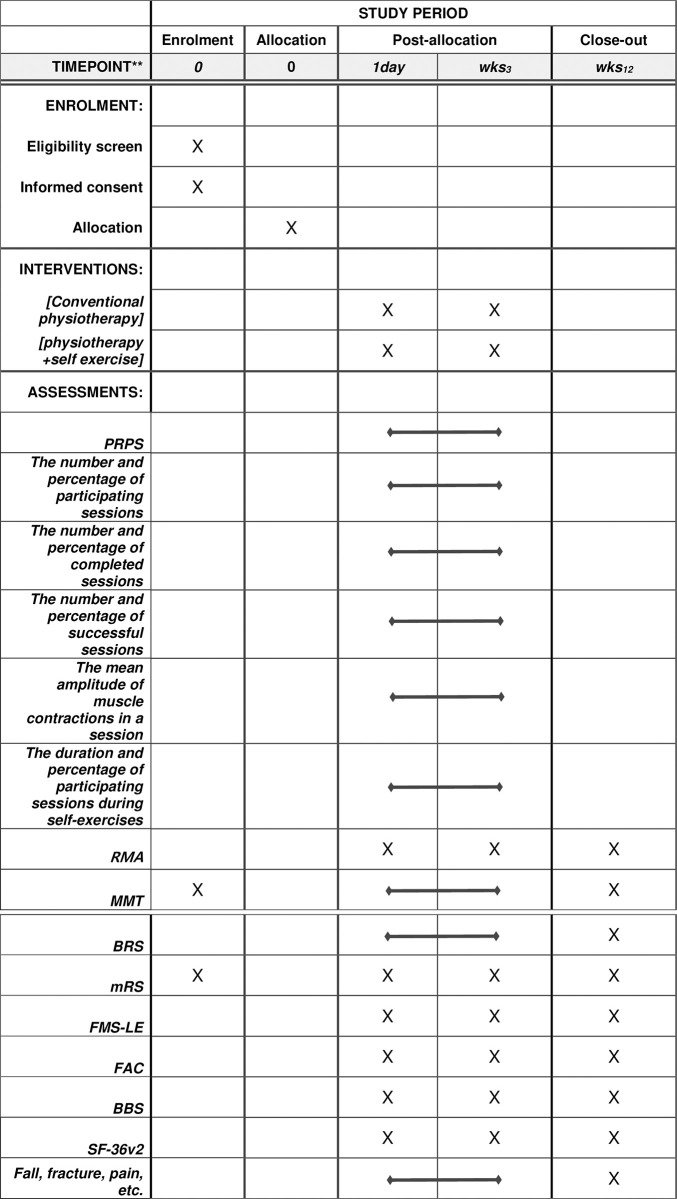
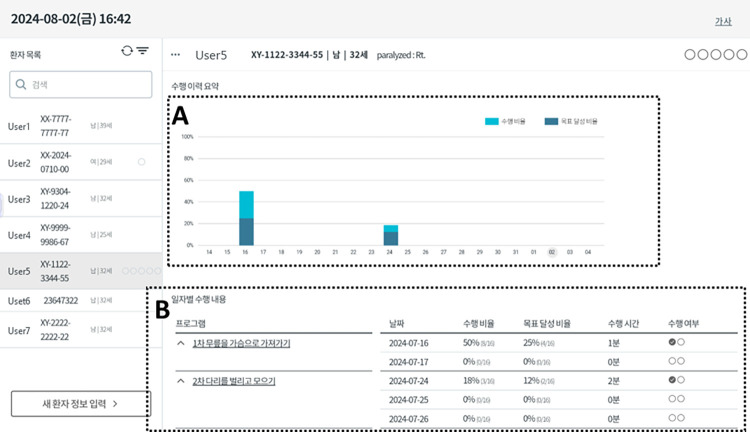
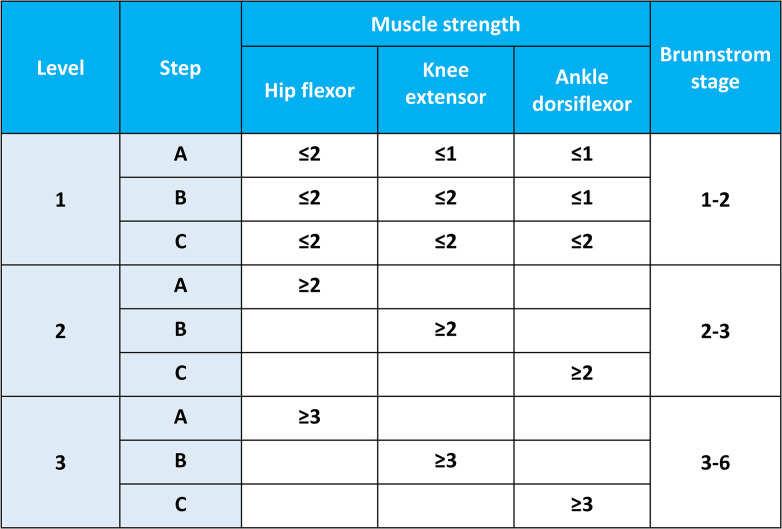
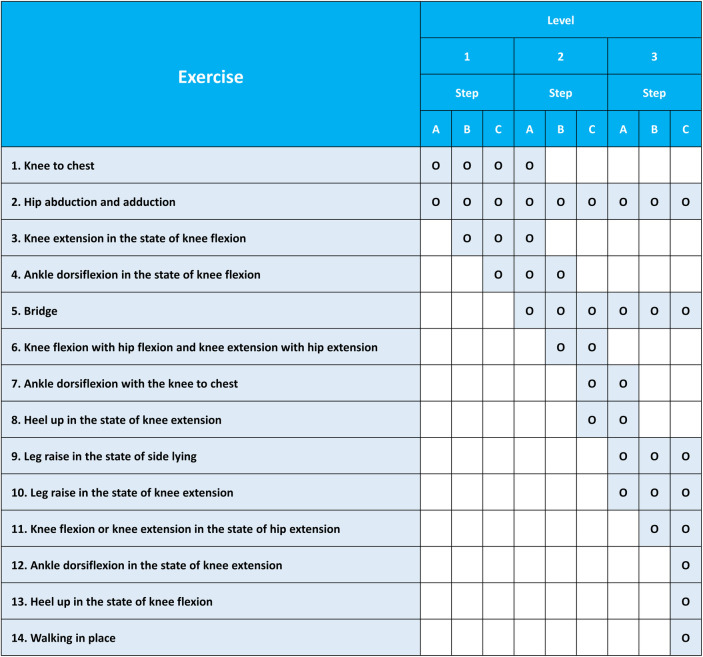
This is a pilot randomized controlled trial comparing conventional physical therapy with additional in-bed self-exercises based on electromyography sensor feedback and conventional physical therapy alone. The interventions will be adjusted according to the muscle strength and Brunnstrom recovery stage in the hemiplegic lower limbs. The primary outcome measure is the Pittsburgh Rehabilitation Participation Scale. The secondary outcome measures include the number and percentage of participating sessions, number and percentage of effortful sessions, number and percentage of successful sessions, mean amplitude of muscle contractions in a session, duration and percentage of participating sessions during self-exercises, Rivermead Motor Assessment, Manual Muscle Test, Brunnstrom recovery stage, Fugl-Meyer assessment, Berg Balance Scale, Functional Ambulation Category, modified Rankin scale, and Short-Form Health Survey 36 version 2.
The results will be described in future studies.
This clinical trial will estimate the feasibility and safety of in-bed self-exercises based on electromyography sensor feedback in patients with subacute stroke. If the expected results are achieved in this study, stroke rehabilitation methods will be enriched.
clinicialtrials.gov, NCT05820815.
物理治疗的剂量和强度是影响亚急性脑卒中患者偏瘫下肢运动恢复的关键因素。使用可穿戴传感器的生物反馈可为脑卒中患者提供机会,在监测偏瘫下肢肌肉活动的同时有效指导自我锻炼。本研究旨在探讨基于肌电图传感器反馈的床上自我锻炼在亚急性脑卒中患者中的可行性和安全性。
这是一项前瞻性随机对照试验,将传统物理治疗与基于肌电图传感器反馈的额外床上自我锻炼加传统物理治疗进行比较。干预措施将根据偏瘫下肢的肌力和Brunnstrom恢复阶段进行调整。主要结局指标是匹兹堡康复参与量表。次要结局指标包括参与疗程的数量和百分比、有效疗程的数量和百分比、成功疗程的数量和百分比、一次疗程中肌肉收缩的平均幅度、自我锻炼期间参与疗程的持续时间和百分比、Rivermead运动评估、徒手肌力测试、Brunnstrom恢复阶段、Fugl-Meyer评估、Berg平衡量表、功能步行分类、改良Rankin量表和简明健康调查36项第2版。
结果将在未来的研究中描述。
本临床试验将评估基于肌电图传感器反馈的床上自我锻炼在亚急性脑卒中患者中的可行性和安全性。如果本研究取得预期结果,将丰富脑卒中康复方法。
clinicaltrials.gov,NCT05820815。