Basso Julia C, Oberlin Douglas J, Satyal Medha K, O'Brien Catherine E, Crosta Christen, Psaras Zach, Metpally Anvitha, Suzuki Wendy A
Department of Human Nutrition, Foods, and Exercise, Virginia Tech, VA, United States.
School of Neuroscience, Virginia Tech, VA, United States.
Front Hum Neurosci. 2022 Jul 12;16:833149. doi: 10.3389/fnhum.2022.833149. eCollection 2022.
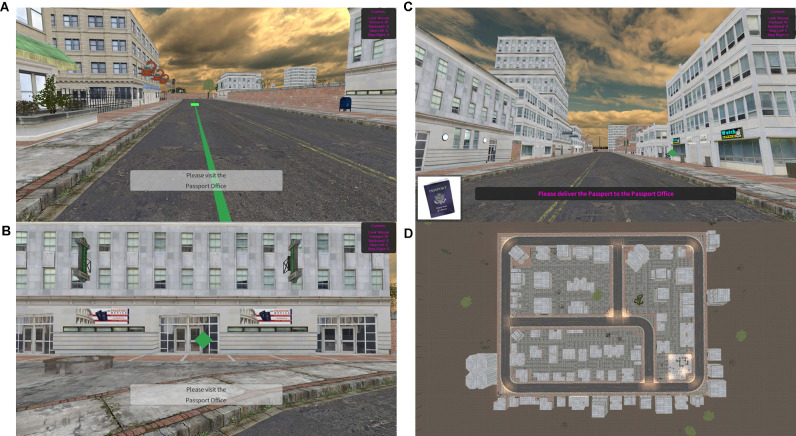
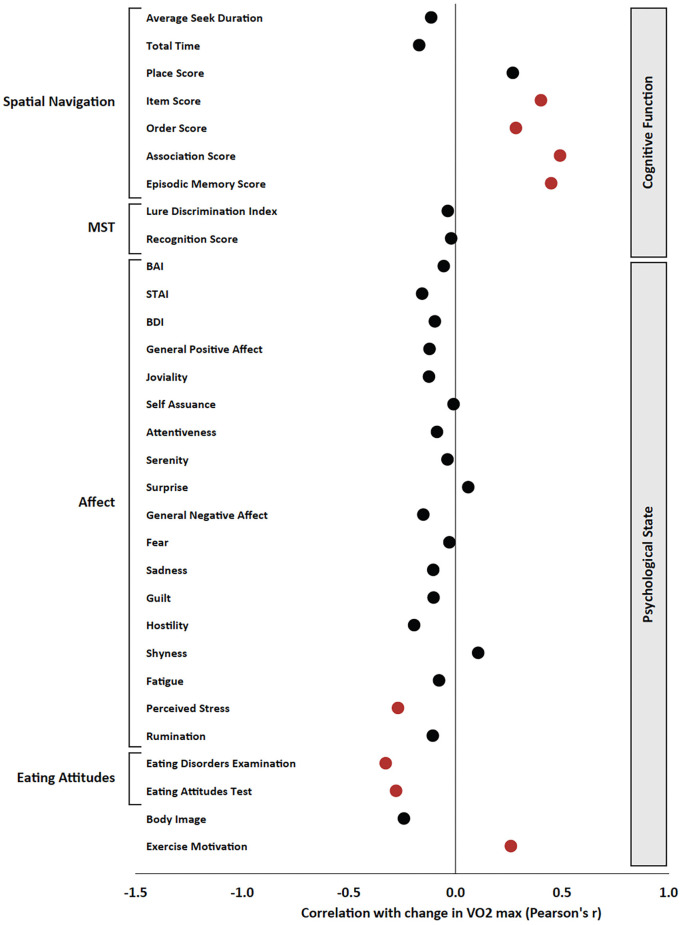
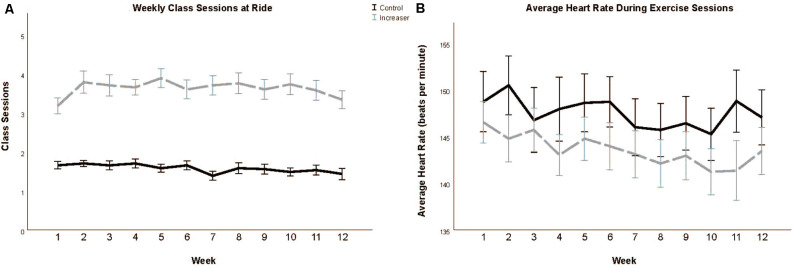
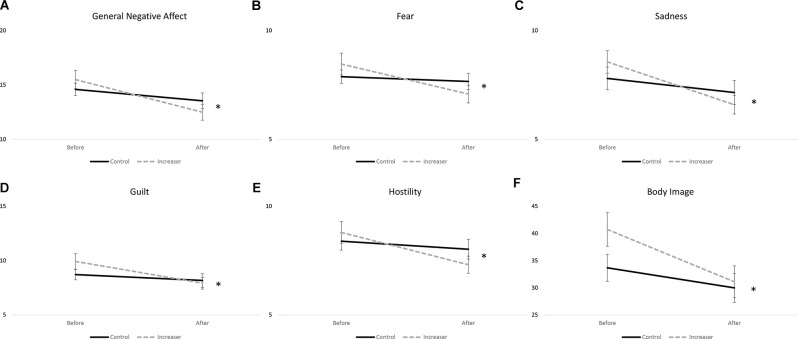
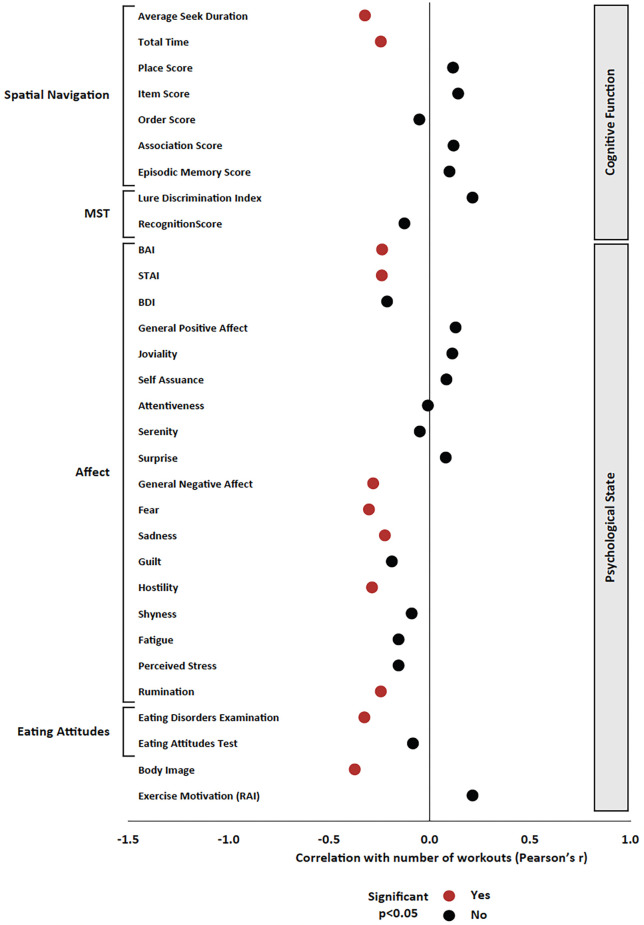
Regular physical exercise can decrease the risk for obesity, diabetes, and cardiovascular disease, increase life expectancy, and promote psychological health and neurocognitive functioning. Cross-sectional studies show that cardiorespiratory fitness level (VO max) is associated with enhanced brain health, including improved mood state and heightened cognitive performance. Interventional studies are consistent with these cross-sectional studies, but most have focused on low-fit populations. Few such studies have asked if increasing levels of physical activity in moderately fit people can significantly enhance mood, motivation, and cognition. Therefore, the current study investigated the effects of increasing aerobic exercise in moderately fit individuals on psychological state and cognitive performance. We randomly assigned moderately fit healthy adults, 25-59 years of age, who were engaged in one or two aerobic exercise sessions per week to either maintain their exercise regimen ( = 41) or increase their exercise regimen (i.e., 4-7 aerobic workouts per week; = 39) for a duration of 3 months. Both before and after the intervention, we assessed aerobic capacity using a modified cardiorespiratory fitness test, and hippocampal functioning various neuropsychological assessments including a spatial navigation task and the Mnemonic Similarity Task as well as self-reported measures including the Positive and Negative Affect Scale, Beck Anxiety Inventory, State-Trait Anxiety Inventory, Perceived Stress Scale, Rumination Scale, Eating Disorders Examination, Eating Attitudes Test, Body Attitudes Test, and Behavioral Regulation of Exercise Questionnaire. Consistent with our initial working hypotheses, we found that increasing exercise significantly decreased measures of negative affect, including fear, sadness, guilt, and hostility, as well as improved body image. Further, we found that the total number of workouts was significantly associated with improved spatial navigation abilities and body image as well as reduced anxiety, general negative affect, fear, sadness, hostility, rumination, and disordered eating. In addition, increases in fitness levels were significantly associated with improved episodic memory and exercise motivation as well as decreased stress and disordered eating. Our findings are some of the first to indicate that in middle-aged moderately-fit adults, continuing to increase exercise levels in an already ongoing fitness regimen is associated with additional benefits for both psychological and cognitive health.
定期体育锻炼可以降低肥胖、糖尿病和心血管疾病的风险,延长预期寿命,并促进心理健康和神经认知功能。横断面研究表明,心肺适能水平(最大摄氧量)与增强的大脑健康相关,包括改善情绪状态和提高认知表现。干预性研究与这些横断面研究结果一致,但大多数研究都集中在身体状况不佳的人群。很少有此类研究探讨过,在身体状况中等的人群中增加身体活动水平是否能显著改善情绪、动力和认知。因此,本研究调查了增加有氧运动对身体状况中等的个体的心理状态和认知表现的影响。我们将年龄在25至59岁、每周进行一到两次有氧运动的身体状况中等的健康成年人随机分为两组,一组维持其运动方案(n = 41),另一组增加运动方案(即每周进行4至7次有氧运动;n = 39),为期3个月。在干预前后,我们使用改良的心肺适能测试评估有氧能力,并通过各种神经心理学评估,包括空间导航任务和记忆相似性任务,以及自我报告测量,包括正负情感量表、贝克焦虑量表、状态-特质焦虑量表、感知压力量表、沉思量表、饮食失调检查、饮食态度测试、身体态度测试和运动行为调节问卷,来评估海马功能。与我们最初的工作假设一致,我们发现增加运动量显著降低了负面情绪的指标,包括恐惧、悲伤、内疚和敌意,同时改善了身体形象。此外,我们发现锻炼的总次数与改善空间导航能力和身体形象以及降低焦虑、总体负面情绪、恐惧、悲伤、敌意、沉思和饮食失调显著相关。此外,体能水平的提高与情景记忆和运动动力的改善以及压力和饮食失调的减少显著相关。我们的研究结果首次表明,在中年身体状况中等的成年人中,在已有的健身方案中持续增加运动水平对心理和认知健康都有额外的益处。