Department of Plant Breeding, Justus Liebig University, Giessen, Germany.
Uganda National Gene Bank, National Agricultural Research Laboratories, Kampala, Uganda.
BMC Plant Biol. 2022 Jul 29;22(1):378. doi: 10.1186/s12870-022-03770-y.
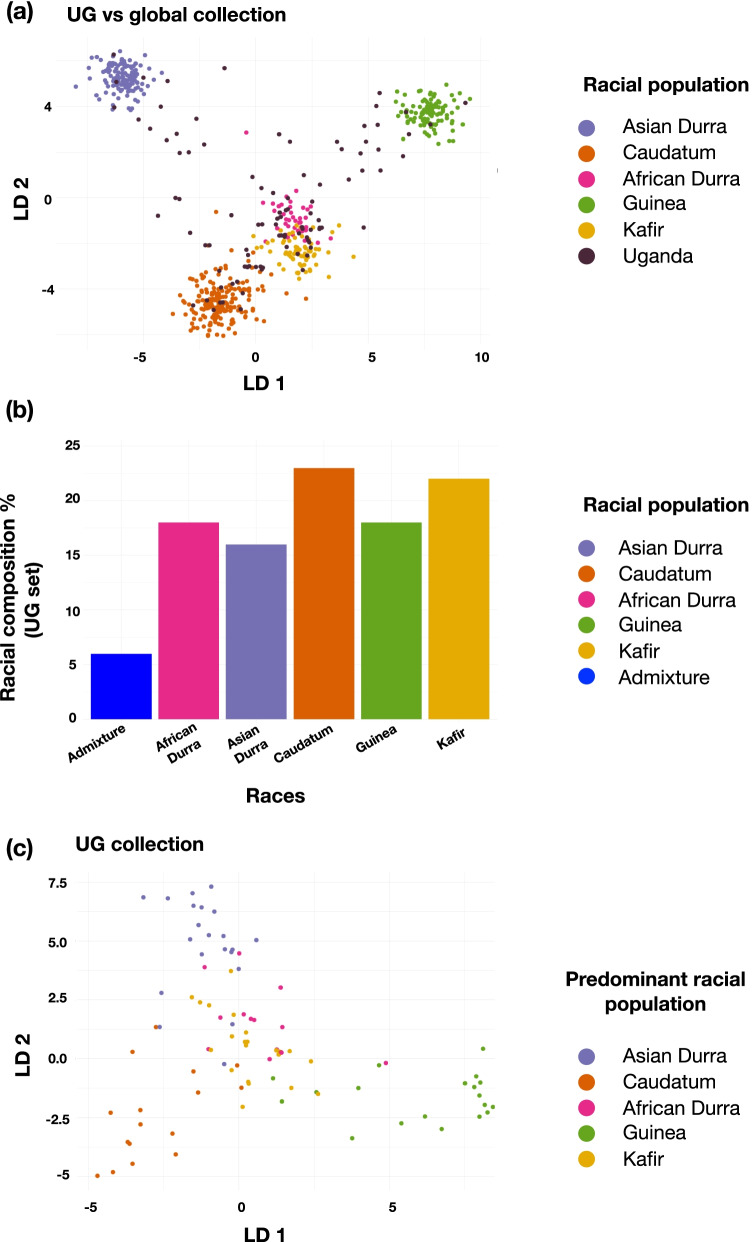
The Plant Genetic Resources Centre at the Uganda National Gene Bank houses has over 3000 genetically diverse landraces and wild relatives of Sorghum bicolor accessions. This genetic diversity resource is untapped, under-utilized, and has not been systematically incorporated into sorghum breeding programs. In this study, we characterized the germplasm collection using whole-genome SNP markers (DArTseq). Discriminant analysis of principal components (DAPC) was implemented to study the racial ancestry of the accessions in comparison to a global sorghum diversity set and characterize the sub-groups present in the Ugandan (UG) germplasm.
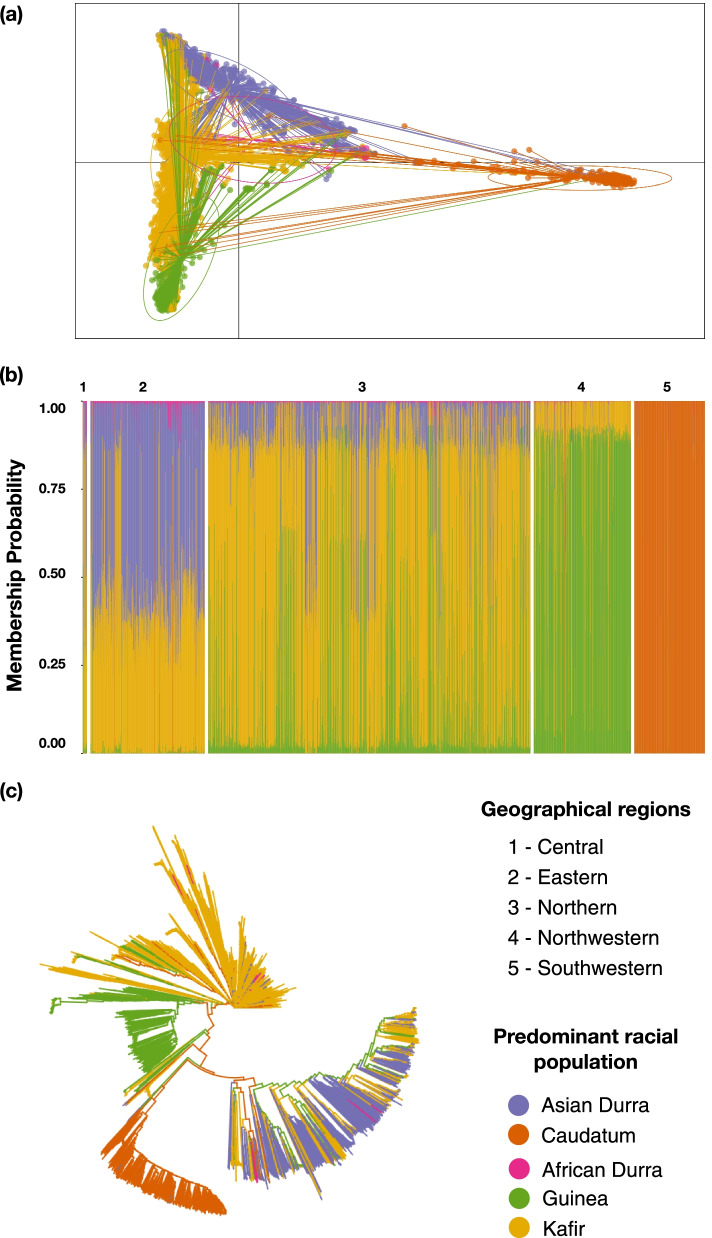
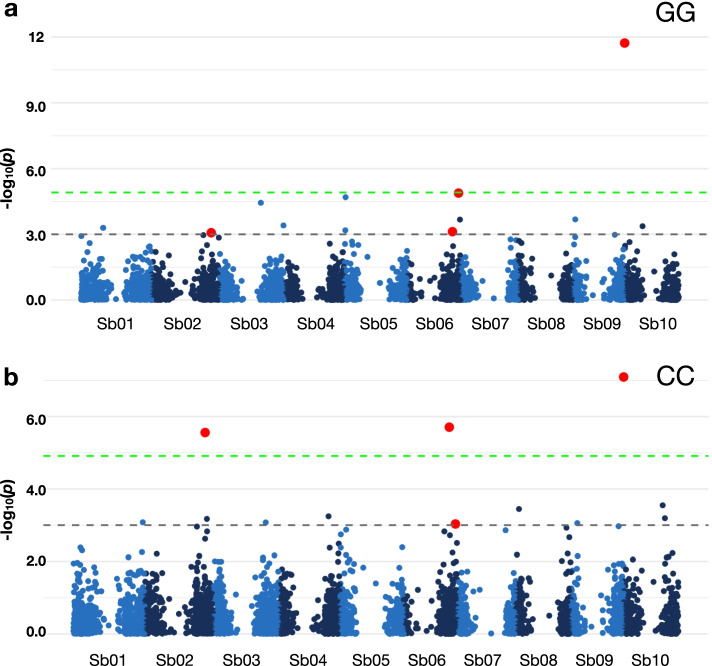
Population structure and phylogenetic analysis revealed the presence of five subgroups among the Ugandan accessions. The samples from the highlands of the southwestern region were genetically distinct as compared to the rest of the population. This subset was predominated by the caudatum race and unique in comparison to the other sub-populations. In this study, we detected QTL for juvenile cold tolerance by genome-wide association studies (GWAS) resulting in the identification of 4 markers associated (-log10p > 3) to survival under cold stress under both field and climate chamber conditions, located on 3 chromosomes (02, 06, 09). To our best knowledge, the QTL on Sb09 with the strongest association was discovered for the first time.
This study demonstrates how genebank genomics can potentially facilitate effective and efficient usage of valuable, untapped germplasm collections for agronomic trait evaluation and subsequent allele mining. In face of adverse climate change, identification of genomic regions potentially involved in the adaptation of Ugandan sorghum accessions to cooler climatic conditions would be of interest for the expansion of sorghum production into temperate latitudes.
乌干达国家基因库的植物遗传资源中心收藏了超过 3000 份具有遗传多样性的高粱地方品种和野生近缘种。这些遗传多样性资源尚未得到充分利用,也没有系统地纳入高粱的育种计划。在本研究中,我们使用全基因组 SNP 标记(DArTseq)对种质资源进行了特征描述。主成分判别分析(DAPC)用于研究与全球高粱多样性数据集相比,这些材料的种族起源,并对乌干达(UG)种质中存在的亚群进行特征描述。
群体结构和系统发育分析显示,乌干达材料存在 5 个亚群。与其他种群相比,来自西南部高地的样本在遗传上是独特的。该亚群以 caudatum 种为主,与其他亚群不同。在本研究中,我们通过全基因组关联研究(GWAS)检测到了幼苗耐冷性的 QTL,结果鉴定出 4 个与田间和气候室条件下冷胁迫下存活相关的标记(-log10p>3),位于 3 条染色体(02、06、09)上。据我们所知,Sb09 上与最强关联的 QTL 是首次被发现。
本研究表明,基因库基因组学如何能够有效地利用有价值的、未开发的种质资源进行农艺性状评价和随后的等位基因挖掘。在应对不利的气候变化时,确定与乌干达高粱品种适应较凉爽气候条件相关的基因组区域将有助于将高粱生产扩展到温带地区。