Department of Laboratory Medicine, Ruijin Hospital, Shanghai Jiao Tong University School of Medicine, Shanghai, 201801, China.
Hum Genomics. 2022 Jul 29;16(1):29. doi: 10.1186/s40246-022-00404-0.
Spinocerebellar ataxia type 1 (SCA1) is a neurodegenerative disease caused by a polyglutamine expansion in the ataxin-1 protein. The pathogenic mechanism resulting in SCA1 is still unclear. Protein-protein interactions affect the function and stability of ataxin-1.
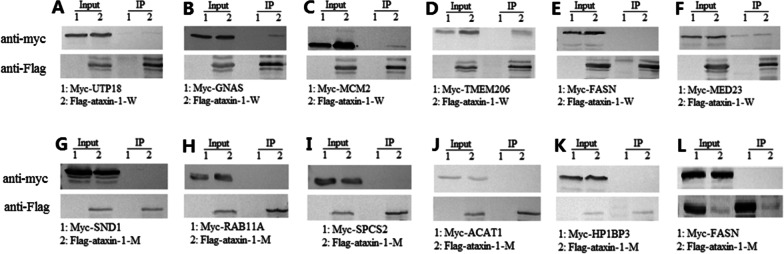
Wild-type and mutant ataxin-1 were expressed in HEK-293T cells. The levels of expression were assessed using real-time polymerase chain reaction (PCR) and Western blots. Co-immunoprecipitation was done in HEK-293T cells expressing exogenous wild-type and mutant ataxin-1 using anti-Flag antibody following by tandem affinity purification in order to study protein-protein interactions. The candidate interacting proteins were validated by immunoprecipitation. Chromatin immunoprecipitation and high-throughput sequencing and RNA immunoprecipitation and high-throughput sequencing were performed using HEK-293T cells expressing wild-type or mutant ataxin-1.
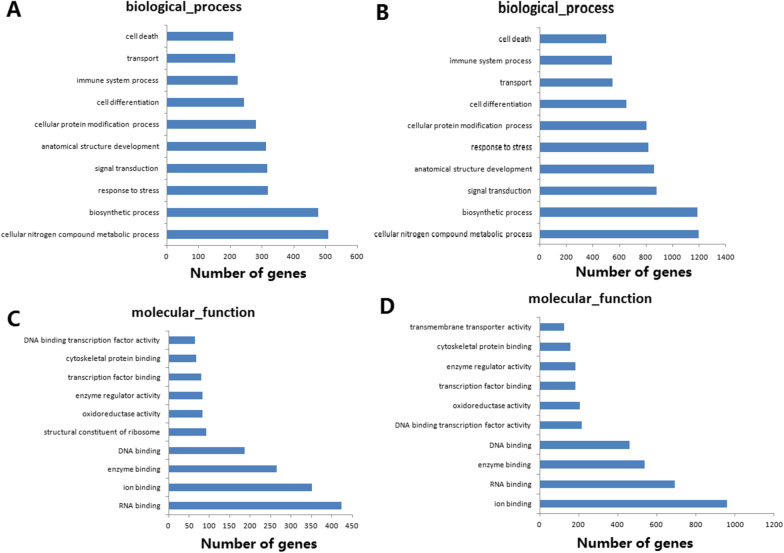
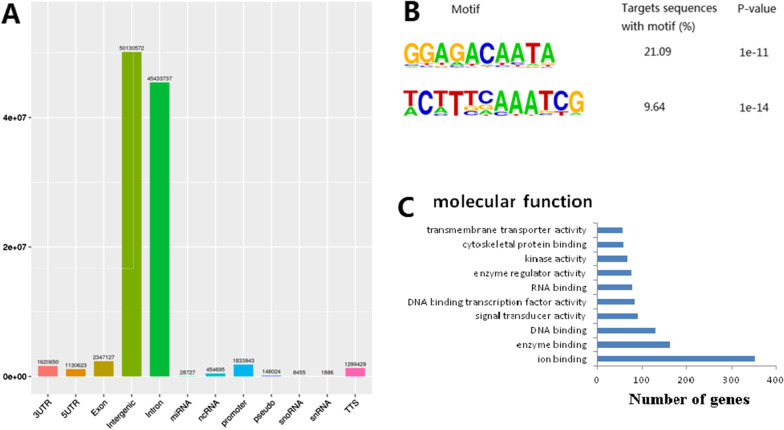
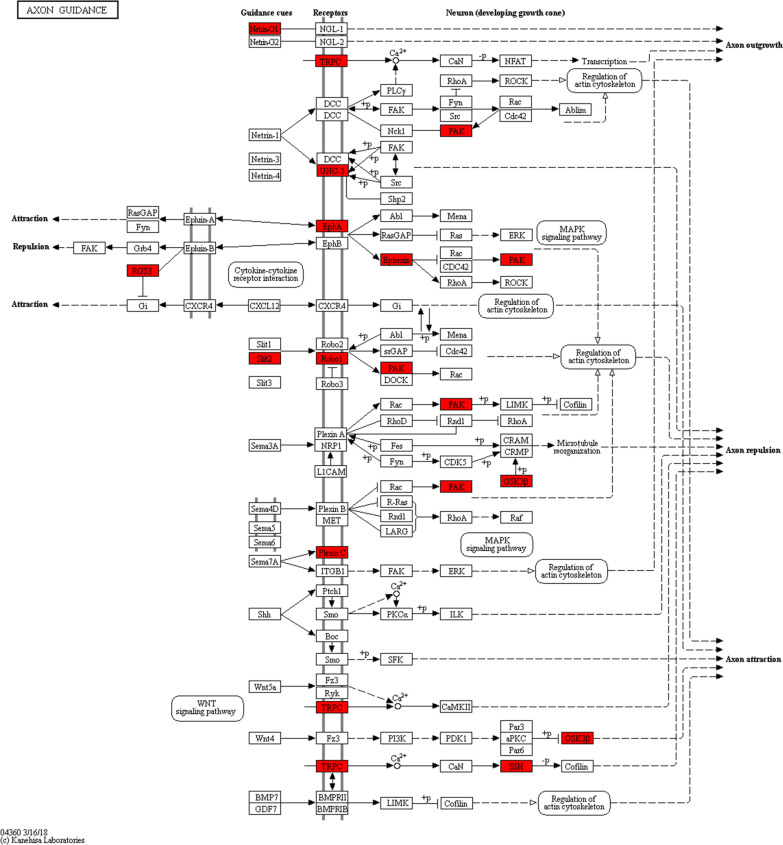
In this study using HEK-293T cells, we found that wild-type ataxin-1 interacted with MCM2, GNAS, and TMEM206, while mutant ataxin-1 lost its interaction with MCM2, GNAS, and TMEM206. Two ataxin-1 binding targets containing the core GGAG or AAAT were identified in HEK-293T cells using ChIP-seq. Gene Ontology analysis of the top ataxin-1 binding genes identified SLC6A15, NTF3, KCNC3, and DNAJC6 as functional genes in neurons in vitro. Ataxin-1 also was identified as an RNA-binding protein in HEK-293T cells using RIP-seq, but the polyglutamine expansion in the ataxin-1 had no direct effects on the RNA-binding activity of ataxin-1.
An expanded polyglutamine tract in ataxin-1 might interfere with protein-protein or protein-DNA interactions but had little effect on protein-RNA interactions. This study suggested that the dysfunction of protein-protein or protein-DNA interactions is involved in the pathogenesis of SCA1.
脊髓小脑性共济失调 1 型(SCA1)是一种由ataxin-1 蛋白中的多聚谷氨酰胺扩展引起的神经退行性疾病。导致 SCA1 的发病机制尚不清楚。蛋白质-蛋白质相互作用会影响 ataxin-1 的功能和稳定性。
在 HEK-293T 细胞中表达野生型和突变型 ataxin-1。使用实时聚合酶链反应(PCR)和 Western blot 评估表达水平。在表达外源性野生型和突变型 ataxin-1 的 HEK-293T 细胞中,使用抗 Flag 抗体进行共免疫沉淀,然后通过串联亲和纯化来研究蛋白质-蛋白质相互作用。通过免疫沉淀验证候选相互作用蛋白。使用表达野生型或突变型 ataxin-1 的 HEK-293T 细胞进行染色质免疫沉淀和高通量测序以及 RNA 免疫沉淀和高通量测序。
在这项使用 HEK-293T 细胞的研究中,我们发现野生型 ataxin-1 与 MCM2、GNAS 和 TMEM206 相互作用,而突变型 ataxin-1 失去了与 MCM2、GNAS 和 TMEM206 的相互作用。使用 ChIP-seq 在 HEK-293T 细胞中鉴定出含有核心 GGAG 或 AAAT 的两个 ataxin-1 结合靶标。对 top ataxin-1 结合基因的基因本体分析确定 SLC6A15、NTF3、KCNC3 和 DNAJC6 为体外神经元中的功能基因。使用 RIP-seq 还在 HEK-293T 细胞中鉴定出 ataxin-1 为 RNA 结合蛋白,但 ataxin-1 中的多聚谷氨酰胺扩展对 ataxin-1 的 RNA 结合活性没有直接影响。
ataxin-1 中扩展的多聚谷氨酰胺带可能干扰蛋白质-蛋白质或蛋白质-DNA 相互作用,但对蛋白质-RNA 相互作用影响不大。本研究表明,蛋白质-蛋白质或蛋白质-DNA 相互作用的功能障碍参与了 SCA1 的发病机制。