Shanghai Institute of Medical Genetics, Shanghai Children's Hospital, Shanghai Jiao Tong University School of Medicine, Shanghai, China.
Department of Histo-Embryology, Genetics and Developmental Biology, Shanghai Jiao Tong University School of Medicine, Shanghai, China.
Cell Prolif. 2022 Oct;55(10):e13298. doi: 10.1111/cpr.13298. Epub 2022 Jul 30.
Mesoderm, derived from a new layer between epiblast and hypoblast during gastrulation, can differentiate into various tissues, including muscles, bones, kidneys, blood, and the urogenital system. However, systematic elucidation of mesoderm characteristics and specific markers remains a challenge. This study aims to screen and identify candidate genes important for mesoderm development.
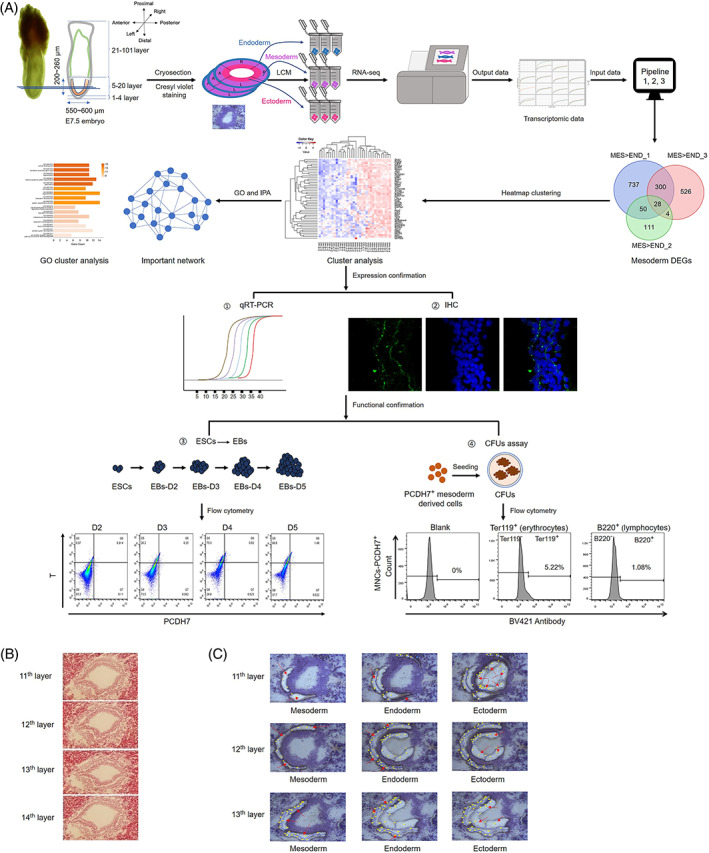
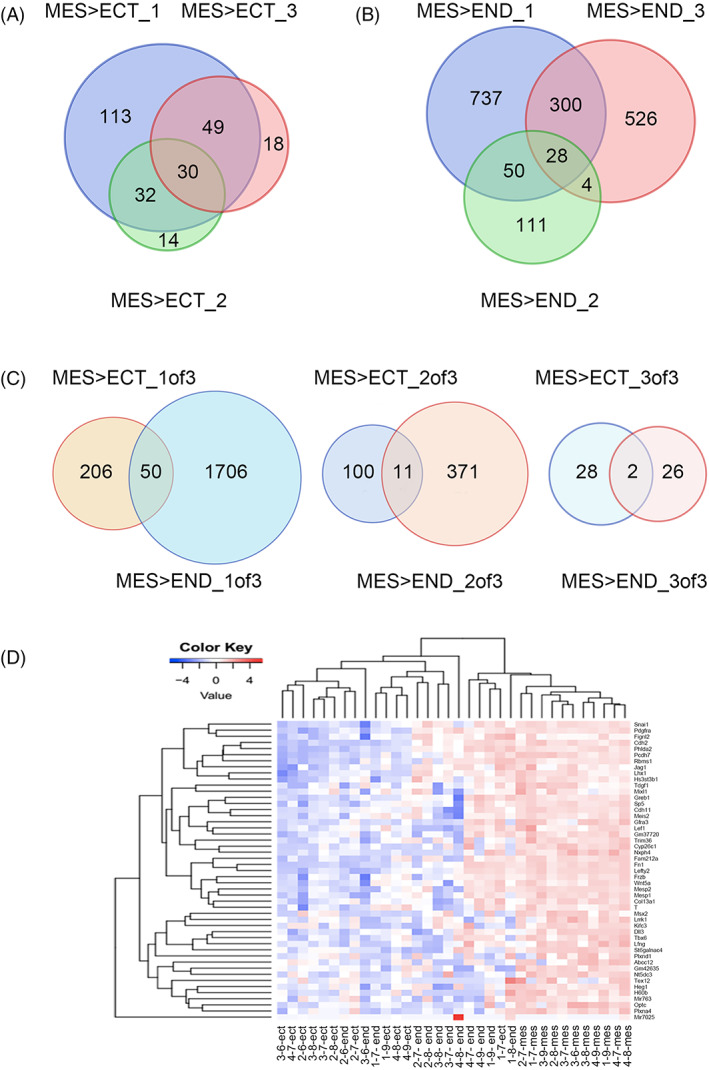
Cells originating from the three germ layers were obtained by laser capture microdissection, followed by microcellular RNA sequencing. Mesoderm-specific differentially expressed genes (DEGs) were identified by using a combination of three bioinformatics pipelines. Candidate mesoderm-specific genes expression were verified by real-time quantitative polymerase chain reaction analysis and immunohistochemistry. Functional analyses were verified by ESCs-EBs differentiation and colony-forming units (CFUs) assay.
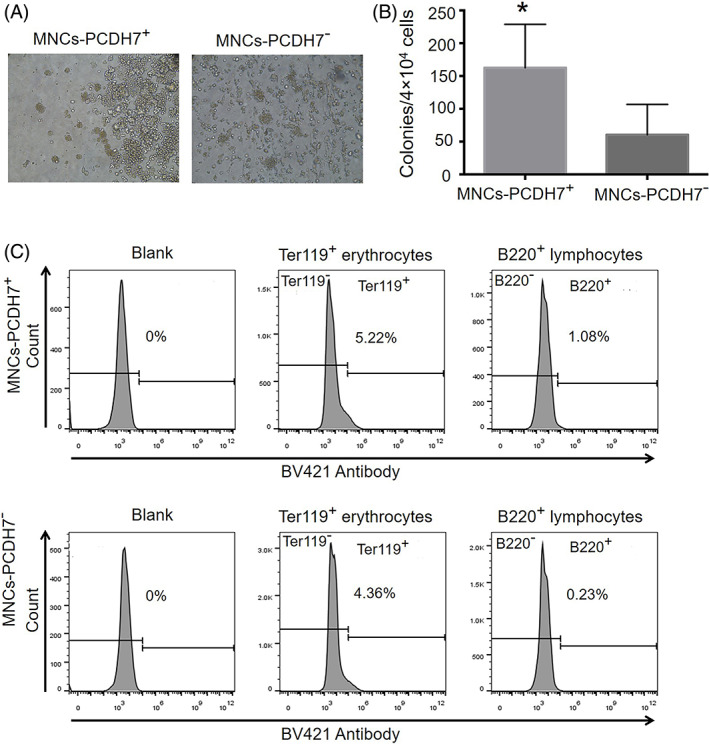
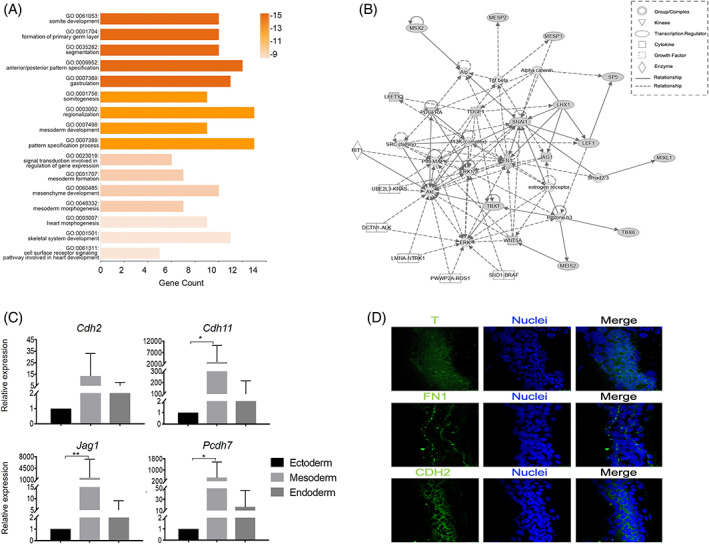
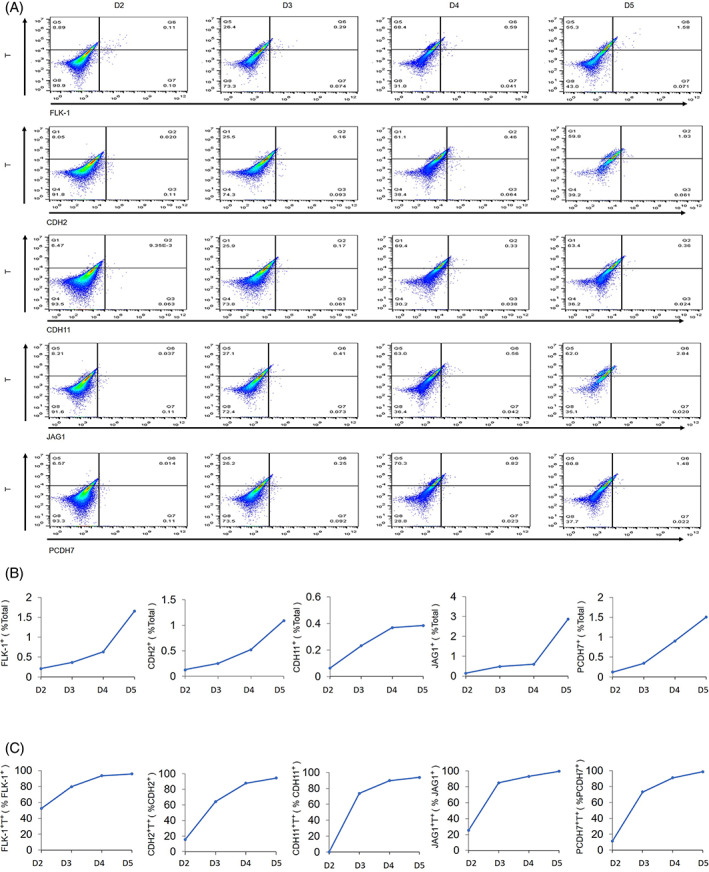
A total of 1962 differentially expressed mesoderm genes were found, out of which 50 were candidate mesoderm-specific DEGs which mainly participate in somite development, formation of the primary germ layer, segmentation, mesoderm development, and pattern specification process by GO analysis. Representative genes Cdh2, Cdh11, Jag1, T, Fn-1, and Pcdh7 were specifically expressed in mesoderm among the three germ layers. Pcdh7 as membrane-associated gene has hematopoietic-relevant functions identified by ESCs-EBs differentiation and CFUs assay.
Spatial transcriptomic profiling with multi-method analysis and confirmation revealed candidate mesoderm progenitors. This approach appears to be efficient and reliable and can be extended to screen and validate candidate genes in various cellular systems.
中胚层来源于原肠胚形成过程中胚层和下胚层之间的新层,能够分化为多种组织,包括肌肉、骨骼、肾脏、血液和泌尿生殖系统。然而,中胚层特征和特异性标记物的系统阐明仍然是一个挑战。本研究旨在筛选和鉴定对中胚层发育重要的候选基因。
通过激光捕获显微解剖获得来自三个胚层的细胞,然后进行微细胞 RNA 测序。通过结合三种生物信息学管道来识别中胚层特异性差异表达基因(DEG)。通过实时定量聚合酶链反应分析和免疫组织化学验证候选中胚层特异性基因的表达。通过 ESCs-EBs 分化和集落形成单位(CFUs)测定验证功能分析。
共发现 1962 个差异表达的中胚层基因,其中 50 个是候选中胚层特异性 DEG,通过 GO 分析主要参与体节发育、初级胚层形成、分段、中胚层发育和模式规范过程。代表性基因 Cdh2、Cdh11、Jag1、T、Fn-1 和 Pcdh7 在三个胚层中特异性表达于中胚层。Pcdh7 作为膜相关基因,通过 ESCs-EBs 分化和 CFUs 测定鉴定出与造血相关的功能。
多方法分析和验证的空间转录组谱揭示了候选中胚层祖细胞。这种方法似乎高效可靠,可以扩展到筛选和验证各种细胞系统中的候选基因。