Poultry Institute, Chinese Academy of Agriculture Science, Yangzhou, Jiangsu 225125, China.
Novogene Bioinformatics Institute, Beijing 10089, China.
J Adv Res. 2023 May;47:13-25. doi: 10.1016/j.jare.2022.07.005. Epub 2022 Jul 27.
Investigating the genetic footprints of historical temperature selection can get insights to the local adaptation and feasible influences of climate change on long-term population dynamics.
Chicken is a significative species to study genetic adaptation on account of its similar domestication track related to human activity with the most diversified varieties. Yet, few studies have demonstrated the genetic signatures of its adaptation to naturally tropical and frigid environments.
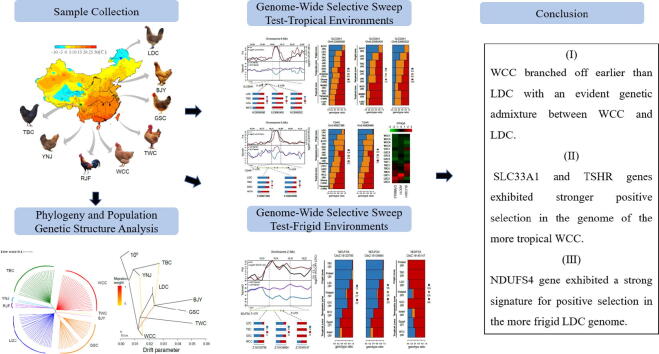
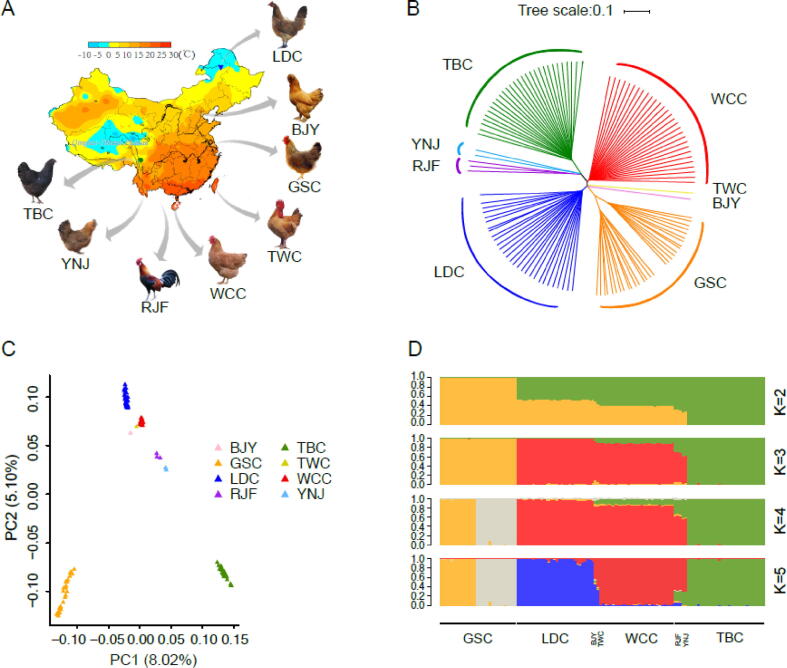
Here, we generated whole genome resequencing of 119 domesticated chickens in China including the following breeds which are in order of breeding environmental temperature from more tropical to more frigid: Wenchang chicken (WCC), green-shell chicken (GSC), Tibetan chicken (TBC), and Lindian chicken (LDC).
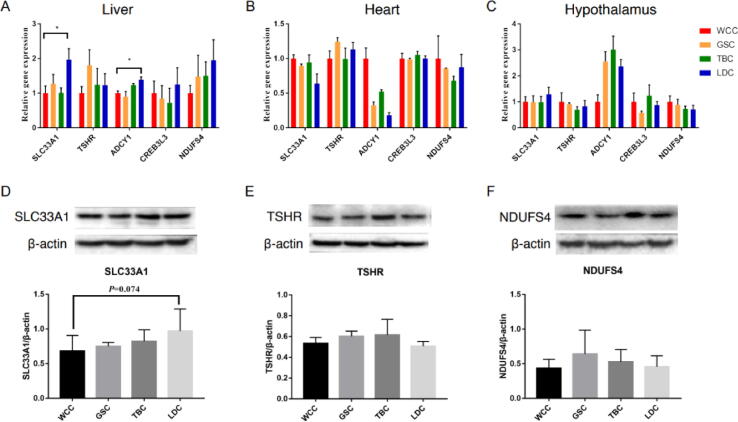
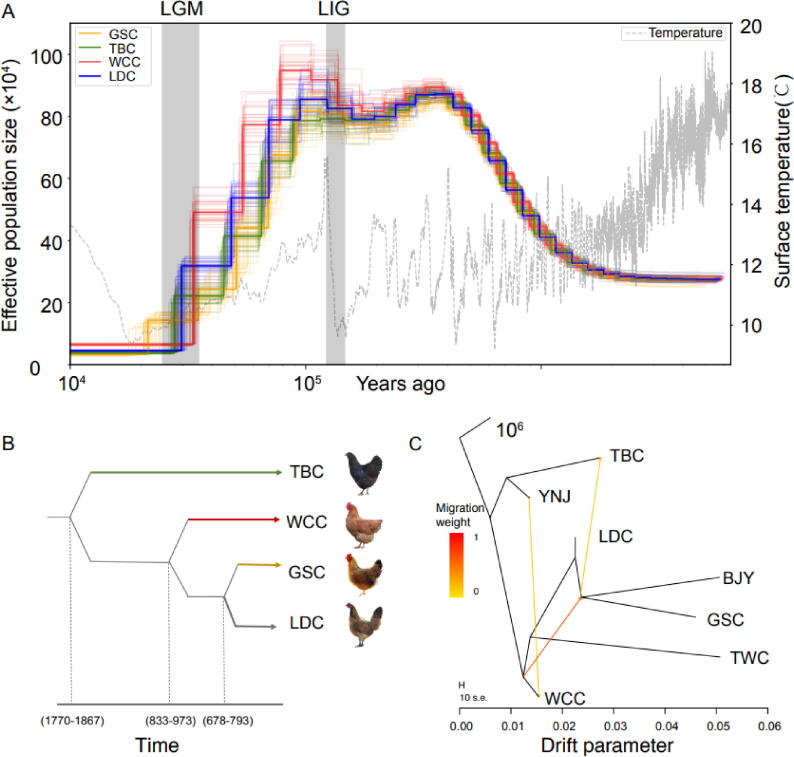
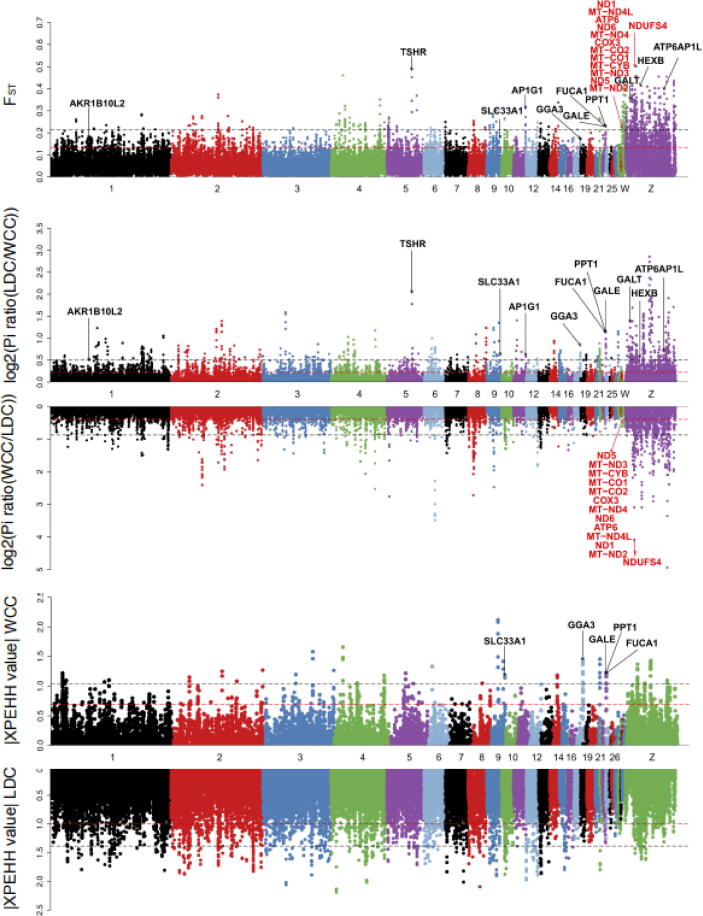
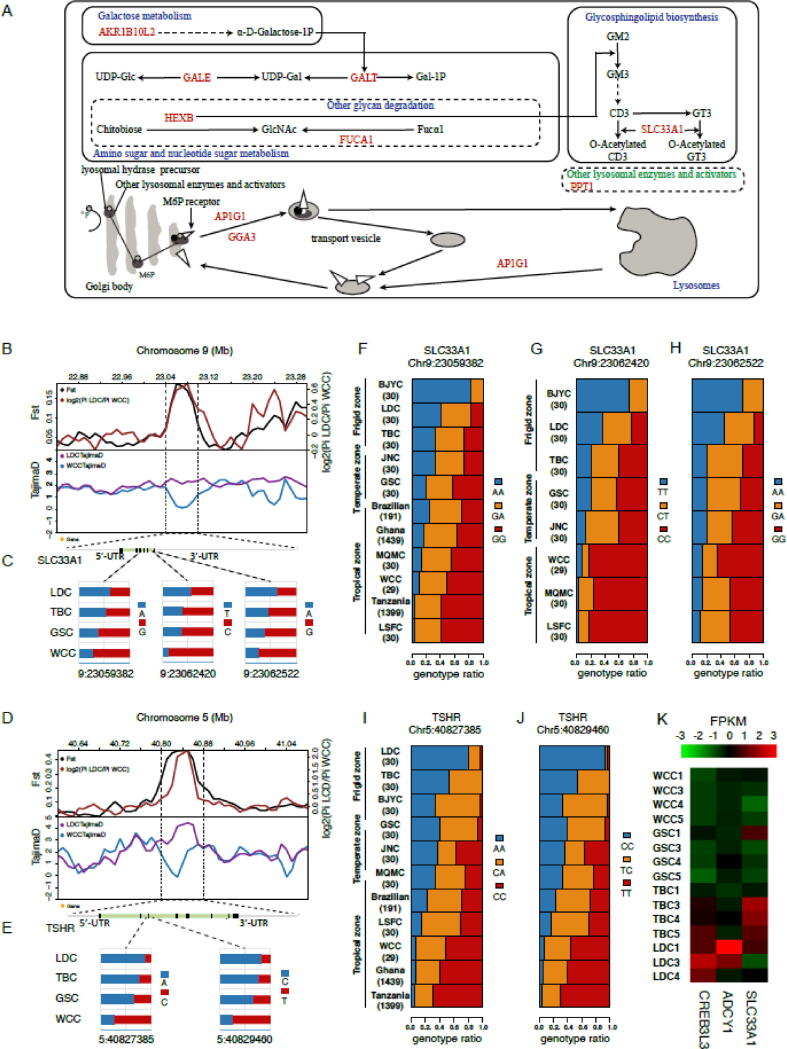
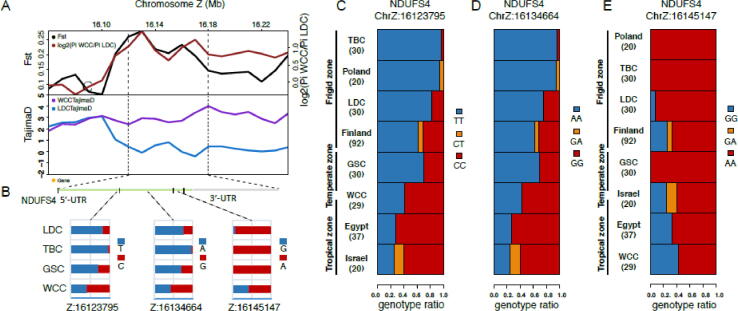
Our results showed WCC branched off earlier than LDC with an evident genetic admixture between WCC and LDC, suggesting their closer genetic relationship. Further comparative genomic analyses solute carrier family 33 member 1 (SLC33A1) and thyroid stimulating hormone receptor (TSHR) genes exhibited stronger signatures for positive selection in the genome of the more tropical WCC. Furthermore, genotype data from about 3,000 African local ecotypes confirmed that allele frequencies of single nucleotide polymorphisms (SNPs) in these 2 genes appeared strongly associated with tropical environment adaptation. In addition, the NADH:ubiquinone oxidoreductase subunit S4 (NDUFS4) gene exhibited a strong signature for positive selection in the LDC genome, and SNPs with marked allele frequency differences indicated a significant relationship with frigid environment adaptation.
Our findings partially clarify how selection footprints from environmental temperature stress can lead to advantageous genomic adaptions to tropical and frigid environments in poultry and provide a valuable resource for selective breeding of chickens.
研究历史温度选择的遗传痕迹可以深入了解当地的适应能力以及气候变化对长期人口动态的可行影响。
鸡是研究遗传适应的重要物种,因为它与人类活动有关的驯化轨迹与大多数多样化的品种相似。然而,很少有研究表明其对自然热带和寒冷环境的遗传适应特征。
在这里,我们对包括以下品种在内的 119 只中国驯化鸡进行了全基因组重测序,这些品种的养殖环境温度从热带到寒冷依次为:文昌鸡(WCC)、绿壳鸡(GSC)、藏鸡(TBC)和林甸鸡(LDC)。
我们的结果表明,WCC 比 LDC 更早分枝,WCC 和 LDC 之间存在明显的遗传混合,表明它们的遗传关系更密切。进一步的比较基因组分析解决了溶质载体家族 33 成员 1(SLC33A1)和促甲状腺激素受体(TSHR)基因在更热带的 WCC 基因组中表现出更强的正选择特征。此外,来自约 3000 个非洲当地生态型的基因型数据证实,这 2 个基因中的单核苷酸多态性(SNP)等位基因频率与热带环境适应呈强烈相关。此外,NADH:泛醌氧化还原酶亚基 S4(NDUFS4)基因在 LDC 基因组中表现出强烈的正选择特征,具有显著等位基因频率差异的 SNP 表明与寒冷环境适应具有显著关系。
我们的研究结果部分阐明了环境温度胁迫的选择足迹如何导致家禽对热带和寒冷环境的有利基因组适应,并为鸡的选择性育种提供了有价值的资源。