College of Arts, Media and Technology, Chiang Mai University, Chiang Mai, 50200, Thailand.
Research Group of Embedded Systems and Mobile Application in Health Science, College of Arts, Media and Technology, Chiang Mai University, Chiang Mai, 50200, Thailand.
BMC Med Inform Decis Mak. 2022 Jul 30;22(1):202. doi: 10.1186/s12911-022-01944-0.
Women's mobile health (m-health) applications are currently widely used for health education, medication, prevention of illness, etcetera. However, women are extremely sensitive to their design. While the number of m-health applications for women is increasing, many are of poor quality and have development issues.
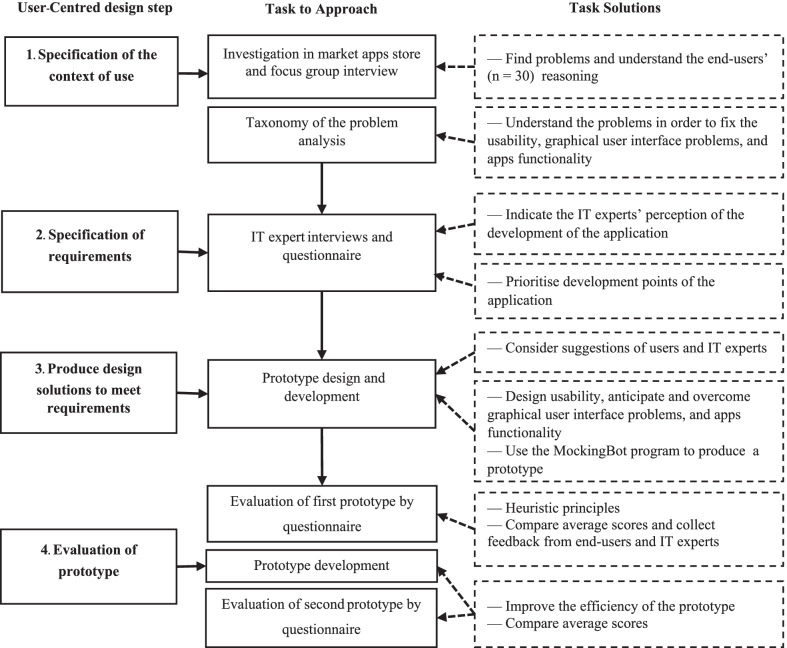
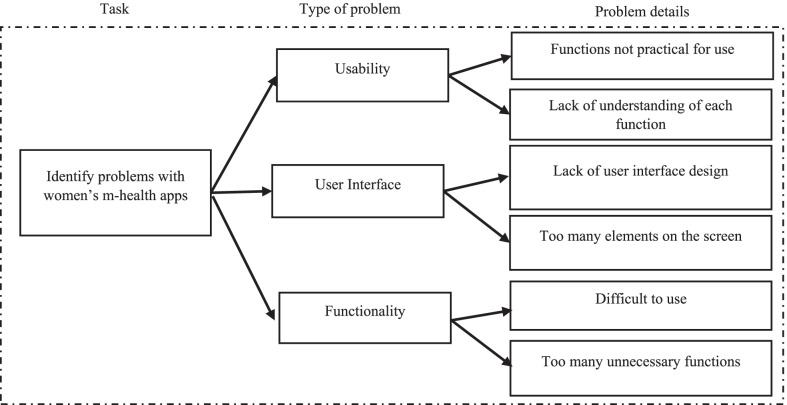
This paper aims to develop and evaluate an m-health application for Thai women based on a user-centred design (UCD). Current women's m-health applications were investigated to identify any lack of development in usability, functionality and graphical user interface. The results were evaluated and used to create criteria for the trial of a prototype application.
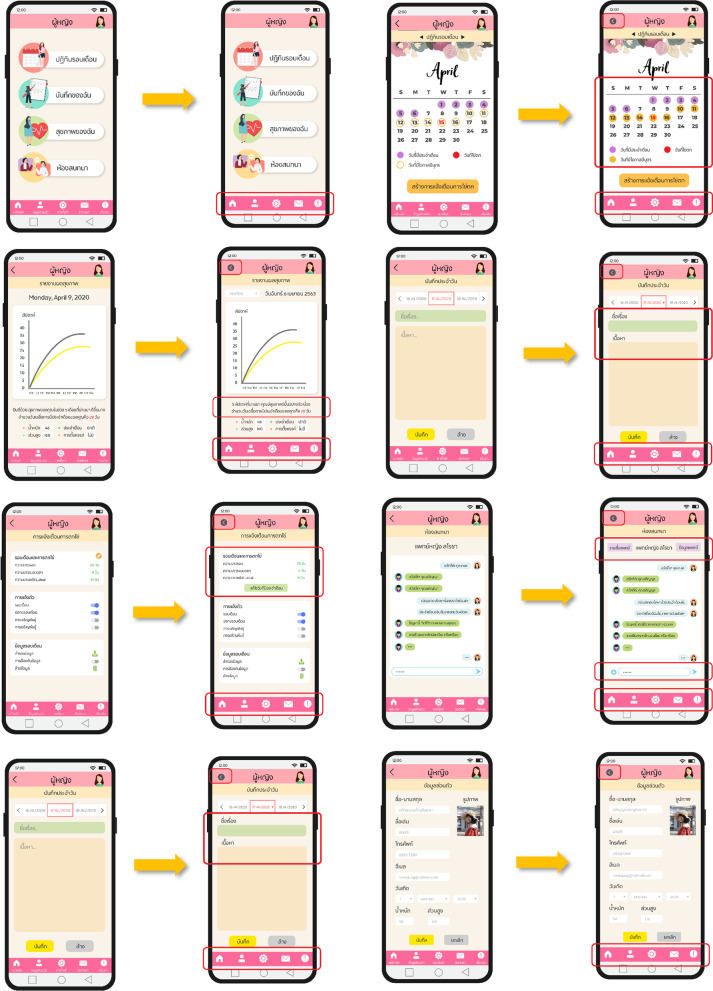
UCD methodology was used to design a graphical user interface, analyse the application's functionality, and enhance its usability. Data from thirty female end-users were collected and maintained locally, and thirteen information technology (IT) experts provided feedback on the prototype trial. Interviews and questionnaires were used to gather user data and identify problems.
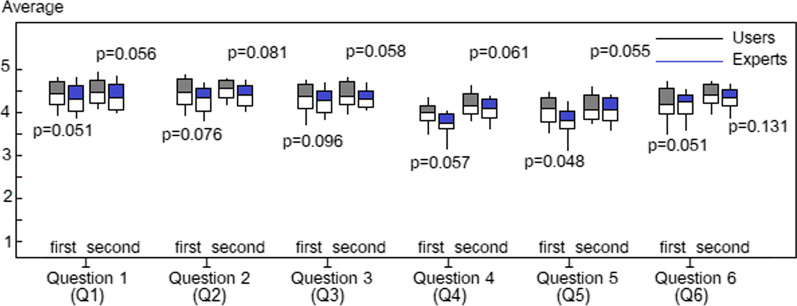
The average scores of the evaluation by the end-users (n = 30) and IT experts (n = 13) were compared using a t-test statistical analysis. For the first version, the end-users gave higher usability scores (average = 4.440), with no statistical significance and a P value of 0.05. In comparison, lower scores for functionality were given by the IT experts (average = 4.034), with no statistical significance and a P value of 0.05. For the second version, the average scores from the end-users were higher than those from the IT experts. The highest score was related to usability (average = 4.494), with no statistical significance and a P value of 0.05. The lowest score was for the user interface from the group of IT experts (average = 4.084), with no statistical significance and a P value of 0.05.
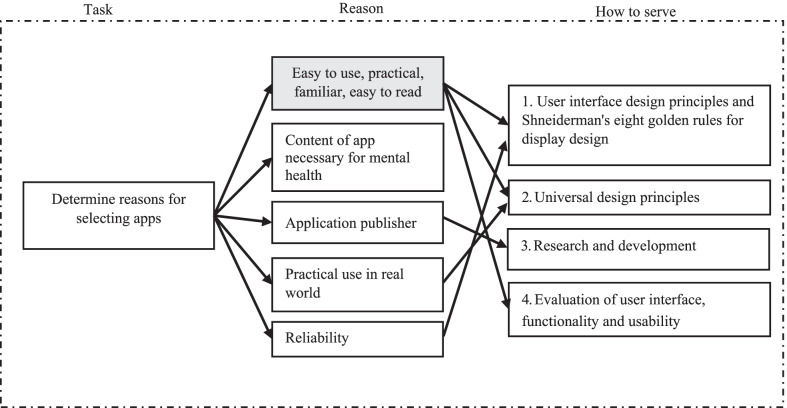
A UCD was utilised to construct a process taxonomy to understand, analyse, design and develop an application suitable for Thai women. It was found from an evaluation of the currently-available women's m-health applications that usability is their main weakness; therefore, this aspect needed to be prioritised in the new design. According to the results, IT experts' perspective of the development of an m-health application was different from that of end-users. Hence, it was evident that both end-users and IT experts needed to be involved in helping developers to analyse, prioritise and establish a strategy for developing an m-health application, particularly one for women's health. This would give researchers an in-depth understanding of the end-users' expectations.
女性移动健康 (m-health) 应用程序目前广泛用于健康教育、药物治疗、疾病预防等。然而,女性对其设计非常敏感。虽然针对女性的 m-health 应用程序数量在增加,但其中许多质量较差且存在开发问题。
本文旨在基于以用户为中心的设计 (UCD) 为泰国女性开发和评估 m-health 应用程序。对现有的女性 m-health 应用程序进行了调查,以确定在可用性、功能和图形用户界面方面是否存在任何开发不足的问题。评估结果被用来为原型应用程序的试用创建标准。
使用 UCD 方法设计图形用户界面、分析应用程序的功能并提高其可用性。从 30 名女性最终用户那里收集并本地维护数据,并由 13 名信息技术 (IT) 专家对原型试验提供反馈。使用访谈和问卷调查来收集用户数据并识别问题。
使用 t 检验统计分析比较了最终用户 (n=30) 和 IT 专家 (n=13) 的评估平均得分。对于第一版,最终用户的可用性得分更高 (平均=4.440),但无统计学意义,P 值为 0.05。相比之下,IT 专家对功能的评分较低 (平均=4.034),无统计学意义,P 值为 0.05。对于第二版,最终用户的平均得分高于 IT 专家。最高得分与可用性相关 (平均=4.494),无统计学意义,P 值为 0.05。IT 专家组对用户界面的评分最低 (平均=4.084),无统计学意义,P 值为 0.05。
使用 UCD 构建了一个过程分类法,以了解、分析、设计和开发适合泰国女性的应用程序。通过评估现有的女性 m-health 应用程序发现,可用性是其主要弱点;因此,在新设计中需要优先考虑这一方面。根据结果,IT 专家对 m-health 应用程序开发的看法与最终用户不同。因此,很明显,最终用户和 IT 专家都需要参与帮助开发人员分析、确定优先级并为开发 m-health 应用程序制定策略,特别是针对女性健康的应用程序。这将使研究人员深入了解最终用户的期望。