Myeloma Research Laboratory, Faculty of Health and Medical Sciences, School of Biomedicine, University of Adelaide, Adelaide, Australia.
Precision Cancer Medicine Theme, Solid Tumour Program, South Australian Health and Medical Research Institute, Adelaide, Australia.
Sci Rep. 2022 Jul 30;12(1):13128. doi: 10.1038/s41598-022-17403-9.
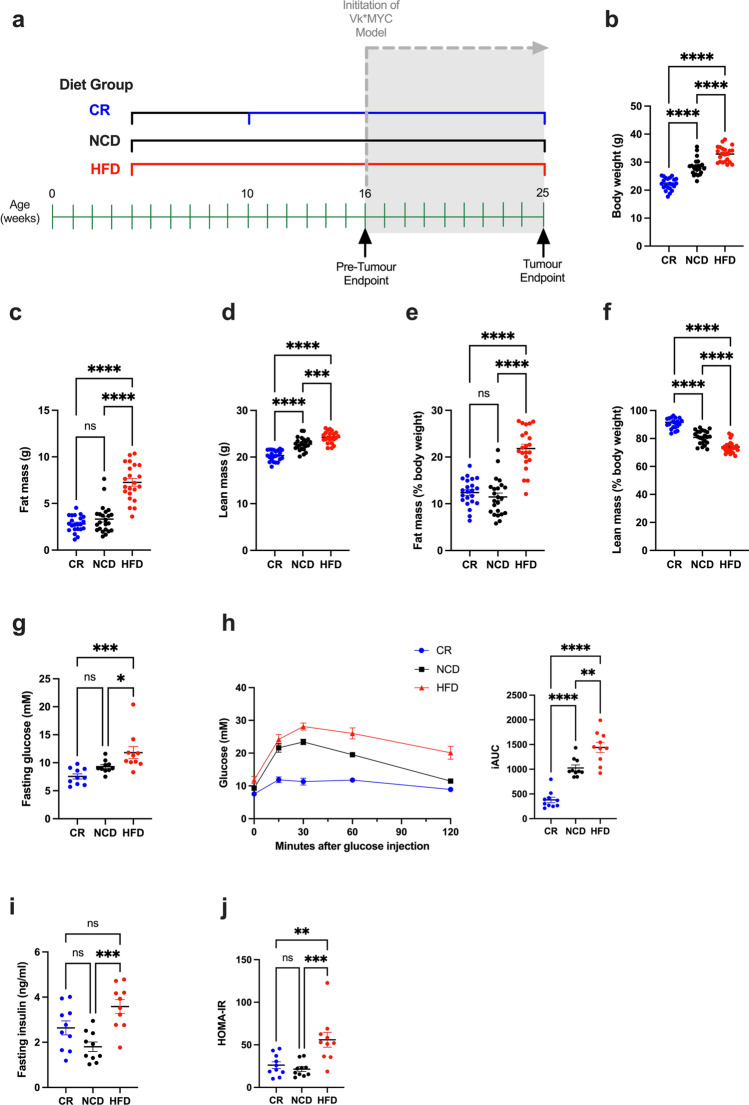
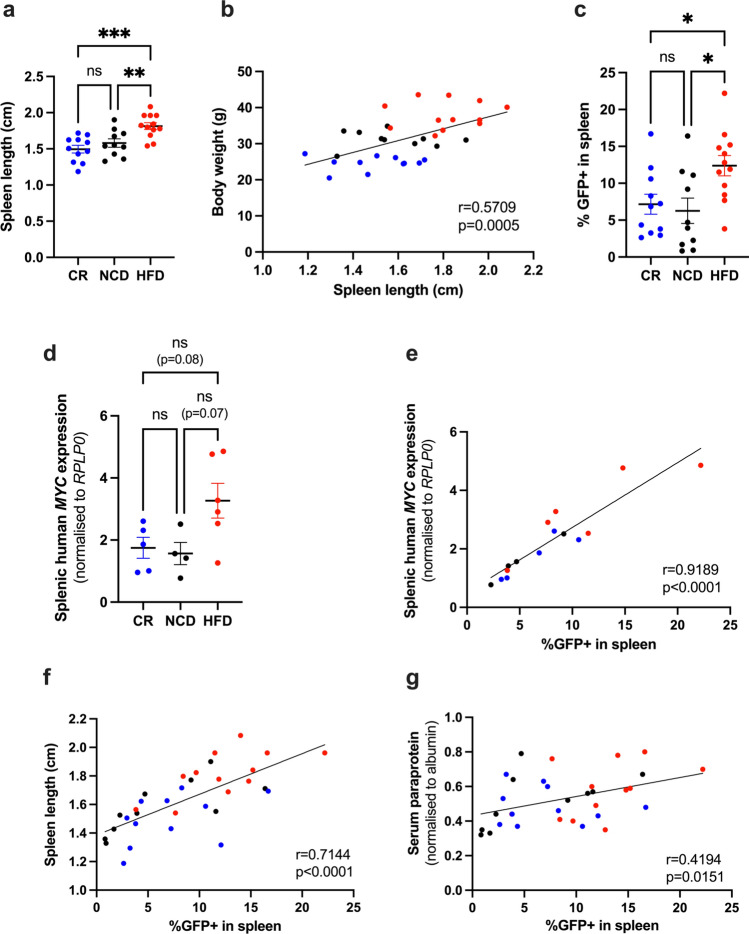
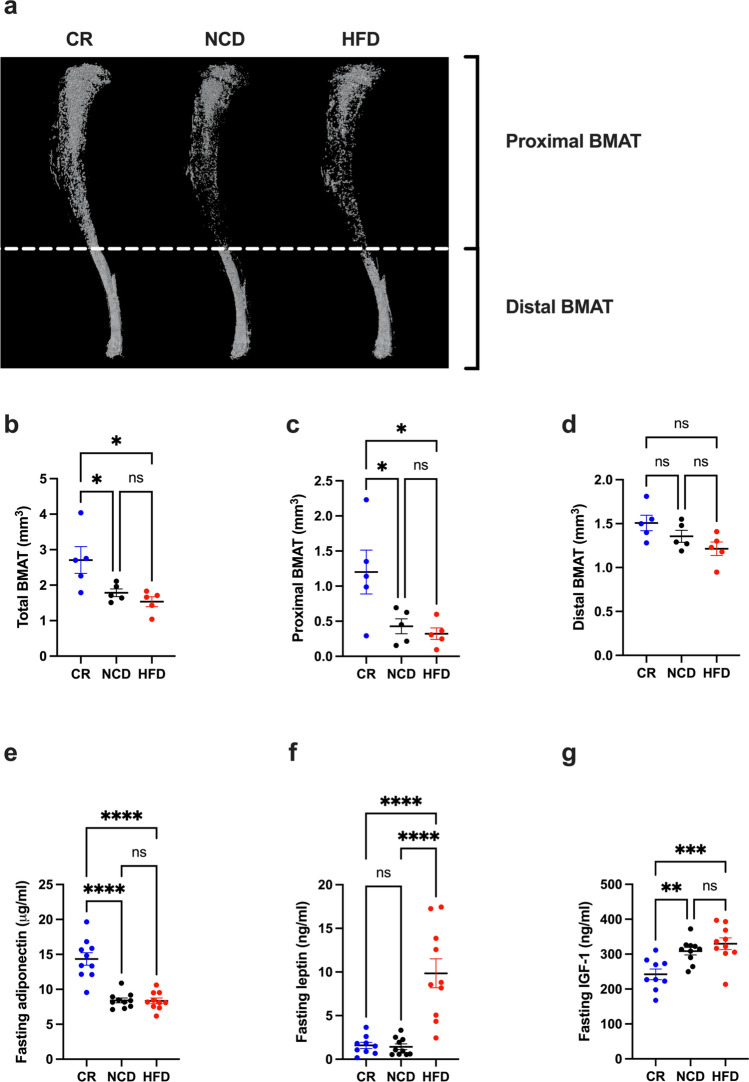
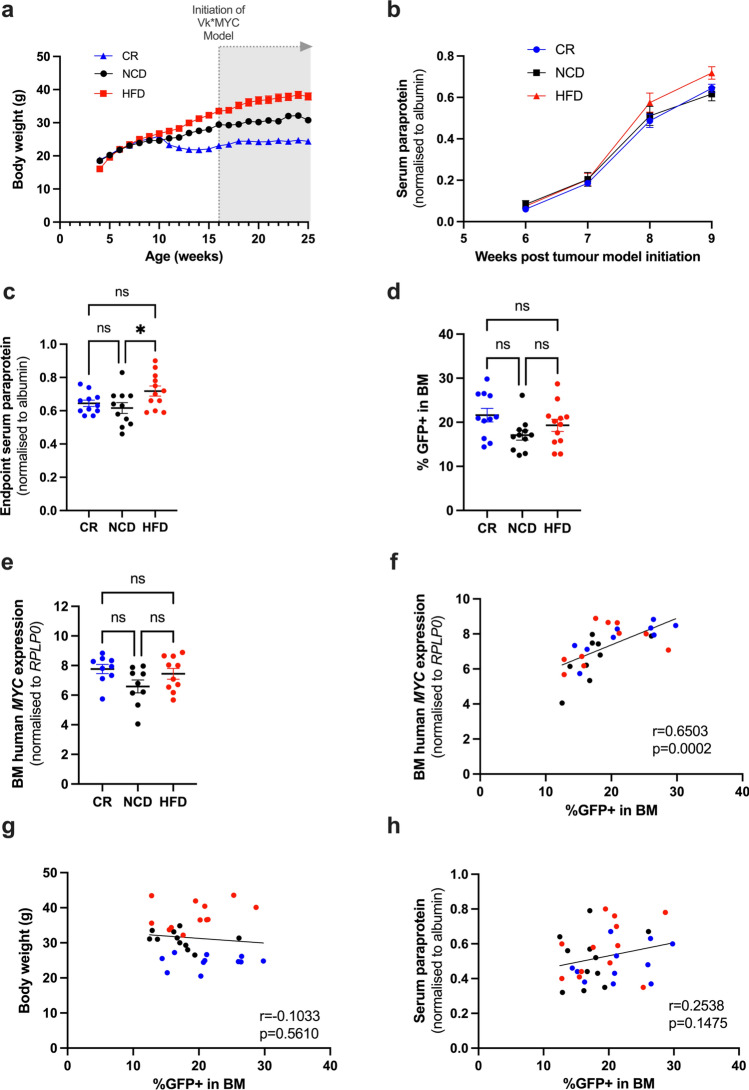
Multiple myeloma (MM) is an incurable haematological malignancy, caused by the uncontrolled proliferation of plasma cells within the bone marrow (BM). Obesity is a known risk factor for MM, however, few studies have investigated the potential of dietary intervention to prevent MM progression. Calorie restriction (CR) is associated with many health benefits including reduced cancer incidence and progression. To investigate if CR could reduce MM progression, dietary regimes [30% CR, normal chow diet (NCD), or high fat diet (HFD)] were initiated in C57BL/6J mice. Diet-induced changes were assessed, followed by inoculation of mice with Vk*MYC MM cells (Vk14451-GFP) at 16 weeks of age. Tumour progression was monitored by serum paraprotein, and at endpoint, BM and splenic tumour burden was analysed by flow cytometry. 30% CR promoted weight loss, improved glucose tolerance, increased BM adiposity and elevated serum adiponectin compared to NCD-fed mice. Despite these metabolic changes, CR had no significant effect on serum paraprotein levels. Furthermore, endpoint analysis found that dietary changes were insufficient to affect BM tumour burden, however, HFD resulted in an average two-fold increase in splenic tumour burden. Overall, these findings suggest diet-induced BM changes may not be key drivers of MM progression in the Vk14451-GFP transplant model of myeloma.
多发性骨髓瘤(MM)是一种不可治愈的血液恶性肿瘤,由骨髓(BM)中浆细胞的不受控制增殖引起。肥胖是 MM 的已知危险因素,然而,很少有研究调查饮食干预预防 MM 进展的潜力。热量限制(CR)与许多健康益处相关,包括降低癌症发病率和进展。为了研究 CR 是否可以减缓 MM 的进展,在 C57BL/6J 小鼠中启动了三种饮食方案[30%热量限制、正常饮食(NCD)或高脂肪饮食(HFD)]。评估饮食诱导的变化,然后在 16 周龄时用 Vk*MYC MM 细胞(Vk14451-GFP)接种小鼠。通过血清副蛋白监测肿瘤进展,并在终点通过流式细胞术分析 BM 和脾肿瘤负担。与 NCD 喂养的小鼠相比,30%的 CR 促进体重减轻、改善葡萄糖耐量、增加 BM 脂肪量并提高血清脂联素水平。尽管存在这些代谢变化,但 CR 对血清副蛋白水平没有显著影响。此外,终点分析发现饮食变化不足以影响 BM 肿瘤负担,但 HFD 导致脾肿瘤负担平均增加两倍。总体而言,这些发现表明,在 Vk14451-GFP 骨髓瘤移植模型中,饮食诱导的 BM 变化可能不是 MM 进展的关键驱动因素。