Department of Anesthesiology, VA San Diego Healthcare System, San Diego, CA, USA.
Department of Anesthesiology, University of California San Diego, La Jolla, CA, USA.
Theranostics. 2022 Jul 11;12(12):5389-5403. doi: 10.7150/thno.72614. eCollection 2022.
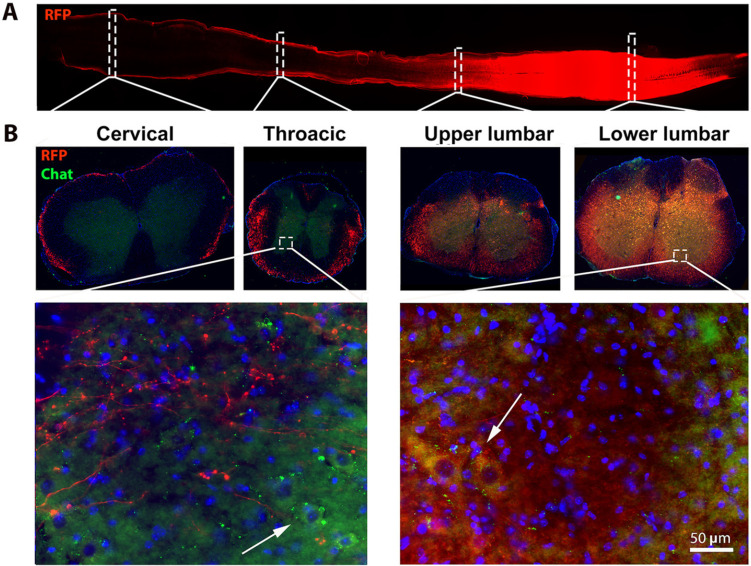
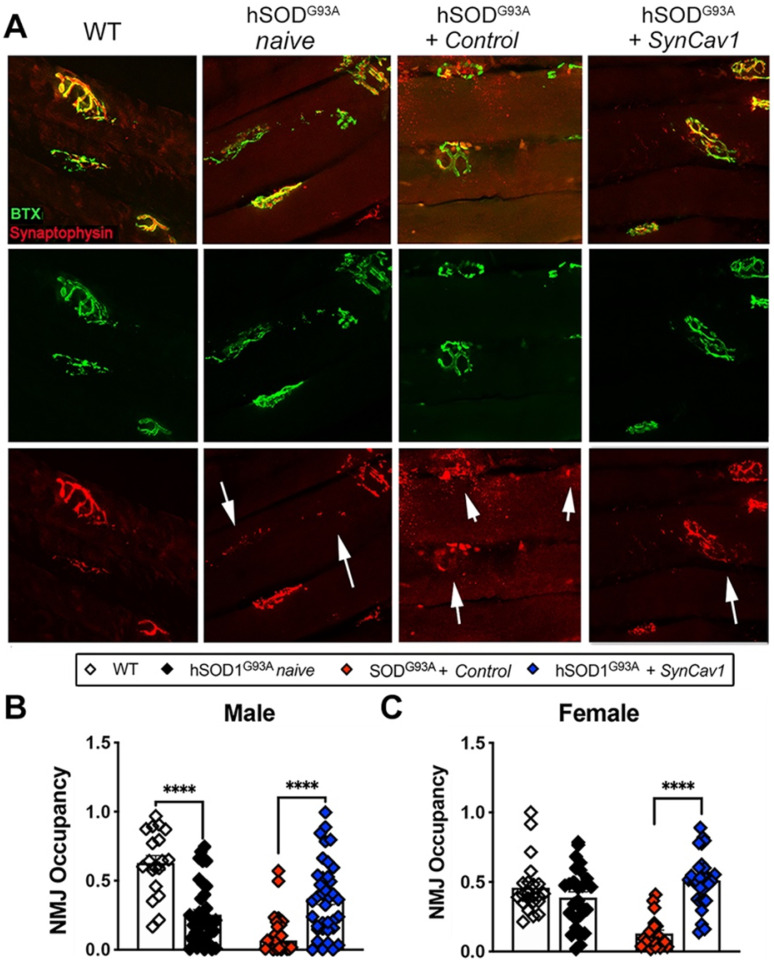
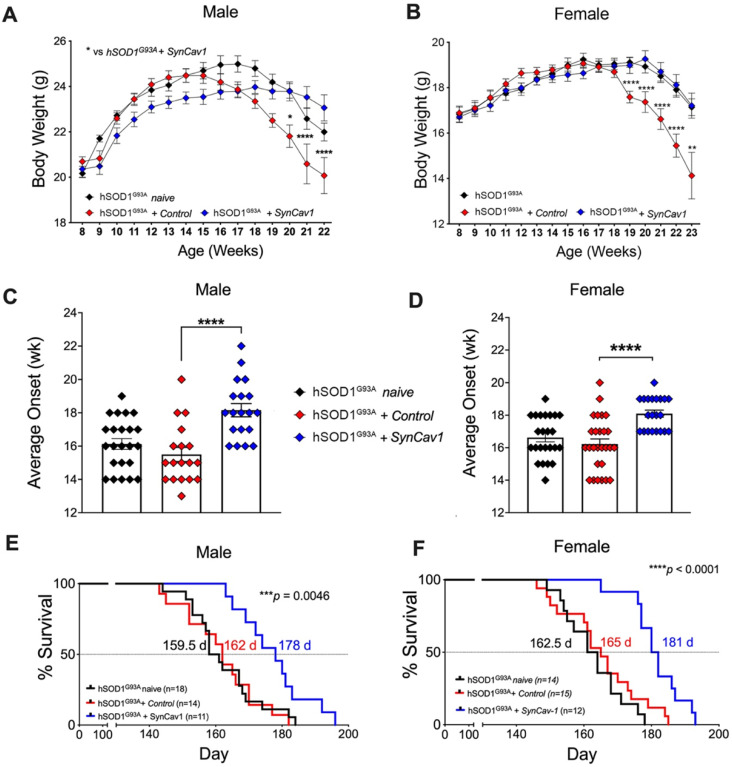
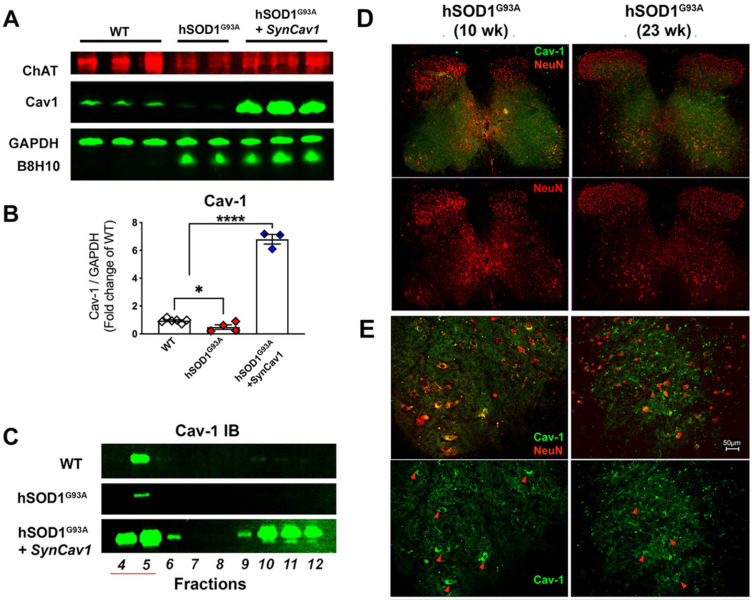
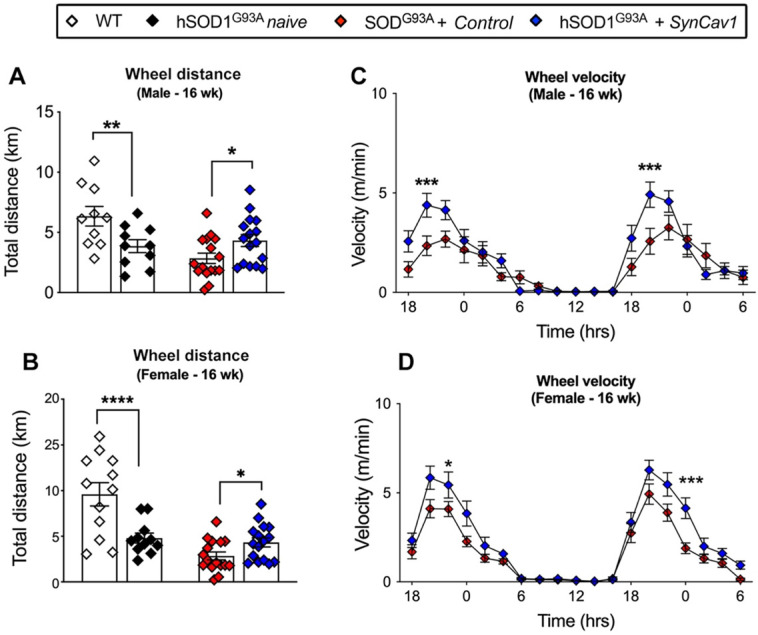
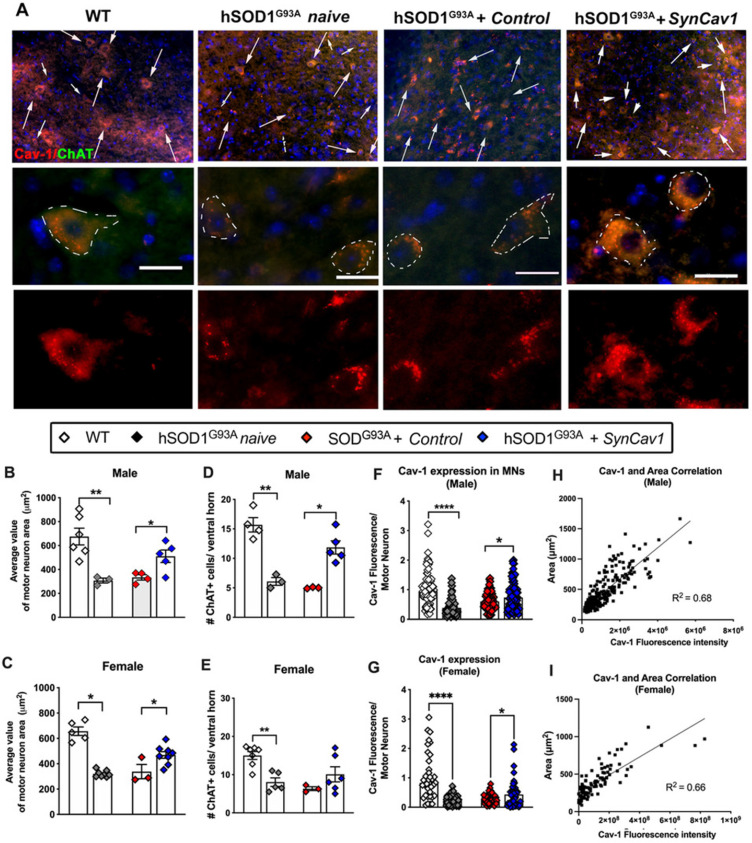
Elevating neuroprotective proteins using adeno-associated virus (AAV)-mediated gene delivery shows great promise in combating devastating neurodegenerative diseases. Amyotrophic lateral sclerosis (ALS) is one such disease resulting from loss of upper and lower motor neurons (MNs) with 90-95% of cases sporadic (SALS) in nature. Due to the unknown etiology of SALS, interventions that afford neuronal protection and preservation are urgently needed. Caveolin-1 (Cav-1), a membrane/lipid rafts (MLRs) scaffolding and neuroprotective protein, and MLR-associated signaling components are decreased in degenerating neurons in postmortem human brains. We previously showed that, when crossing our SynCav1 transgenic mouse (TG) with the mutant human superoxide dismutase 1 (hSOD1) mouse model of ALS, the double transgenic mouse (SynCav1 TG/hSOD1) exhibited better motor function and longer survival. The objective of the current study was to test whether neuron-targeted Cav-1 upregulation in the spinal cord using could improve motor function and extend longevity in mutant humanized mouse and rat (hSOD1) models of familial (F)ALS. Motor function was assessed by voluntary running wheel (RW) in mice and forelimb grip strength (GS) and motor evoked potentials (MEP) in rats. Immunofluorescence (IF) microscopy for choline acetyltransferase (ChAT) was used to assess MN morphology. Neuromuscular junctions (NMJs) were measured by bungarotoxin-a (Btx-a) and synaptophysin IF. Body weight (BW) was measured weekly, and the survival curve was determined by Kaplan-Meier analysis. Following subpial gene delivery to the lumbar spinal cord, male and female hSOD1G93A mice treated with SynCav1 exhibited delayed disease onset, greater running-wheel performance, preserved spinal alpha-motor neuron morphology and NMJ integrity, and 10% increased longevity, independent of affecting expression of the mutant hSOD1G93A protein. Cervical subpial SynCav1 delivery to hSOD1G93A rats preserved forelimb GS and MEPs in the brachial and gastrocnemius muscles. In summary, subpial delivery of SynCav1 protects and preserves spinal motor neurons, and extends longevity in a familial mouse model of ALS without reducing the toxic monogenic component. Furthermore, subpial SynCav1 delivery preserved neuromuscular function in a rat model of FALS. The latter findings strongly indicate the therapeutic applicability of SynCav1 to treat ALS attributed to monogenic (FALS) and potentially in sporadic cases (i.e., SALS).
使用腺相关病毒 (AAV) 介导的基因传递来提高神经保护蛋白的水平,在对抗毁灭性的神经退行性疾病方面显示出巨大的潜力。肌萎缩侧索硬化症 (ALS) 就是这样一种疾病,它是由上运动神经元和下运动神经元 (MNs) 的丧失引起的,其中 90-95%的病例为散发性 (SALS)。由于 SALS 的病因不明,因此迫切需要干预措施来提供神经元保护和保存。小窝蛋白-1 (Cav-1) 是一种膜/脂筏 (MLRs) 支架和神经保护蛋白,其在死后人脑的退行性神经元中减少。我们之前的研究表明,当我们的 SynCav1 转基因小鼠 (TG) 与 ALS 的突变型人类超氧化物歧化酶 1 (hSOD1) 小鼠模型杂交时,双转基因小鼠 (SynCav1 TG/hSOD1) 表现出更好的运动功能和更长的存活时间。本研究的目的是测试使用 AAV 对脊髓中的神经元靶向 Cav-1 进行上调,是否能改善突变型人类化小鼠和大鼠 (hSOD1) 家族性 (F)ALS 模型中的运动功能并延长寿命。通过自愿跑轮 (RW) 评估小鼠的运动功能,通过前肢握力 (GS) 和运动诱发电位 (MEP) 评估大鼠的运动功能。免疫荧光 (IF) 显微镜用于评估胆碱乙酰转移酶 (ChAT) 以评估 MN 形态。通过bungarotoxin-a (Btx-a) 和突触小体蛋白 IF 测量神经肌肉接头 (NMJ)。每周测量体重 (BW),并通过 Kaplan-Meier 分析确定生存曲线。 在对腰椎脊髓进行鞘内基因传递后,接受 SynCav1 治疗的雄性和雌性 hSOD1G93A 小鼠发病延迟,跑轮性能更好,脊髓α运动神经元形态和 NMJ 完整性得到保留,寿命延长 10%,而不影响突变型 hSOD1G93A 蛋白的表达。颈鞘内 SynCav1 传递可维持 hSOD1G93A 大鼠的前肢 GS 和 brachial 和 gastrocnemius 肌肉中的 MEP。 综上所述,鞘内传递 SynCav1 可保护和保存脊髓运动神经元,并延长家族性 ALS 小鼠模型的寿命,而不会减少毒性单基因成分。此外,鞘内 SynCav1 传递可保留 FALS 大鼠的神经肌肉功能。后一种发现强烈表明 SynCav1 具有治疗 ALS 的治疗适用性,这种 ALS 归因于单基因 (FALS),并且可能在散发性病例 (即 SALS) 中也具有治疗适用性。