State Key Laboratory of Molecular Vaccinology and Molecular Diagnostics, School of Public Health, Xiamen University, Xiamen, China.
Xiamen Center for Disease Control and Prevention, Xiamen, China.
Front Public Health. 2022 Jul 13;10:887146. doi: 10.3389/fpubh.2022.887146. eCollection 2022.
In September 2021, there was an outbreak of coronavirus disease 2019 (COVID-19) in Xiamen, China. Various non-pharmacological interventions (NPIs) and pharmacological interventions (PIs) have been implemented to prevent and control the spread of the disease. This study aimed to evaluate the effectiveness of various interventions and to identify priorities for the implementation of prevention and control measures.
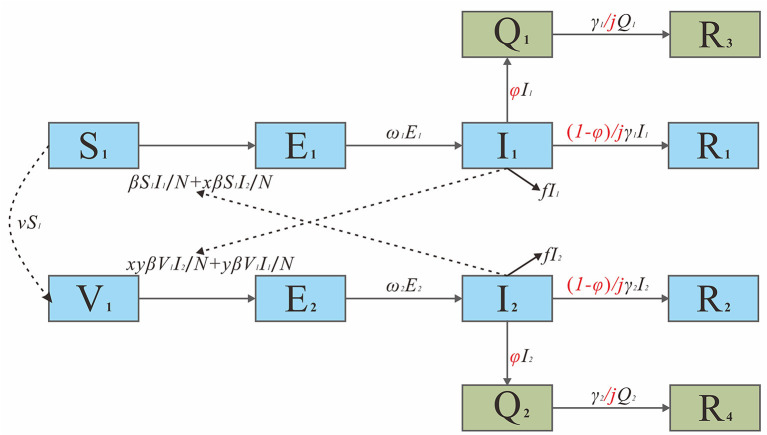
The data of patients with COVID-19 were collected from 8 to 30 September 2021. A Susceptible-Exposed-Infectious-Recovered (SEIR) dynamics model was developed to fit the data and simulate the effectiveness of interventions (medical treatment, isolation, social distancing, masking, and vaccination) under different scenarios. The effective reproductive number ( ) was used to assess the transmissibility and transmission risk.
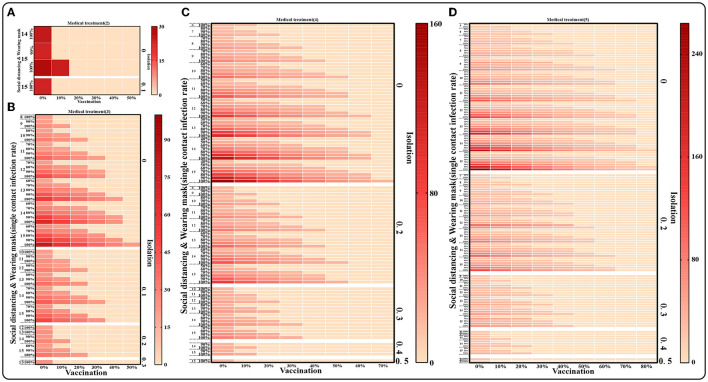
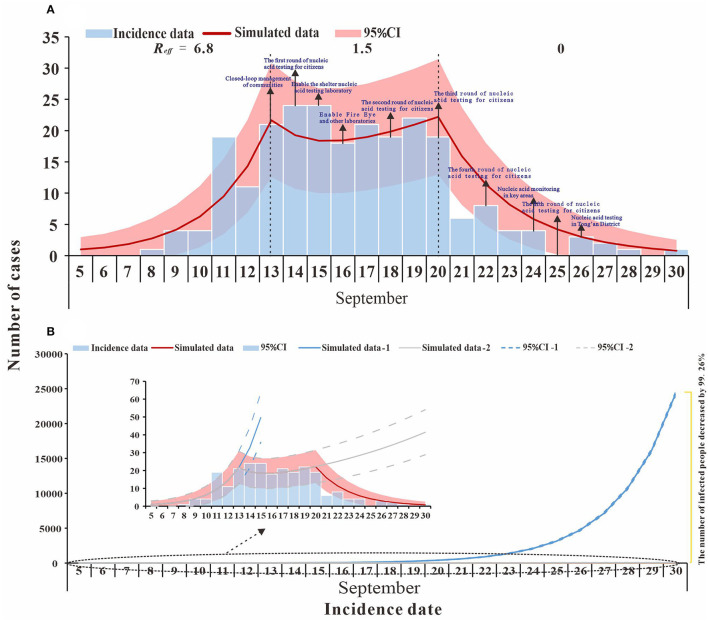
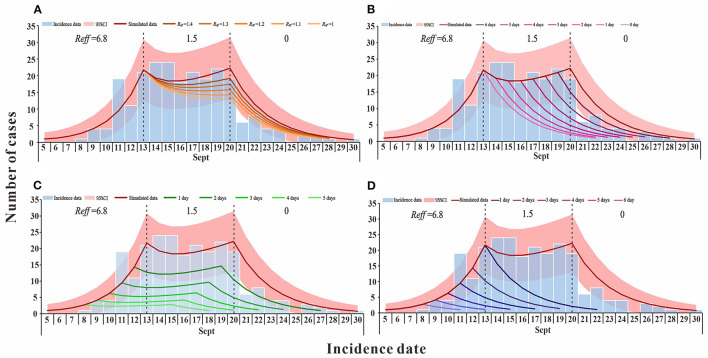
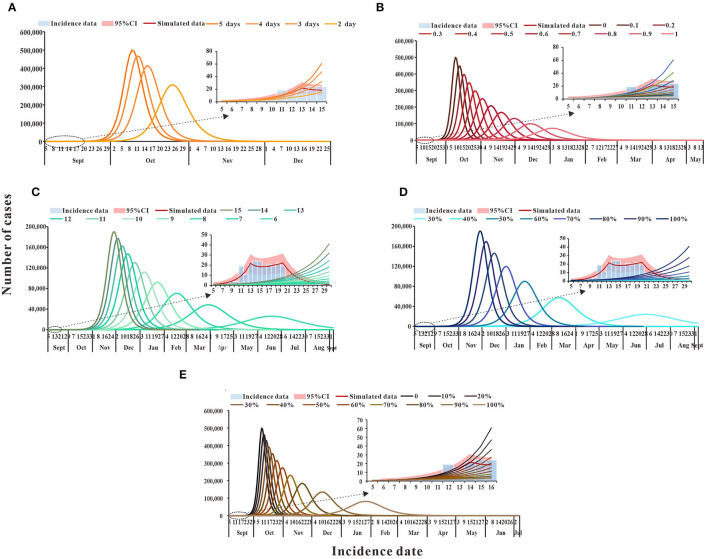
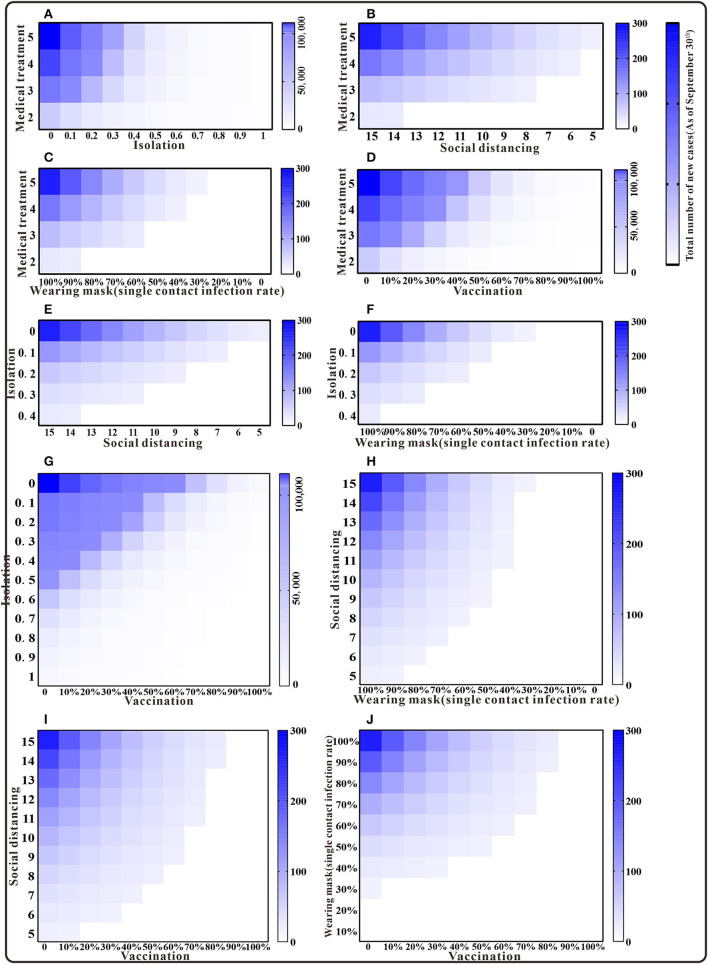
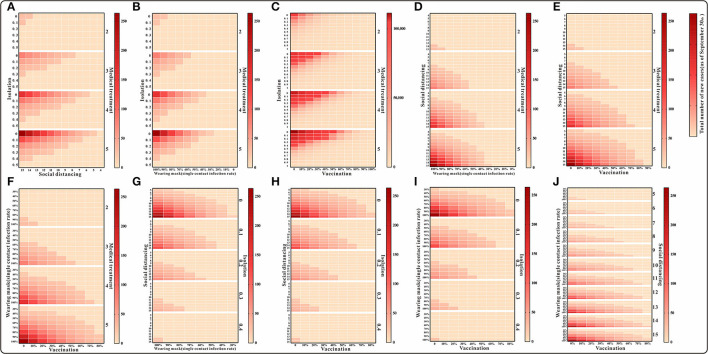
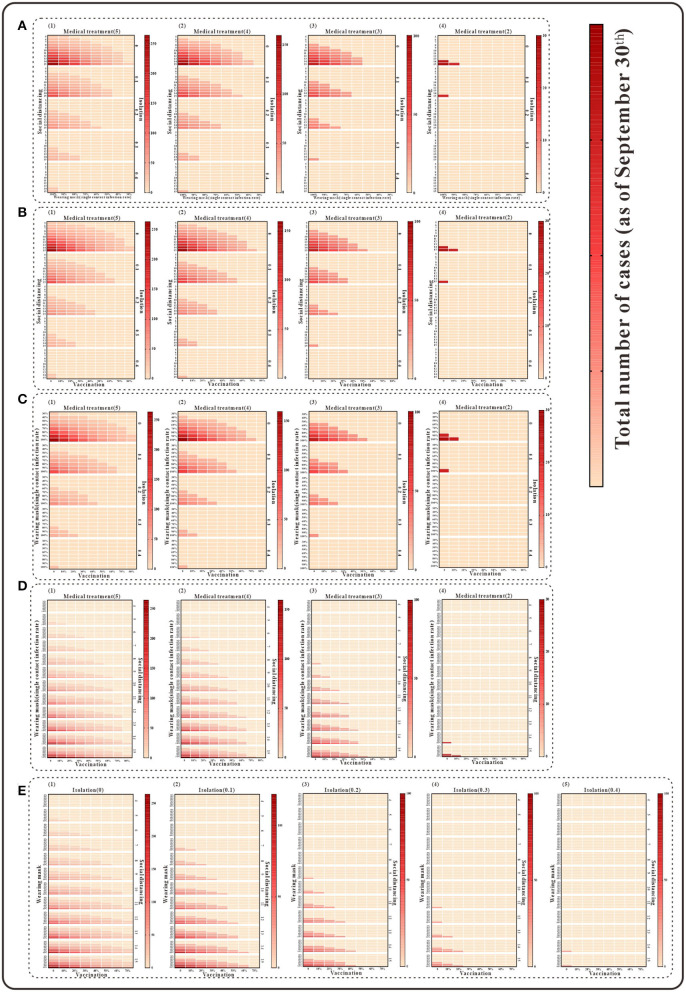
A total of 236 cases of COVID-19 were reported in Xiamen. The epidemic curve was divided into three phases ( = 6.8, 1.5, and 0). Notably, the cumulative number of cases was reduced by 99.67% due to the preventive and control measures implemented by the local government. In the effective containment stage, the number of cases could be reduced to 115 by intensifying the implementation of interventions. The total number of cases () could be reduced by 29.66-95.34% when patients voluntarily visit fever clinics. When only two or three of these measures are implemented, the simulated may be greater than the actual number. As four measures were taken simultaneously, the may be <100, which is 57.63% less than the actual number. The simultaneous implementation of five interventions could rapidly control the transmission and reduce the number of cases to fewer than 25.
With the joint efforts of the government and the public, the outbreak was controlled quickly and effectively. Authorities could promptly cut the transmission chain and control the spread of the disease when patients with fever voluntarily went to the hospital. The ultimate effect of controlling the outbreak through only one intervention was not obvious. The combined community control and mask wearing, along with other interventions, could lead to rapid control of the outbreak and ultimately lower the total number of cases. More importantly, this would mitigate the impact of the outbreak on society and socioeconomics.
2021 年 9 月,中国厦门市爆发了 2019 年冠状病毒病(COVID-19)疫情。为了预防和控制疾病的传播,实施了各种非药物干预(NPIs)和药物干预(PIs)。本研究旨在评估各种干预措施的有效性,并确定预防和控制措施实施的优先事项。
从 2021 年 8 月 8 日至 9 月 30 日收集了 COVID-19 患者的数据。开发了一个易感-暴露-感染-恢复(SEIR)动力学模型,以拟合数据并模拟不同情景下干预措施(医疗、隔离、社会隔离、掩蔽和接种疫苗)的有效性。有效繁殖数()用于评估传染性和传播风险。
厦门共报告 COVID-19 病例 236 例。疫情曲线分为三个阶段(=6.8、1.5 和 0)。值得注意的是,由于当地政府采取的预防和控制措施,累计病例数减少了 99.67%。在有效遏制阶段,通过加强干预措施,病例数可减少至 115 例。当患者自愿就诊发热门诊时,总病例数()可减少 29.66%-95.34%。当仅实施其中两项或三项措施时,模拟的可能大于实际数量。当同时实施四项措施时,可能会<100,比实际数量减少 57.63%。同时实施五项干预措施可以迅速控制传播并将病例数减少到 25 例以下。
在政府和公众的共同努力下,疫情得到了迅速有效的控制。当发热患者自愿就医时,当局能够迅速切断传播链,控制疾病的传播。仅通过一项干预措施控制疫情的最终效果并不明显。社区控制和戴口罩等综合干预措施,加上其他干预措施,可以迅速控制疫情,最终降低总病例数。更重要的是,这将减轻疫情对社会和社会经济的影响。