Department of General Practice and Primary Health Care, University of Helsinki and Helsinki University Hospital, Helsinki, Finland.
Social Services and Health Care Division, Helsinki, Finland.
Front Public Health. 2022 Jul 13;10:880339. doi: 10.3389/fpubh.2022.880339. eCollection 2022.
One in four women of childbearing age has some degree of mental disorders and are, therefore, prone to both pregnancy complications and adverse health outcomes in their offspring. We aimed to evaluate the impact of preconception severe mental disorders on pregnancy outcomes in primiparous women.
The study cohort was composed of 6,189 Finnish primiparous women without previously diagnosed diabetes, who delivered between 2009 and 2015, living in the city of Vantaa, Finland. Women were classified to have a preconception severe mental disorder if they had one or more outpatient visits to a psychiatrist or hospitalization with a psychiatric diagnosis 1 year before conception. Data on pregnancies, diagnoses, and pregnancy outcomes were obtained from national registers at an individual level.
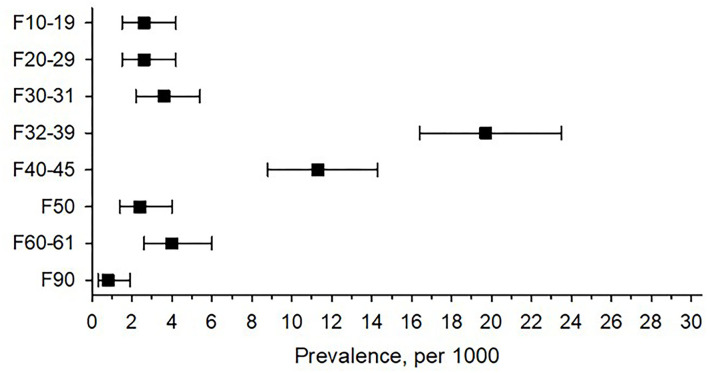
Primiparous women with preconception severe psychiatric diagnosis were younger, more often living alone, smokers, and had lower educational attainment and lower taxable income than women without psychiatric diagnosis (for all < 0.001). Of all women, 3.4% had at least one psychiatric diagnosis. The most common psychiatric diagnoses were depression and anxiety disorders. The most common comorbidity was the combination of depression and anxiety disorders. There were no differences in the need for respiratory treatments, admissions to the neonatal intensive care unit, or antibiotic treatments between the offspring's groups.
Although primiparous women had severe mental disorders, the well-being of newborns was good. The most common severe mental health disorders were depression and anxiety disorders, and psychiatric comorbidity was common. Women with severe mental disorders more often belonged to lower socioeconomic groups.
四分之一的育龄妇女患有某种程度的精神障碍,因此她们既容易出现妊娠并发症,又容易使后代出现不良健康后果。我们旨在评估孕前严重精神障碍对初产妇妊娠结局的影响。
研究队列由芬兰万塔市 6189 名无先前诊断为糖尿病的初产妇组成,她们于 2009 年至 2015 年间分娩,且均为初产妇。如果女性在受孕前 1 年内有一次或多次精神病门诊就诊或因精神疾病住院,则将其归类为孕前患有严重精神障碍。妊娠、诊断和妊娠结局数据均从芬兰个人层面的国家登记处获得。
与无精神科诊断的女性相比,患有孕前严重精神科诊断的初产妇年龄更小,更常独居,吸烟,教育程度和应税收入较低(所有 P 值均<0.001)。在所有女性中,有 3.4%至少有一个精神科诊断。最常见的精神科诊断是抑郁症和焦虑症。最常见的合并症是抑郁症和焦虑症的合并症。两组新生儿的呼吸治疗需求、入住新生儿重症监护病房或抗生素治疗需求无差异。
尽管初产妇患有严重精神障碍,但新生儿的健康状况良好。最常见的严重精神健康障碍是抑郁症和焦虑症,且精神科合并症常见。患有严重精神障碍的女性更常属于较低的社会经济群体。