Xu Yanru, Zhong Liying, Wei Huixian, Li Yuwei, Xie Jiaxiang, Xie Leijie, Chen Xiusheng, Guo Xiangyu, Yin Peng, Li Shihua, Zeng Junwei, Li Xiao-Jiang, Lin Li
Guangdong Key Laboratory of Nonhuman Primate Models of Human Diseases, Key Laboratory of CNS Regeneration (Ministry of Education), Guangdong-Hongkong-Macau Institute of CNS Regeneration, Jinan University, Guangzhou, China.
Guangdong Provincial People's Hospital, Guangdong Academy of Medical Sciences, Guangzhou, China.
Front Aging Neurosci. 2022 Jul 13;14:934224. doi: 10.3389/fnagi.2022.934224. eCollection 2022.
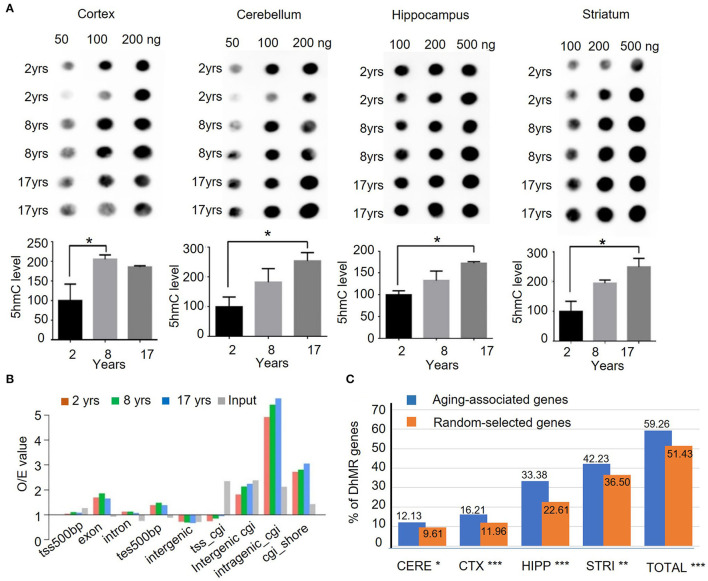
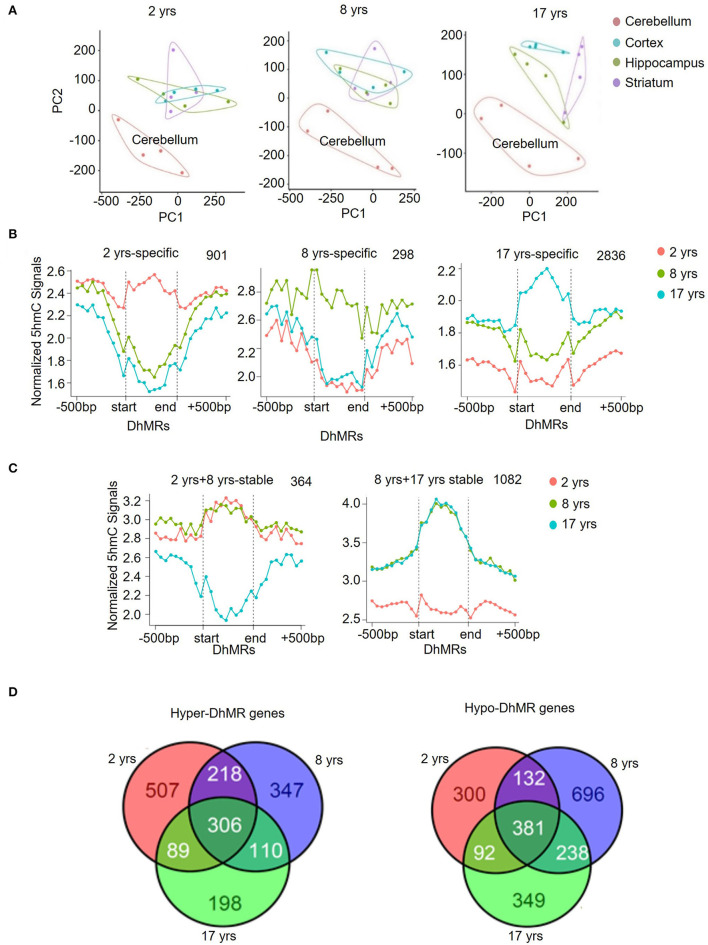
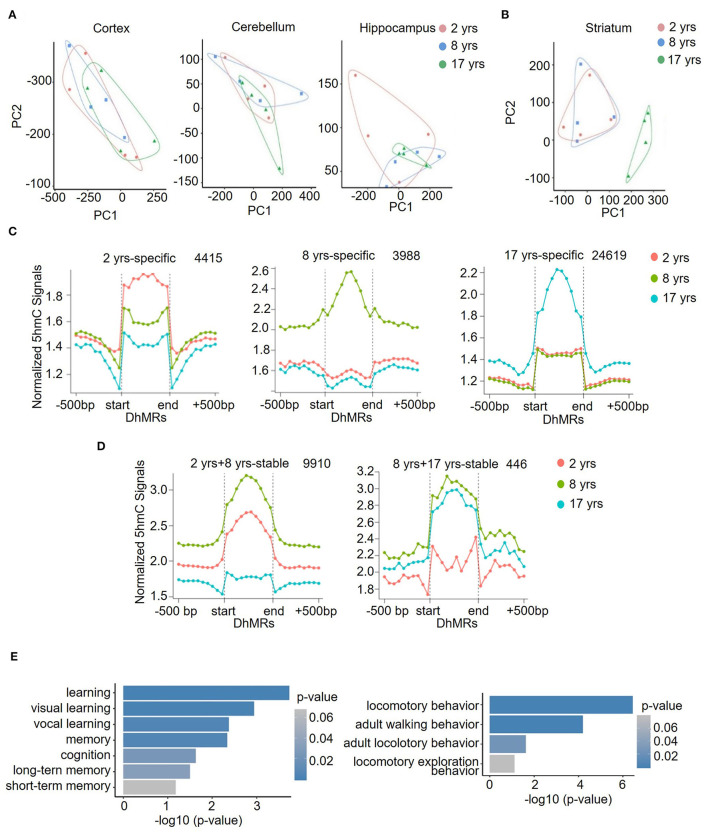
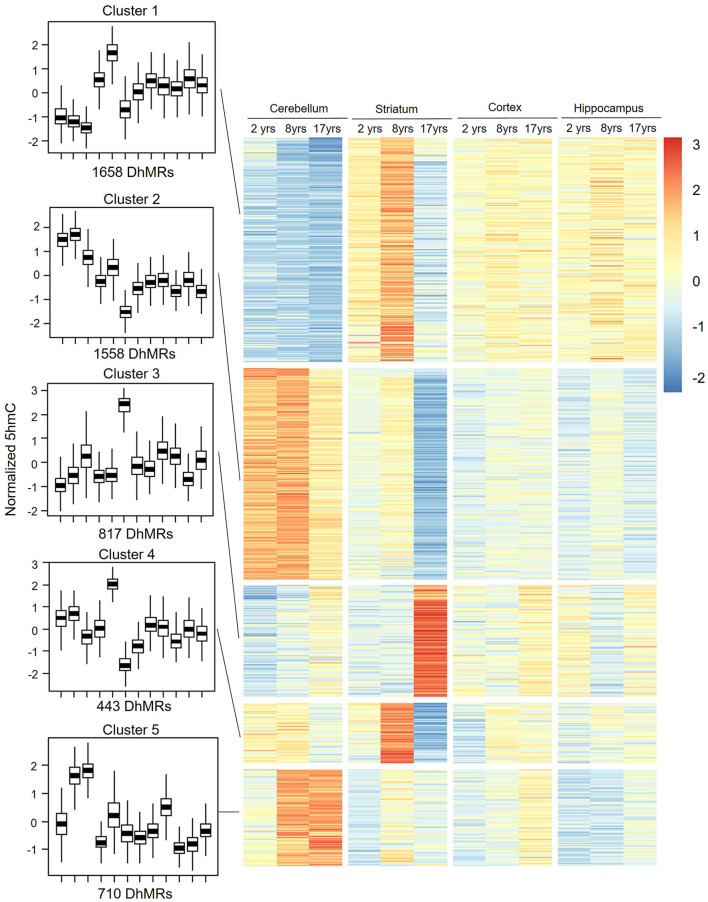
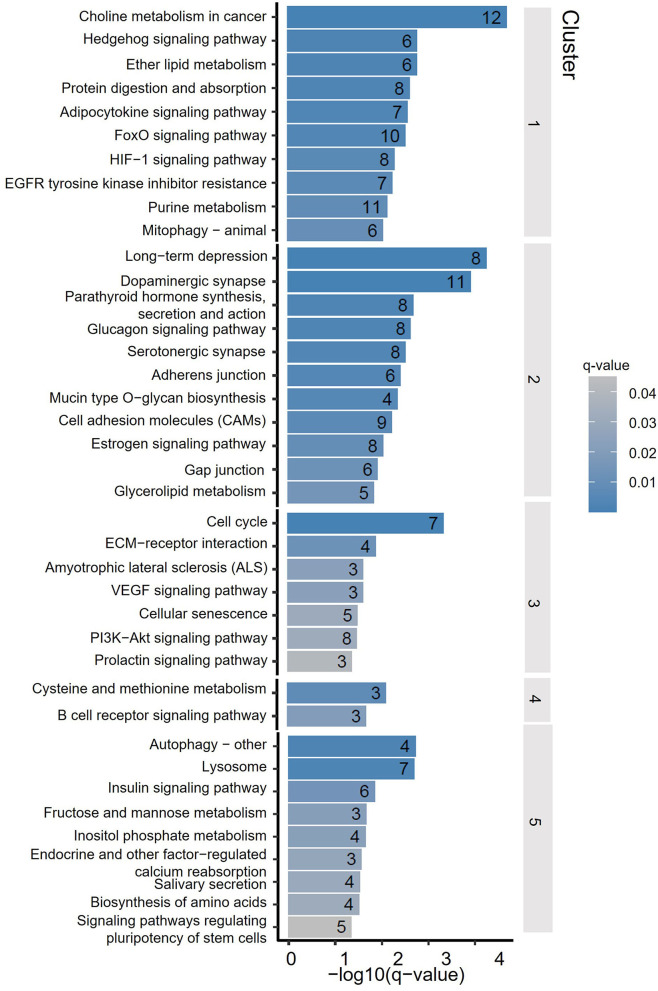
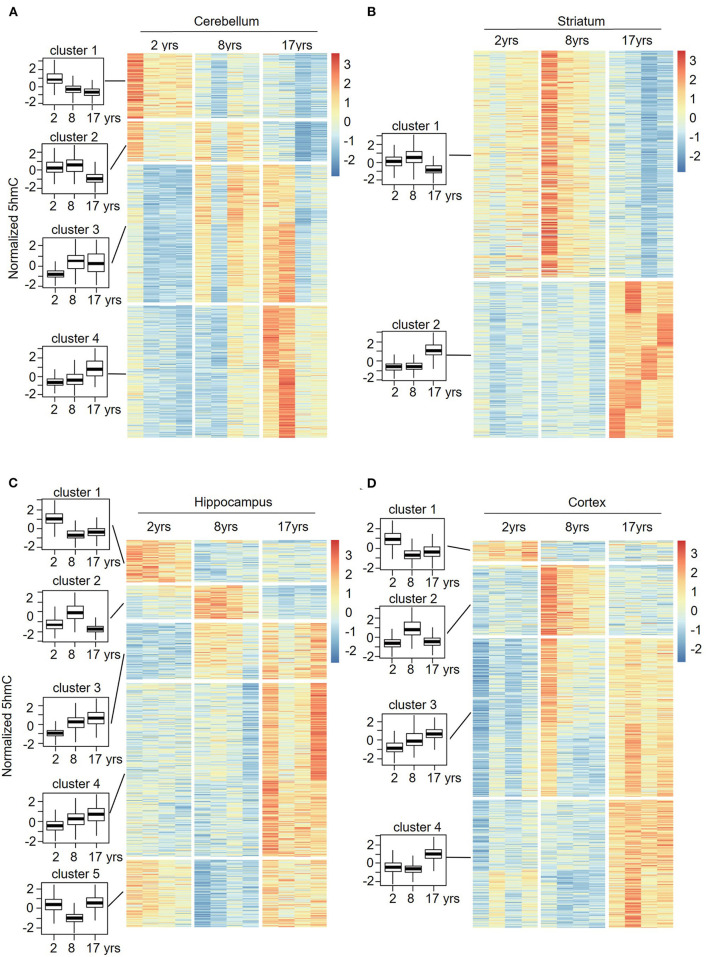
Because of the difficulty in collecting fresh brains of humans at different ages, it remains unknown how epigenetic regulation occurs in the primate brains during aging. In the present study, we examined the genomic distribution of 5hmC, an indicator of DNA methylation, in the brain regions of non-human primates (rhesus monkey) at the ages of 2 (juvenile), 8 (young adult), and 17 (old) years. We found that genomic 5hmC distribution was accumulated in the monkey brain as age increased and displayed unique patterns in the cerebellum and striatum in an age-dependent manner. We also observed a correlation between differentially hydroxymethylated regions (DhMRs) and genes that contribute to brain region-related functions and diseases. Our studies revealed, for the first time, the brain-region and age-dependent 5hmC modifications in the non-human primate and the association of these 5hmC modifications with brain region-specific function and potentially aging-related brain diseases.
由于收集不同年龄段人类新鲜大脑存在困难,灵长类动物大脑在衰老过程中表观遗传调控如何发生仍不清楚。在本研究中,我们检测了2岁(幼年)、8岁(青年)和17岁(老年)的非人灵长类动物(恒河猴)大脑区域中5-羟甲基胞嘧啶(5hmC,一种DNA甲基化指标)的基因组分布。我们发现,随着年龄增长,基因组5hmC分布在猴脑中积累,并在小脑和纹状体中以年龄依赖的方式呈现独特模式。我们还观察到差异羟甲基化区域(DhMRs)与有助于脑区相关功能和疾病的基因之间存在相关性。我们的研究首次揭示了非人灵长类动物脑区和年龄依赖性的5hmC修饰,以及这些5hmC修饰与脑区特异性功能和潜在衰老相关脑部疾病的关联。