Advanced Technology Center for Aging Research, IRCCS INRCA, Ancona, Italy.
Department of Biology, Ecology and Earth Sciences (DIBEST), University of Calabria, Rende, Italy.
J Gerontol A Biol Sci Med Sci. 2023 Jan 26;78(1):42-50. doi: 10.1093/gerona/glac154.
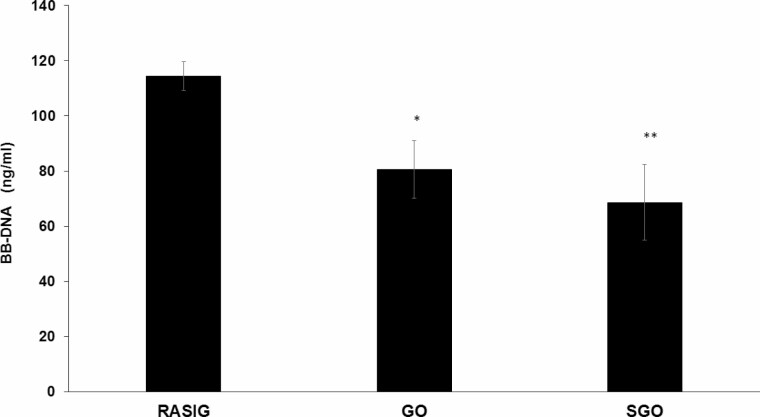
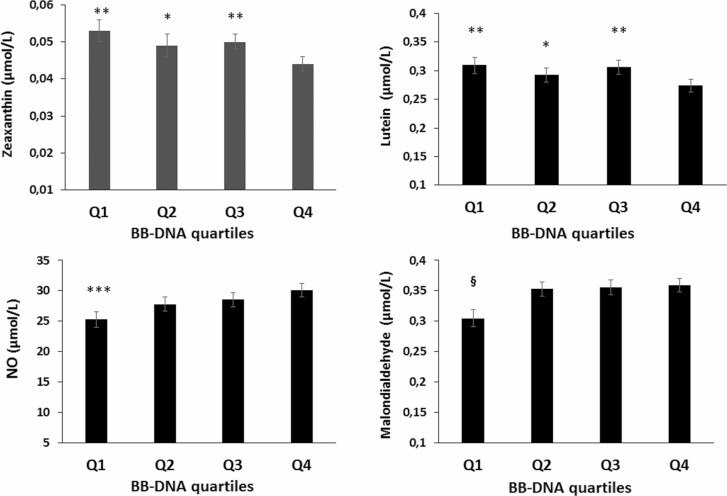
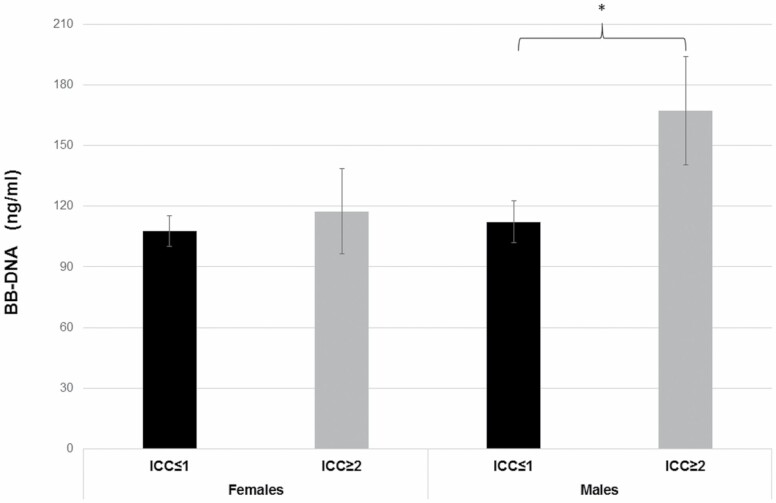
Aging and age-related diseases have been linked to microbial dysbiosis with changes in blood bacterial DNA concentration. This condition may promote chronic low-grade inflammation, which can be further aggravated by antioxidant nutrient deficiency. Low plasma carotenoids are associated with an increased risk of inflammation and cellular damage and predict mortality. However, no evidence is yet available on the relationship between antioxidants and the blood bacterial DNA (BB-DNA). Therefore, this study aimed to compare BB-DNA from (a) GO (nonagenarian offspring), (b) age-matched controls (Randomly recruited Age-Stratified Individuals from the General population [RASIG]), and (c) spouses of GO (SGO) recruited in the MARK-AGE project, as well as to investigate the association between BB-DNA, behavior habits, Charlson Comorbidity Index (CCI), leucocyte subsets, and the circulating levels of some antioxidants and oxidative stress markers. BB-DNA was higher in RASIG than GO and SGO, whereas GO and SGO participants showed similar values. BB-DNA increased in smokers and males with CCI ≥ 2 compared with those with CCI ≤ 1 within RASIG. Moreover, BB-DNA was positively associated with lymphocyte, neutrophil, and monocyte counts, but not with self-reported dietary habits. Higher quartiles of BB-DNA were associated with low lutein and zeaxanthin and elevated malondialdehyde plasma concentrations in RASIG. BB-DNA was also positively correlated with nitric oxide levels. Herein, we provide evidence of a reduced BB-DNA in individuals from long-living families and their spouses, suggesting a decreased microbial dysbiosis and bacterial systemic translocation. BB-DNA was also associated with smoking, CCI, leukocyte subsets, and some redox biomarkers in older participants.
衰老和与年龄相关的疾病与血液细菌 DNA 浓度变化引起的微生物失调有关。这种情况可能会促进慢性低度炎症,而抗氧化营养物质的缺乏会进一步加重这种炎症。血浆类胡萝卜素水平较低与炎症和细胞损伤的风险增加有关,并可预测死亡率。然而,目前尚无关于抗氧化剂与血液细菌 DNA(BB-DNA)之间关系的证据。因此,本研究旨在比较 MARK-AGE 项目中(a)GO(非高龄后代)、(b)年龄匹配的对照组(随机招募的一般人群年龄分层个体[RASIG])和(c)GO 配偶(SGO)的 BB-DNA,并探讨 BB-DNA 与行为习惯、Charlson 合并症指数(CCI)、白细胞亚群以及某些抗氧化剂和氧化应激标志物的循环水平之间的关系。RASIG 中的 BB-DNA 高于 GO 和 SGO,而 GO 和 SGO 参与者的 BB-DNA 水平相似。与 CCI≤1 的参与者相比,吸烟和 CCI≥2 的男性的 BB-DNA 增加。此外,BB-DNA 与淋巴细胞、中性粒细胞和单核细胞计数呈正相关,与自我报告的饮食习惯无关。RASIG 中 BB-DNA 较高的四分位数与叶黄素和玉米黄质浓度较低以及丙二醛血浆浓度升高有关。BB-DNA 还与一氧化氮水平呈正相关。本研究提供了长寿家族成员及其配偶的 BB-DNA 减少的证据,表明微生物失调和细菌全身易位减少。BB-DNA 还与吸烟、CCI、白细胞亚群和一些氧化还原生物标志物在老年参与者中相关。