Institutes of Biology and Medical Science, Soochow University, Suzhou, China.
MOE Laboratory of Biosystems Homeostasis & Protection and Innovation Center for Cell Signaling Network, Life Sciences Institute, Zhejiang University, Hangzhou, China.
Nat Commun. 2022 Aug 1;13(1):4461. doi: 10.1038/s41467-022-31250-2.
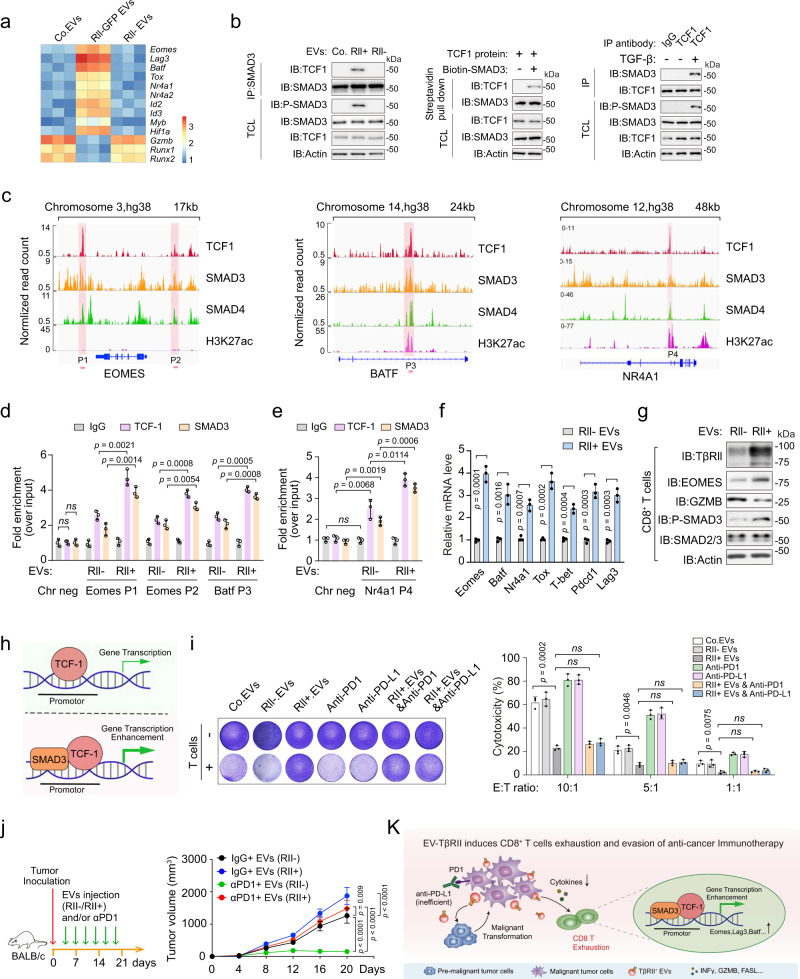
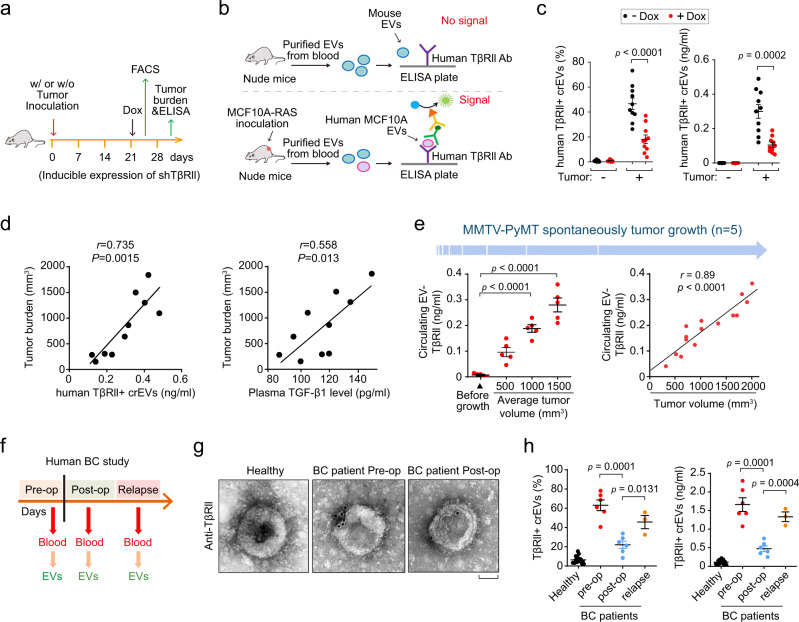
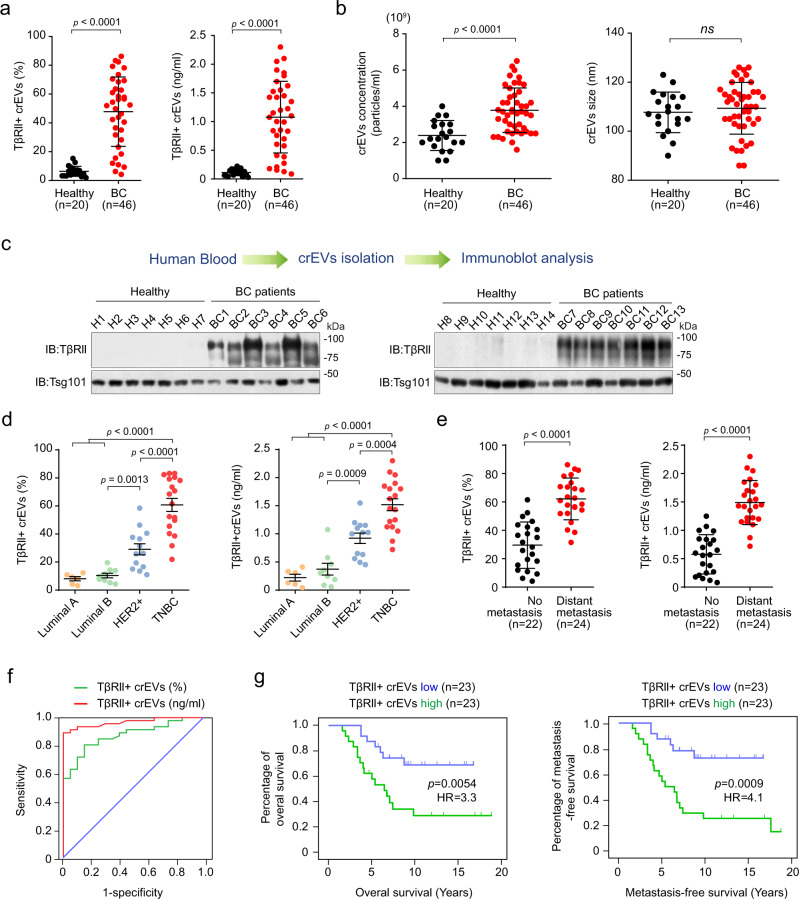
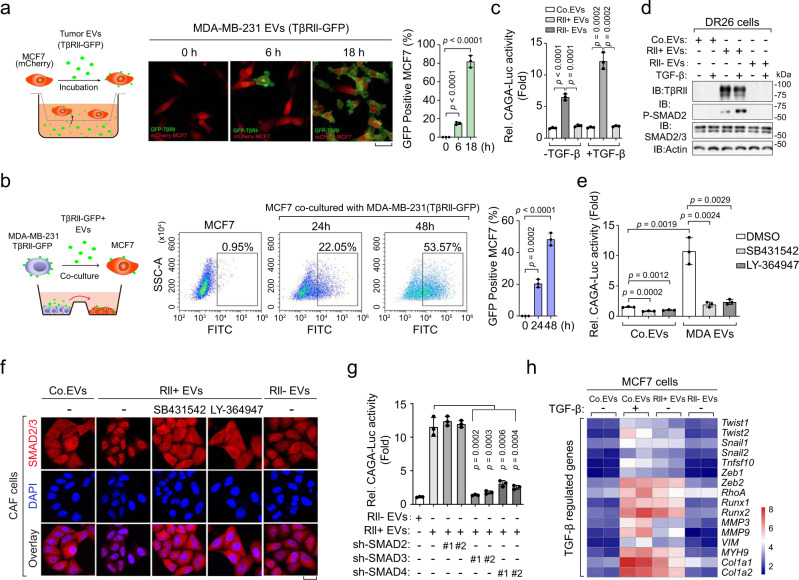
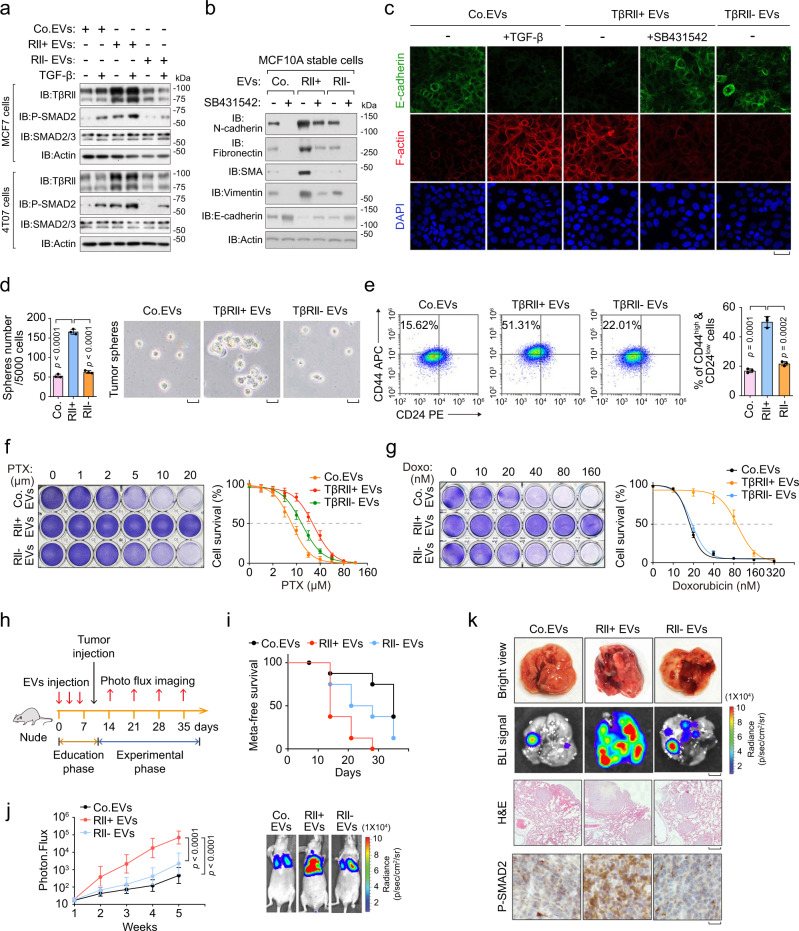
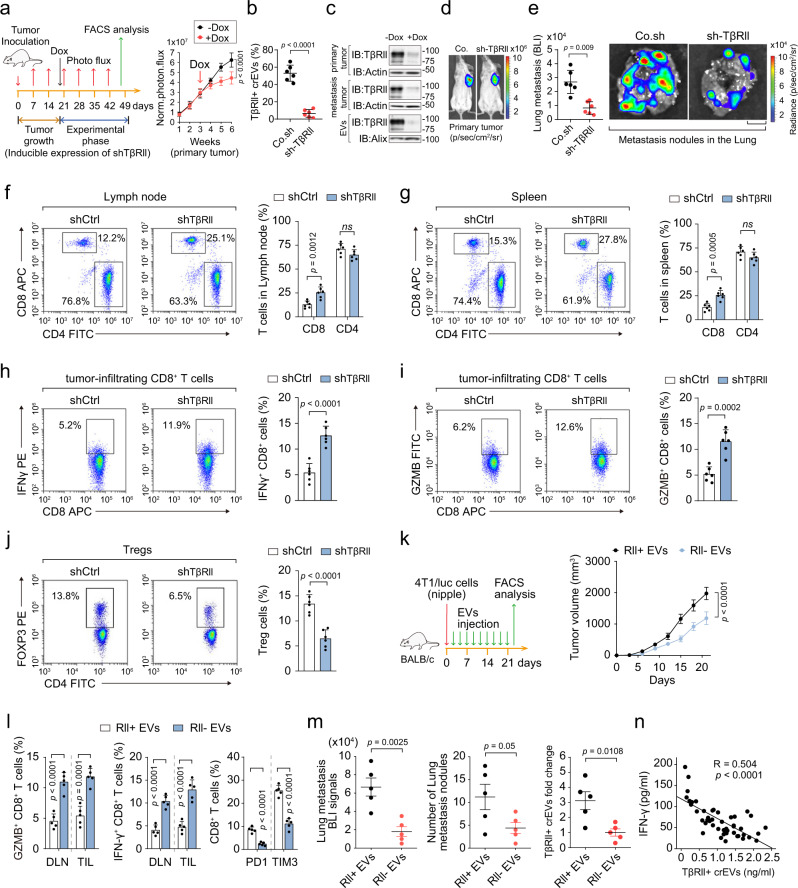
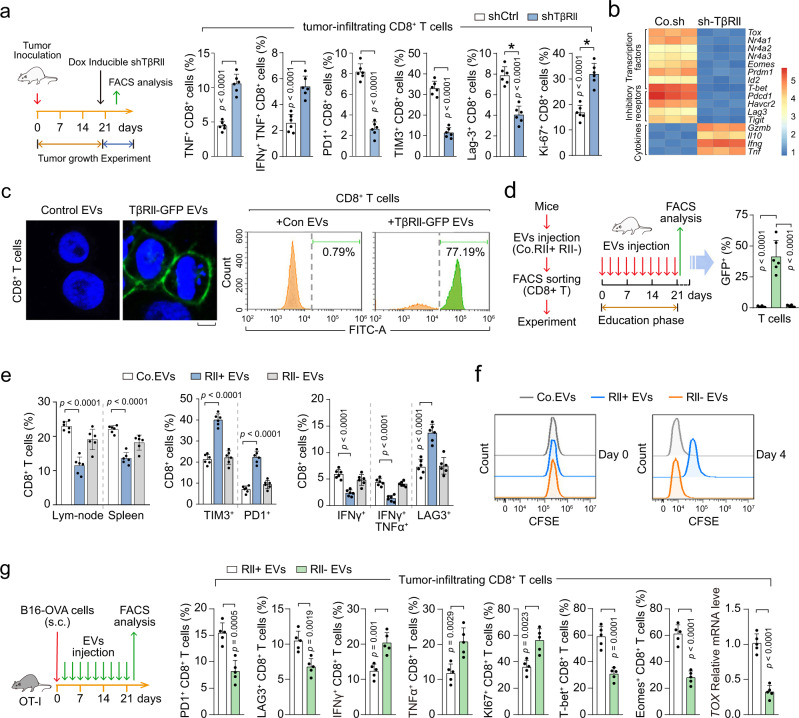
Cancer immunotherapies have shown clinical success in various types of tumors but the patient response rate is low, particularly in breast cancer. Here we report that malignant breast cancer cells can transfer active TGF-β type II receptor (TβRII) via tumor-derived extracellular vesicles (TEV) and thereby stimulate TGF-β signaling in recipient cells. Up-take of extracellular vesicle-TβRII (EV-TβRII) in low-grade tumor cells initiates epithelial-to-mesenchymal transition (EMT), thus reinforcing cancer stemness and increasing metastasis in intracardial xenograft and orthotopic transplantation models. EV-TβRII delivered as cargo to CD8 T cells induces the activation of SMAD3 which we demonstrated to associate and cooperate with TCF1 transcription factor to impose CD8 T cell exhaustion, resulting in failure of immunotherapy. The levels of TβRII circulating extracellular vesicles (crEV) appears to correlate with tumor burden, metastasis and patient survival, thereby serve as a non-invasive screening tool to detect malignant breast tumor stages. Thus, our findings not only identify a possible mechanism by which breast cancer cells can promote T cell exhaustion and dampen host anti-tumor immunity, but may also identify a target for immune therapy against the most devastating breast tumors.
癌症免疫疗法在各种类型的肿瘤中显示出了临床成功,但患者的响应率较低,特别是在乳腺癌中。在这里,我们报告恶性乳腺癌细胞可以通过肿瘤来源的细胞外囊泡(TEV)转移活性 TGF-β 型 II 受体(TβRII),从而刺激受体细胞中的 TGF-β 信号。在低级别肿瘤细胞中摄取细胞外囊泡-TβRII(EV-TβRII)会引发上皮-间充质转化(EMT),从而增强癌症干性并增加心内异种移植和原位移植模型中的转移。作为货物递送至 CD8 T 细胞的 EV-TβRII 诱导 SMAD3 的激活,我们证明 SMAD3 与 TCF1 转录因子结合并合作,以施加 CD8 T 细胞耗竭,从而导致免疫疗法失败。循环细胞外囊泡(crEV)中的 TβRII 水平似乎与肿瘤负担、转移和患者生存相关,因此可作为一种非侵入性筛选工具来检测恶性乳腺癌的分期。因此,我们的发现不仅确定了乳腺癌细胞促进 T 细胞耗竭和抑制宿主抗肿瘤免疫的可能机制,而且还可能确定了针对最具破坏性的乳腺癌的免疫治疗靶标。