New York Chiropractic and Physiotherapy Centre, EC Healthcare, Kowloon, Hong Kong.
Connor Whole Health, University Hospitals Cleveland Medical Center, Cleveland, OH, USA.
Med Sci Monit. 2022 Aug 2;28:e937640. doi: 10.12659/MSM.937640.
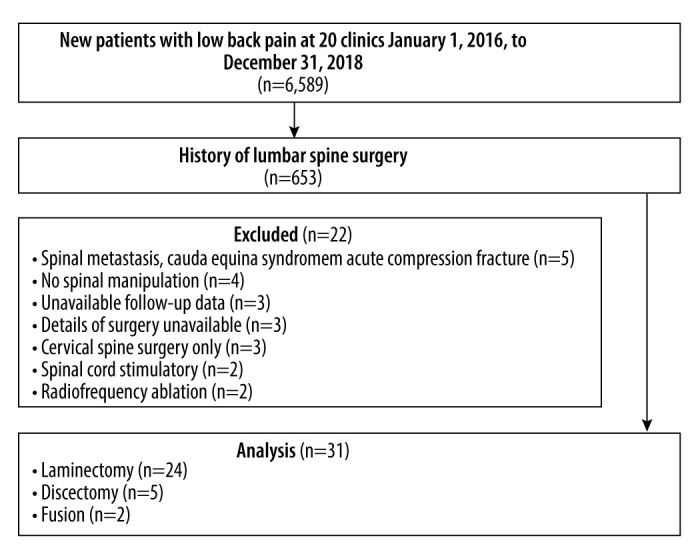
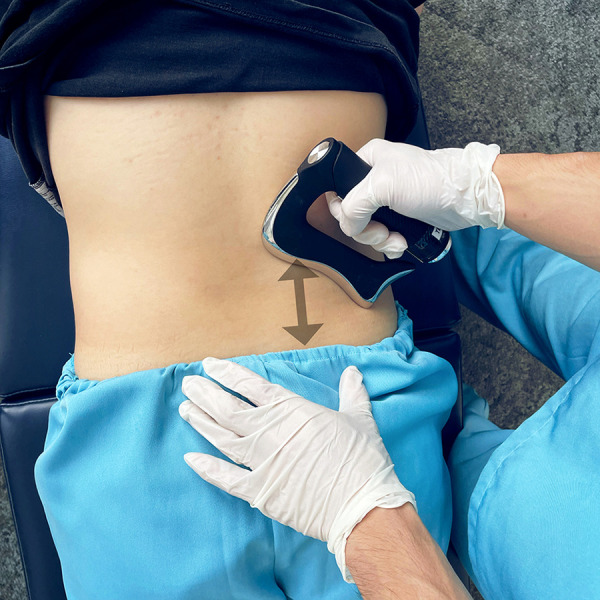
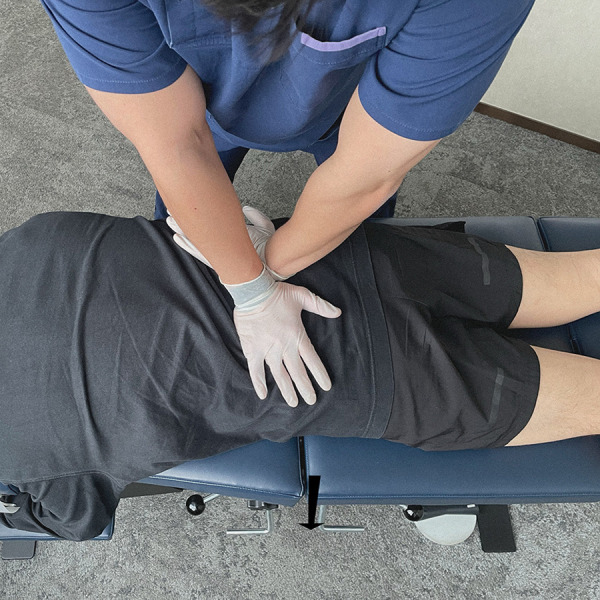
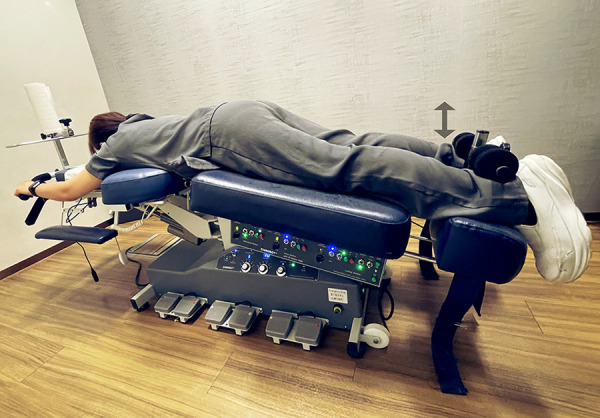
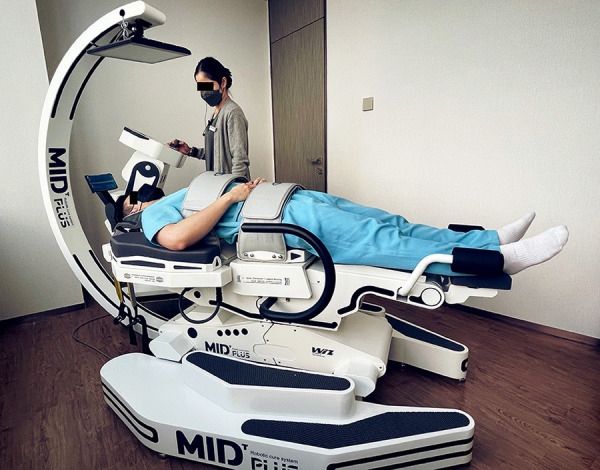
BACKGROUND The term "persistent spinal pain syndrome type 2" (PSPS-2) has been proposed by the International Association for the Study of Pain to replace the term "failed back surgery syndrome". This retrospective study aimed to evaluate effectiveness of multimodal care featuring chiropractic spinal manipulation (CSMT) in 31 adults in Hong Kong with PSPS-2. MATERIAL AND METHODS We identified new adult patients with PSPS-2 receiving CSMT from 2016 to 2018. Demographic and clinical data and baseline/follow-up numeric pain rating scale (NPRS) and Oswestry Disability Index (ODI) scores were extracted. Multiple linear regression was used to examine posttreatment NPRS and ODI reduction, with clinical variables as covariates. RESULTS Of 6589 patients with low back pain, 31 met criteria (mean age 52.2±13.7 years). Surgeries included laminectomy (81%), discectomy (13%), and fusion (6%). Mean baseline NRPS was 6.6±1.9; ODI was 43.8±15.1%. Patients received CSMT (100%), drop technique (81%), passive modalities (65%), soft tissue manipulation (13%), flexion-distraction (13%), and mechanical traction (13%). Mean posttreatment NPRS was 0.6±1.0; ODI was 2.4±3.3%. All patients had a minimum clinically important difference for NPRS (≥2/10) and ODI (≥30%). One year after treatment, 48% maintained improvement, 42% experienced recurrence; in 10%, follow-up was unavailable. Regression analysis identified younger age, shorter symptom duration, and greater baseline NPRS as predictors of NPRS reduction; and greater baseline ODI as a predictor of ODI reduction (all P<0.05). CONCLUSIONS Patients with PSPS-2 improved with multimodal care featuring CSMT, which was more effective in patients with younger age, shorter symptom duration, and higher baseline pain or disability levels.
国际疼痛研究协会(IASP)提出了“持续性脊柱疼痛综合征 2 型(PSPS-2)”这一术语,以取代“失败性腰椎手术后综合征”。本回顾性研究旨在评估香港 31 例 PSPS-2 成人患者接受整脊脊柱手法治疗(CSMT)的综合疗效。
我们从 2016 年至 2018 年确定了接受 CSMT 的新的 PSPS-2 成年患者。提取人口统计学和临床数据以及基线/随访数字疼痛评分量表(NPRS)和 Oswestry 残疾指数(ODI)评分。采用多元线性回归分析治疗后 NPRS 和 ODI 降低情况,并将临床变量作为协变量。
在 6589 例腰痛患者中,有 31 例符合标准(平均年龄 52.2±13.7 岁)。手术包括椎板切除术(81%)、椎间盘切除术(13%)和融合术(6%)。基线 NPRS 平均为 6.6±1.9;ODI 为 43.8±15.1%。患者接受 CSMT(100%)、减压技术(81%)、被动治疗(65%)、软组织手法(13%)、屈伸牵引(13%)和机械牵引(13%)。治疗后 NPRS 平均为 0.6±1.0;ODI 为 2.4±3.3%。所有患者的 NPRS(≥2/10)和 ODI(≥30%)均有最小临床意义的差异。治疗 1 年后,48%的患者保持改善,42%的患者复发;10%的患者随访缺失。回归分析发现,年龄较小、症状持续时间较短、基线 NPRS 较高是 NPRS 降低的预测因素;而基线 ODI 较高是 ODI 降低的预测因素(均 P<0.05)。
PSPS-2 患者接受 CSMT 综合治疗后可改善症状,对于年龄较小、症状持续时间较短、基线疼痛或残疾程度较高的患者效果更好。