Jaradat Roa'a, Lahlouh Amro, Aldabbour Belal, Saadeh Alaa, Mustafa Mohamed
Department of Physiology and Pharmacology, Faculty of Medicine and Dentistry, University of Western Ontario, London, Ontario, Canada.
Department of Clinical Neurological Sciences, Schulich School of Medicine and Dentistry, University of Western Ontario, London, Ontario, Canada.
Oman Med J. 2022 Jul 31;37(4):e403. doi: 10.5001/omj.2022.78. eCollection 2022 Jul.
Resident physicians are particularly prone to sleep disturbance due to long shift hours and excessive workload. Despite the numerous measures undertaken to improve their wellbeing, it is still unknown if limiting the work shift duration would improve sleep quality. We sought to compare sleep quality, anxiety, and depression before and after implementing duty hour limits. We also aim to evaluate how satisfaction with life is related to sleep quality, anxiety, and depression.
We used a self-reported questionnaire to obtain data about sleep quality, anxiety, and depression using the Pittsburgh Sleep Quality Index and Patient Health Questionnaire-4 (PHQ-4) scales, respectively. Using data from a previous study, we compared those parameters before and after implementing duty hour reduction across several specialties at King Abdullah University Hospital, Jordan. Furthermore, we investigated residents' life satisfaction using the Satisfaction with Life Scale.
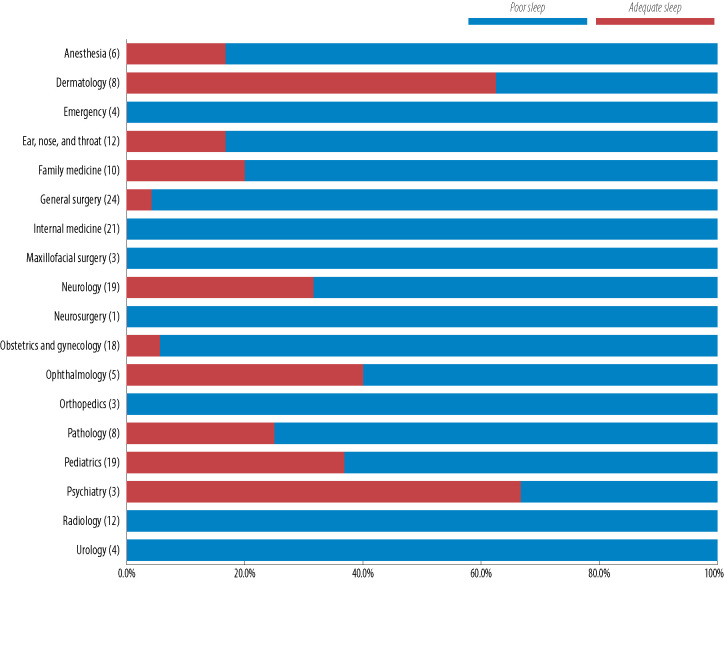
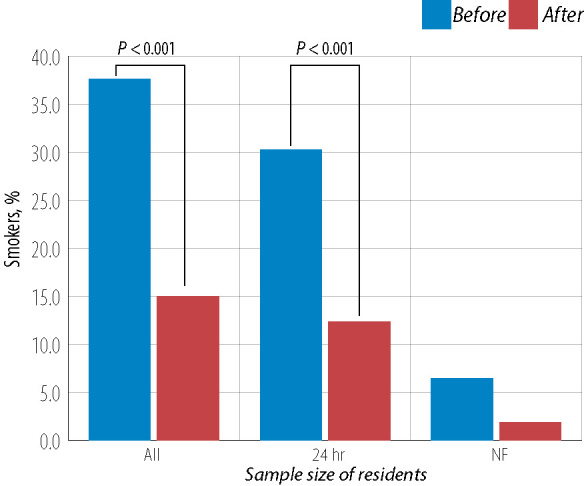
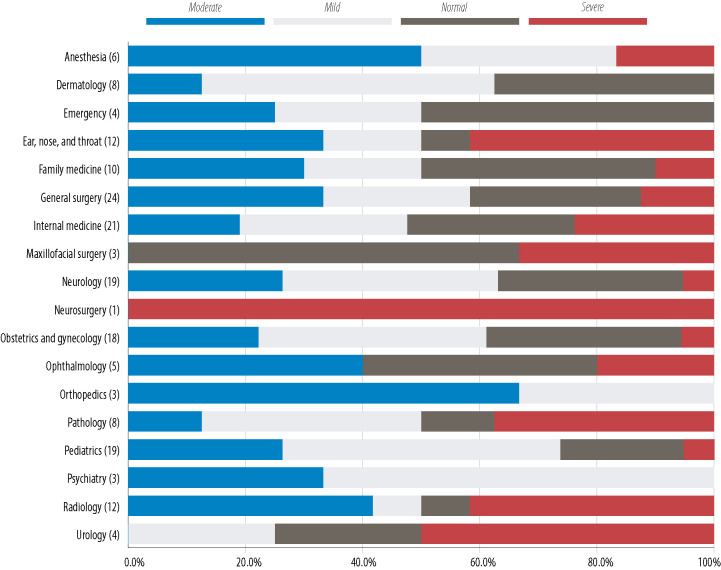
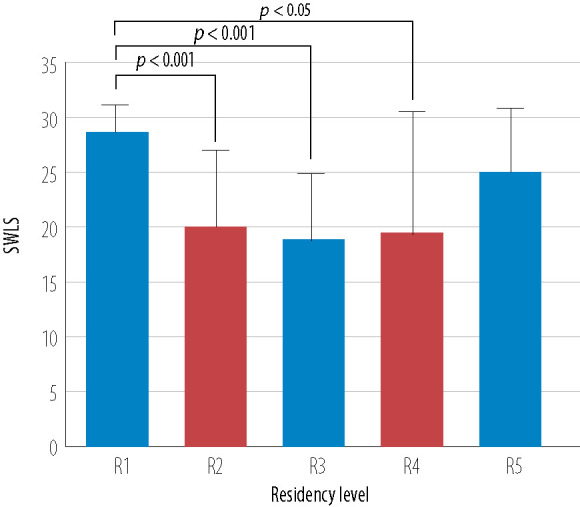
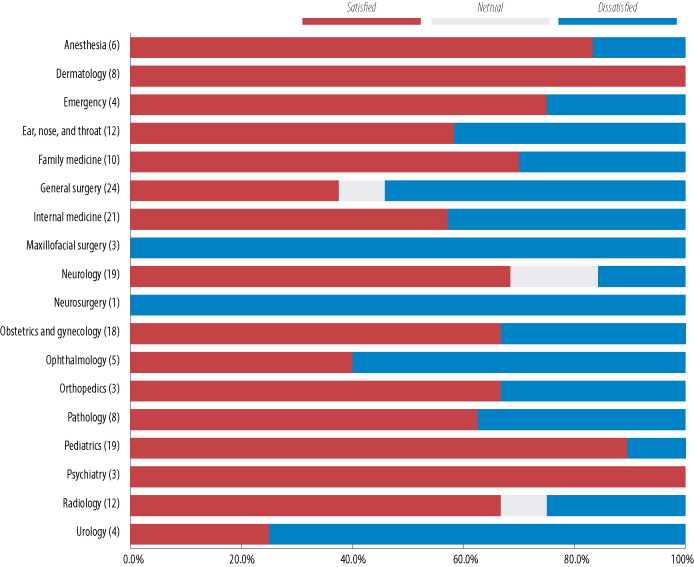
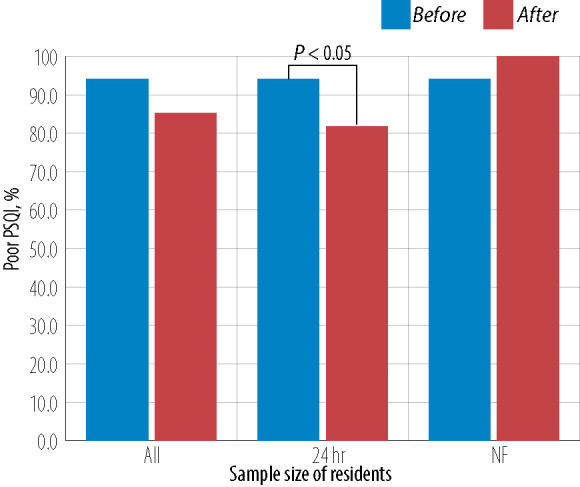
One hundred and eighty residents filled the questionnaire (median age = 26.5 years). Males reported higher rates of poor sleep quality while females had higher rates of anxiety and depression. Decreasing the duration of on-call shifts from 32 to 24 hours decreased the prevalence of poor sleep quality from 91.5% to 83.2% ( 0.038), and smoking rates decreased from 30.4% to 12.5% ( < 0.001). More than six on-calls per month were associated with poorer quality of sleep. Night float shifts significantly decreased rates of moderate and severe PHQ-4 scores ( < 0.001). In addition, 63.3% of residents were satisfied with life. Life satisfaction was associated with enhanced sleep quality and lower PHQ-4 scores ( 0.007 and < 0.001, respectively).
Optimizing shift scheduling and duration can positively influence rates of sleep quality, anxiety, depression, and smoking. More interventions should be tackled along with duty hour limits to optimize residents' life satisfaction.
住院医师由于长时间轮班和工作量过大,特别容易出现睡眠障碍。尽管采取了许多措施来改善他们的健康状况,但限制工作轮班时长是否能改善睡眠质量仍不清楚。我们试图比较实施值班时间限制前后的睡眠质量、焦虑和抑郁情况。我们还旨在评估生活满意度与睡眠质量、焦虑和抑郁之间的关系。
我们使用一份自我报告问卷,分别采用匹兹堡睡眠质量指数和患者健康问卷 -4(PHQ -4)量表来获取有关睡眠质量、焦虑和抑郁的数据。利用先前一项研究的数据,我们比较了约旦阿卜杜拉国王大学医院多个专科实施减少值班时间前后的这些参数。此外,我们使用生活满意度量表调查了住院医师的生活满意度。
180名住院医师填写了问卷(中位年龄 = 26.5岁)。男性报告的睡眠质量差的比例较高,而女性的焦虑和抑郁比例较高。将值班轮班时长从32小时减少到24小时,睡眠质量差的患病率从91.5%降至83.2%(P = 0.038),吸烟率从30.4%降至12.5%(P < 0.001)。每月超过6次值班与较差的睡眠质量相关。夜间轮值显著降低了中度和重度PHQ -4评分的比例(P < 0.001)。此外,63.3%的住院医师对生活感到满意。生活满意度与改善的睡眠质量和较低的PHQ -4评分相关(分别为P = 0.007和P < 0.001)。
优化轮班安排和时长可对睡眠质量、焦虑、抑郁和吸烟率产生积极影响。应与值班时间限制一起采取更多干预措施,以优化住院医师的生活满意度。