School of Health, Medical and Applied Sciences, Central Queensland University, Sydney, Australia.
Appleton Institute, Physical Activity Research Group, Central Queensland University, Rockhampton, Australia.
J Glob Health. 2022 Aug 3;12:04056. doi: 10.7189/jogh.12.04056.
The burden of Type 2 Diabetes Mellitus (T2DM) in South Asian countries is increasing rapidly. Self-care behaviour plays a vital role in managing T2DM and preventing complications. Research on self-care behaviours among people with T2DM has been widely conducted in South Asian countries, but there are no systematic reviews that assess self-care behaviour among people with T2DM in South Asia. This study systematically assessed the studies reporting self-care behaviours among people with T2DM in South-Asia.
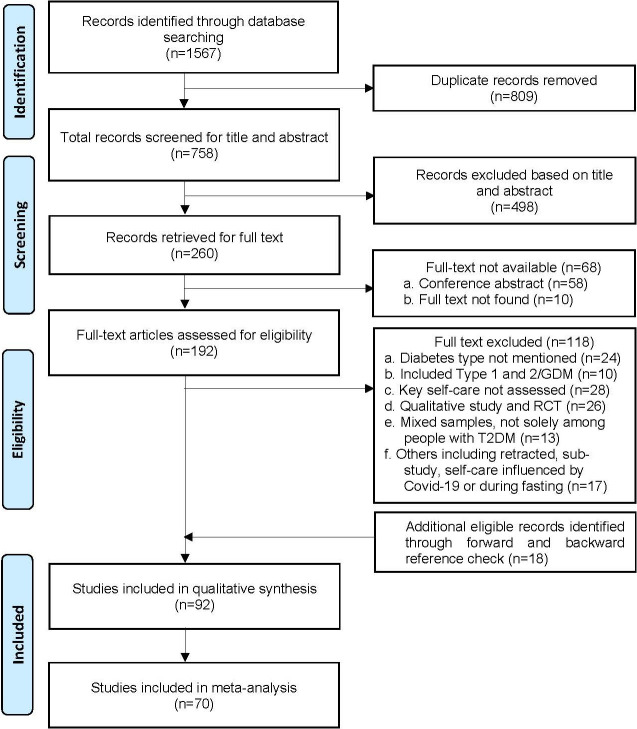
Adhering to the PRISMA guidelines, we searched six bibliographic databases (Scopus, PubMed, CINAHL, Embase, Web of Science, and PsychInfo) to identify the relevant articles published between January 2000 through March 2022. Eligibility criteria included all observational and cross-sectional studies reporting on the prevalence of self-care behaviours (ie, diet, physical activity, medication adherence, blood glucose monitoring, and foot care) conducted in South Asian countries among people with T2DM.
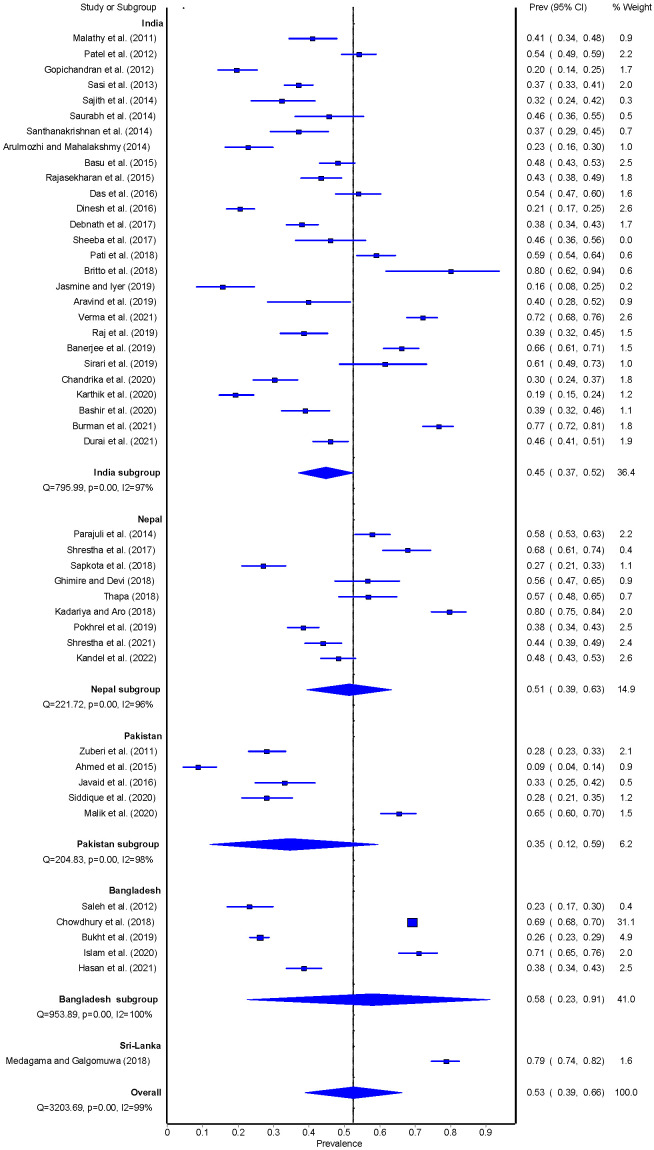
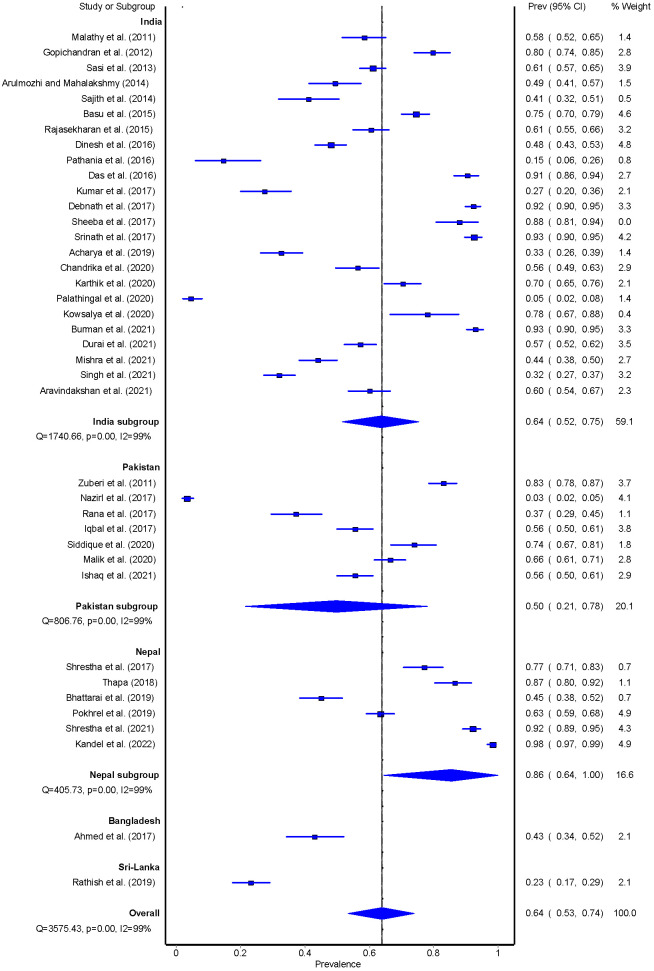
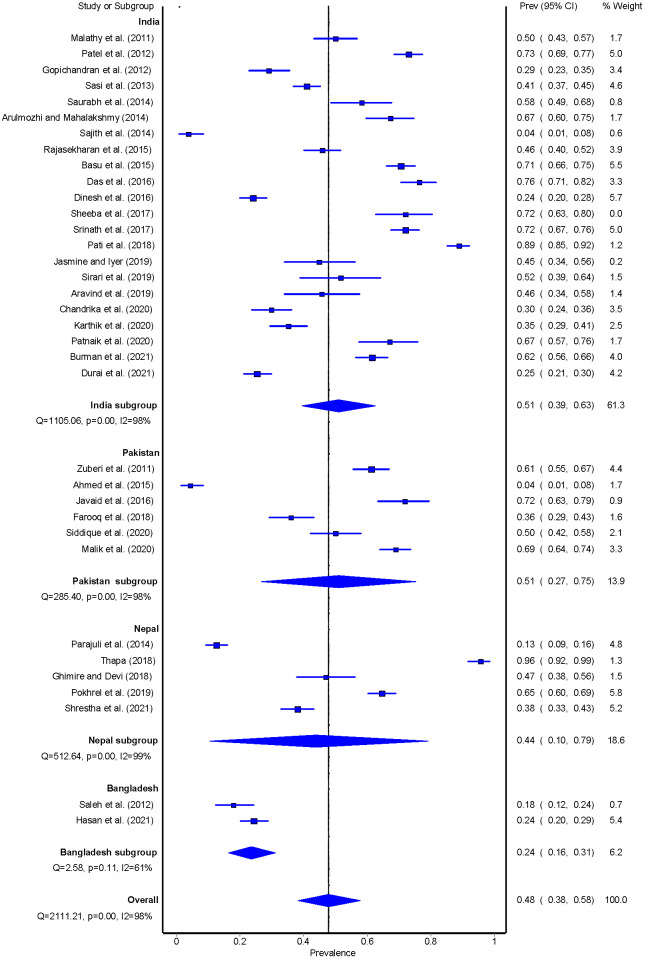
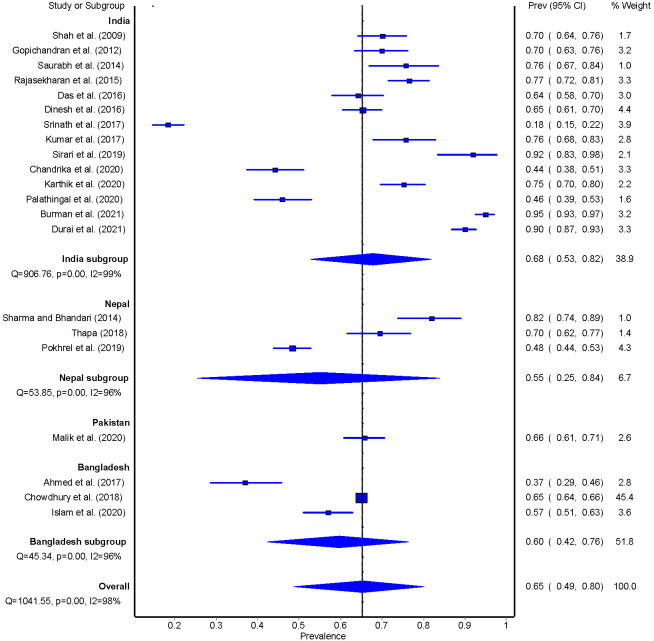
The database search returned 1567 articles. After deduplication (n = 758) and review of full-text articles (n = 192), 92 studies met inclusion criteria and were included. Forward and backward reference checks were performed on included studies, which resulted in an additional 18 articles. The pooled prevalence of adherence to blood glucose monitoring was 65% (95% CI = 49-80); 64% for medication adherence (95% CI = 53-74); 53% for physical activity (95% CI = 39-66); 48% for diet (95% CI = 38-58); 42% for foot care (95% CI = 30-54). About a quarter of people with T2DM consumed alcohol (25.2%, IQR = 13.8%-38.1%) and were using tobacco products (18.6%, IQR = 10.6%-23.8%).
Our findings suggest that the prevalence of self-care behaviours among people with T2DM in South Asia is low. This shows an urgent need to thoroughly investigate the barriers to the practising of self-care and design and implement interventions to improve diabetes self-care behaviour among people with T2DM in South Asia.
2 型糖尿病(T2DM)在南亚国家的负担正在迅速增加。自我护理行为在管理 T2DM 和预防并发症方面起着至关重要的作用。南亚国家已经广泛开展了关于 T2DM 患者自我护理行为的研究,但没有系统评价评估南亚 T2DM 患者的自我护理行为。本研究系统评估了报告南亚 T2DM 患者自我护理行为的研究。
根据 PRISMA 指南,我们在 6 个文献数据库(Scopus、PubMed、CINAHL、Embase、Web of Science 和 PsychInfo)中搜索了 2000 年 1 月至 2022 年 3 月期间发表的相关文章。纳入标准包括所有在南亚国家开展的关于 T2DM 患者自我护理行为(即饮食、体育锻炼、药物依从性、血糖监测和足部护理)的观察性和横断面研究。
数据库检索返回了 1567 篇文章。经过去重(n=758)和全文文章审查(n=192),92 项研究符合纳入标准并被纳入。对纳入的研究进行了向前和向后的参考文献检查,结果又增加了 18 项研究。血糖监测依从性的汇总患病率为 65%(95%CI=49-80);药物依从性为 64%(95%CI=53-74);体育锻炼为 53%(95%CI=39-66);饮食为 48%(95%CI=38-58);足部护理为 42%(95%CI=30-54)。约四分之一的 T2DM 患者饮酒(25.2%,IQR=13.8%-38.1%)和使用烟草制品(18.6%,IQR=10.6%-23.8%)。
我们的研究结果表明,南亚 T2DM 患者的自我护理行为患病率较低。这表明迫切需要彻底调查自我护理实践的障碍,并设计和实施干预措施,以改善南亚 T2DM 患者的糖尿病自我护理行为。