Institute of Psychology, Educational Psychology and Personality Development, University of Hamburg, Von-Melle-Park 5, 20146, Hamburg, Germany.
Department of Psychology, Sexuality and Gender Lab, Queen's University, Kingston, Canada.
Arch Sex Behav. 2022 Nov;51(8):3765-3789. doi: 10.1007/s10508-022-02375-8. Epub 2022 Aug 2.
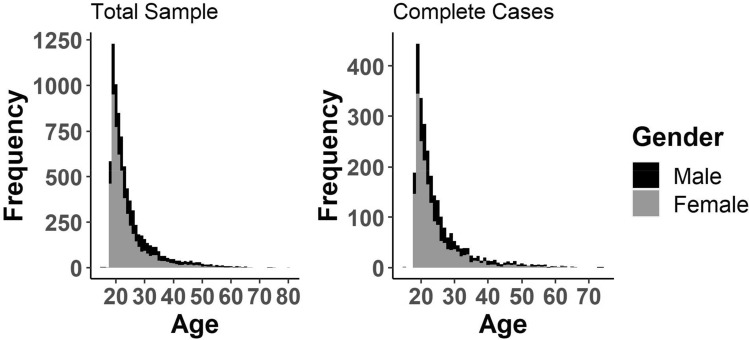
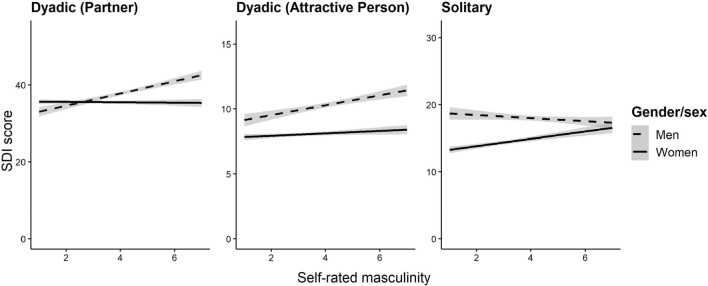
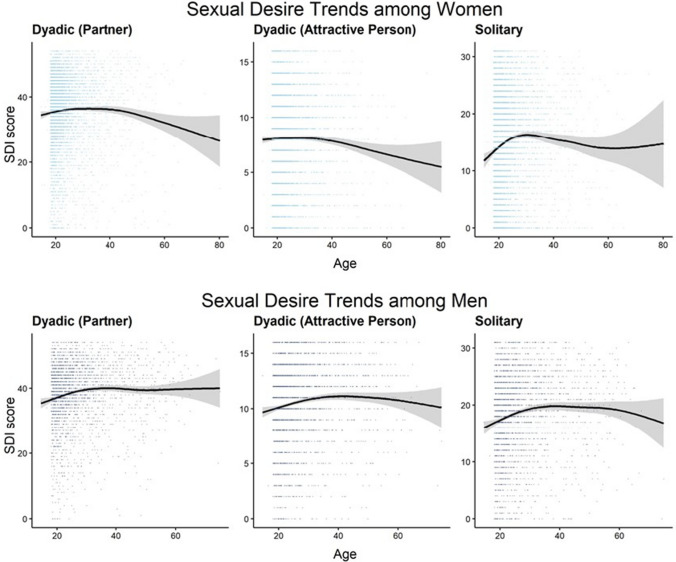
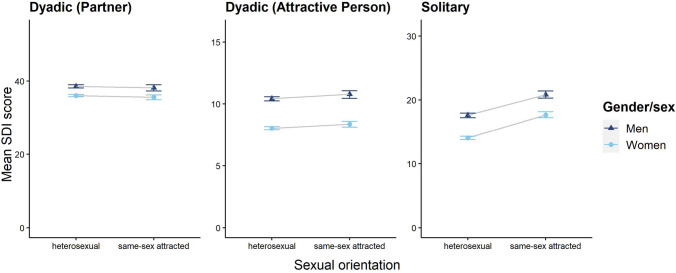
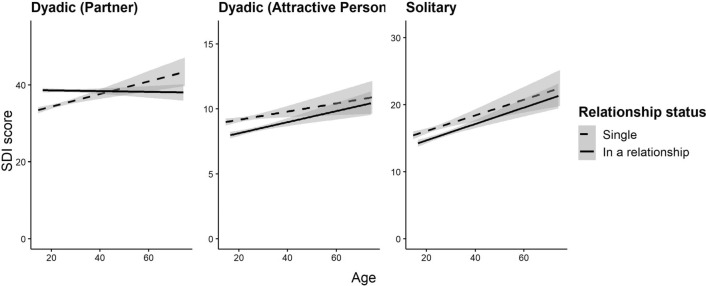
While most studies on sexuality in later life report that sexual desire declines with age, little is known about the exact nature of age effects on sexual desire. Using self-reported dyadic sexual desire relating to a partner, dyadic sexual desire relating to an attractive person, and solitary sexual desire from a large (N > 8000) and age diverse (14.6-80.2 years) online sample, the current study had three goals: First, we investigated relationships between men and women's sexual desire and age. Second, we examined whether individual differences such as gender/sex, sexual orientation, self-rated masculinity, relationship status, self-rated attractiveness, and self-rated health predict sexual desire. Third, we examined how these associations differed across sexual desire facets. On average, the associations between age and both men and women's sexual desire followed nonlinear trends and differed between genders/sexes and types of sexual desire. Average levels of all types of sexual desire were generally higher in men. Dyadic sexual desire related positively to self-rated masculinity and having a romantic partner and solitary desire was higher in people with same-sex attraction. We discuss the results in the context of the evolutionary hypothesis that predict an increase of sexual desire and female reproductive effort prior to declining fertility. Our findings both support and challenge beliefs about gender/sex specificity of age effects on sexual desire and highlight the importance of differentiating between desire types.
虽然大多数关于晚年性行为的研究报告称,性欲会随着年龄的增长而下降,但对于年龄对性欲的确切影响知之甚少。本研究使用来自大型(N>8000)和年龄多样化(14.6-80.2 岁)在线样本的自我报告的与伴侣有关的二元性欲望、与有吸引力的人有关的二元性欲望和单一性欲望,有三个目标:首先,我们调查了男性和女性性欲与年龄之间的关系。其次,我们研究了性别/性别、性取向、自我评估的男性气质、关系状况、自我评估的吸引力和自我评估的健康等个体差异是否预测性欲。第三,我们研究了这些关联在不同的性欲方面有何不同。平均而言,年龄与男性和女性性欲之间的关联遵循非线性趋势,并且在性别/性别和性欲类型之间存在差异。所有类型的性欲的平均水平在男性中通常较高。与伴侣有关的二元性欲望与自我评估的男性气质呈正相关,与浪漫伴侣有关,而与同性吸引力有关的单一欲望较高。我们根据预测性欲和女性生殖努力在生育能力下降之前增加的进化假说来讨论结果。我们的研究结果既支持又挑战了关于年龄对性欲的性别/性别特异性影响的信念,并强调了区分欲望类型的重要性。