Copenhagen Hepatitis C Program (CO-HEP), Department of Infectious Diseases, Copenhagen University Hospital-Hvidovre, Hvidovre, Denmark and Department of Immunology and Microbiology, Faculty of Health and Medical Sciences, University of Copenhagen, Copenhagen, Denmark.
Department of Infectious Diseases, Copenhagen University Hospital-Hvidovre, Hvidovre, Denmark.
Gut. 2023 Mar;72(3):560-572. doi: 10.1136/gutjnl-2021-326323. Epub 2022 Aug 2.
A prophylactic vaccine is needed to control the HCV epidemic, with genotypes 1-3 causing >80% of worldwide infections. Vaccine development is hampered by HCV heterogeneity, viral escape including protection of conserved neutralising epitopes and suboptimal efficacy of HCV cell culture systems. We developed cell culture-based inactivated genotype 1-3 HCV vaccine candidates to present natively folded envelope proteins to elicit neutralising antibodies.
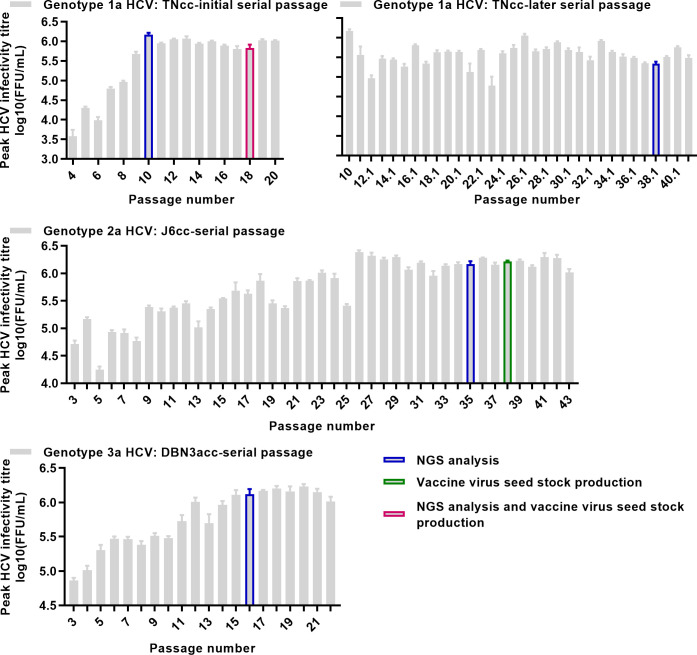
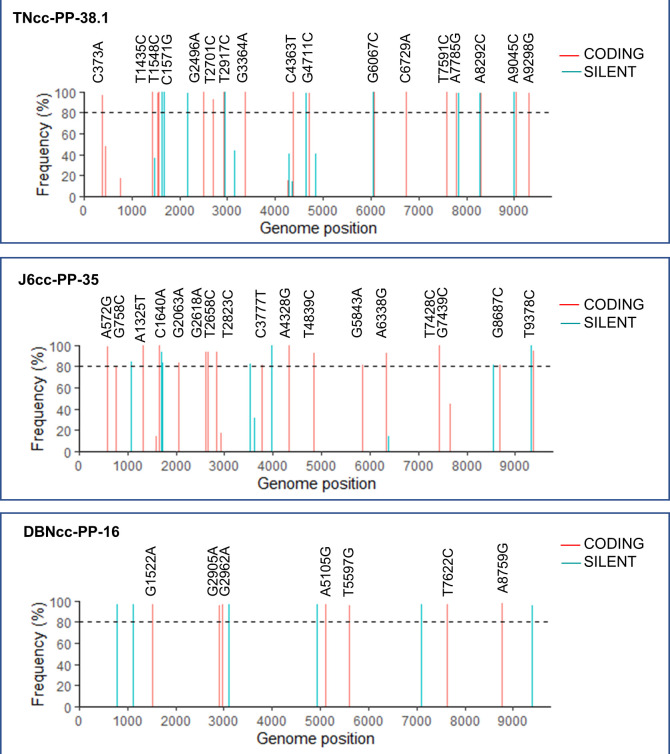
High-yield genotype 1a, 2a and 3a HCV were developed by serial passage of TNcc, J6cc and DBN3acc in Huh7.5 cells and engineering of acquired mutations detected by next-generation sequencing. Neutralising epitope exposure was determined in cell-based neutralisation assays using human monoclonal antibodies AR3A and AR4A, and polyclonal antibody C211. BALB/c mice were immunised with processed and inactivated genotype 1a, 2a or 3a viruses using AddaVax, a homologue of the licenced adjuvant MF-59. Purified mouse and patient serum IgG were assayed for neutralisation capacity; mouse IgG and immune-sera were assayed for E1/E2 binding.
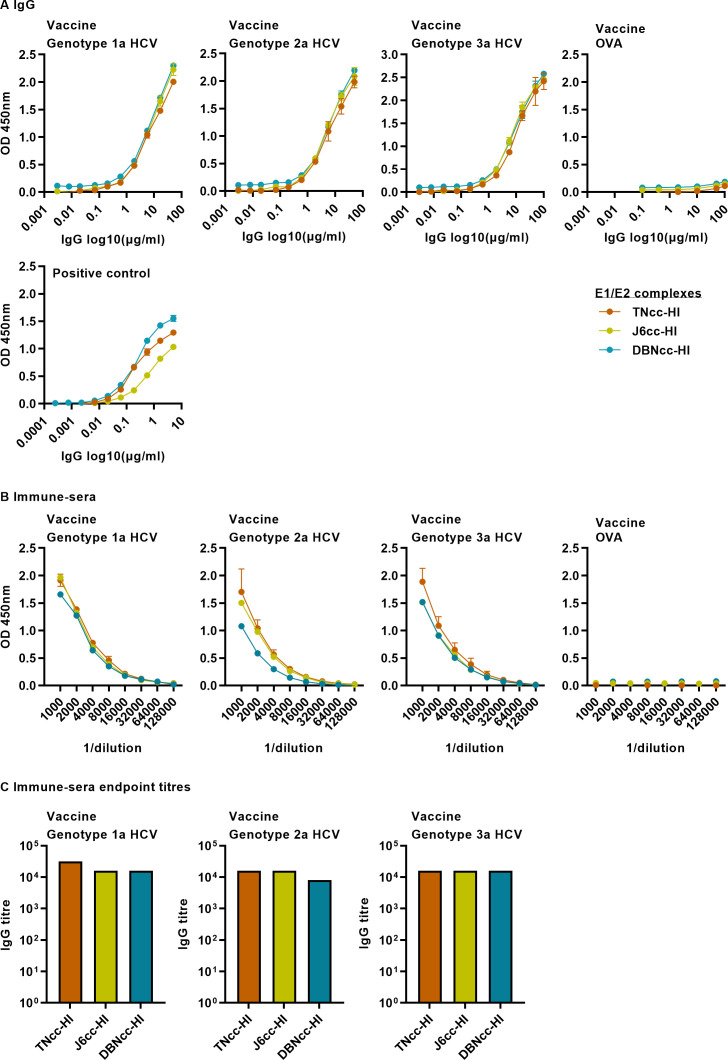
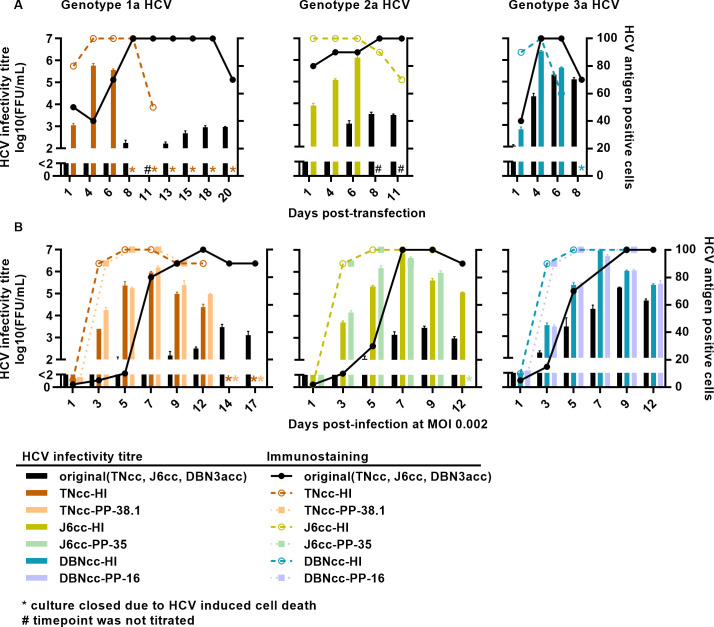
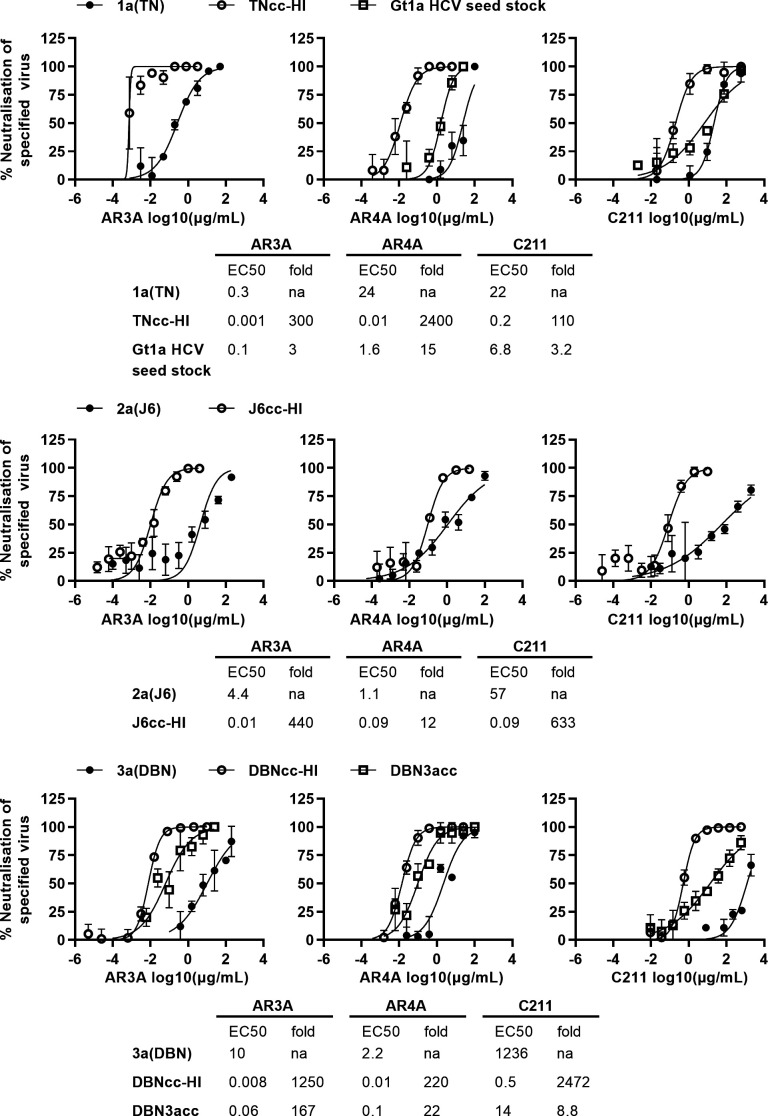
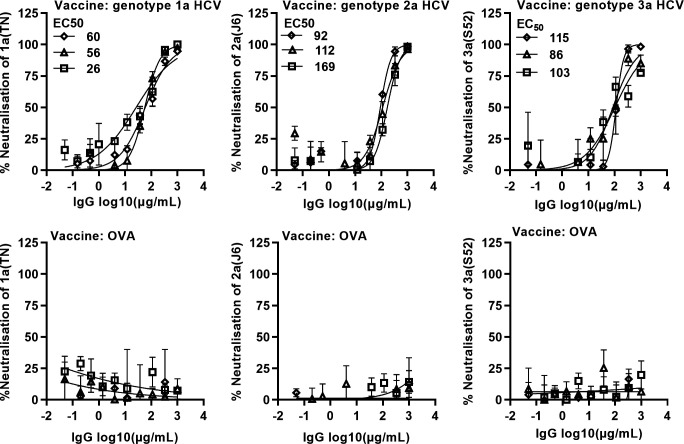
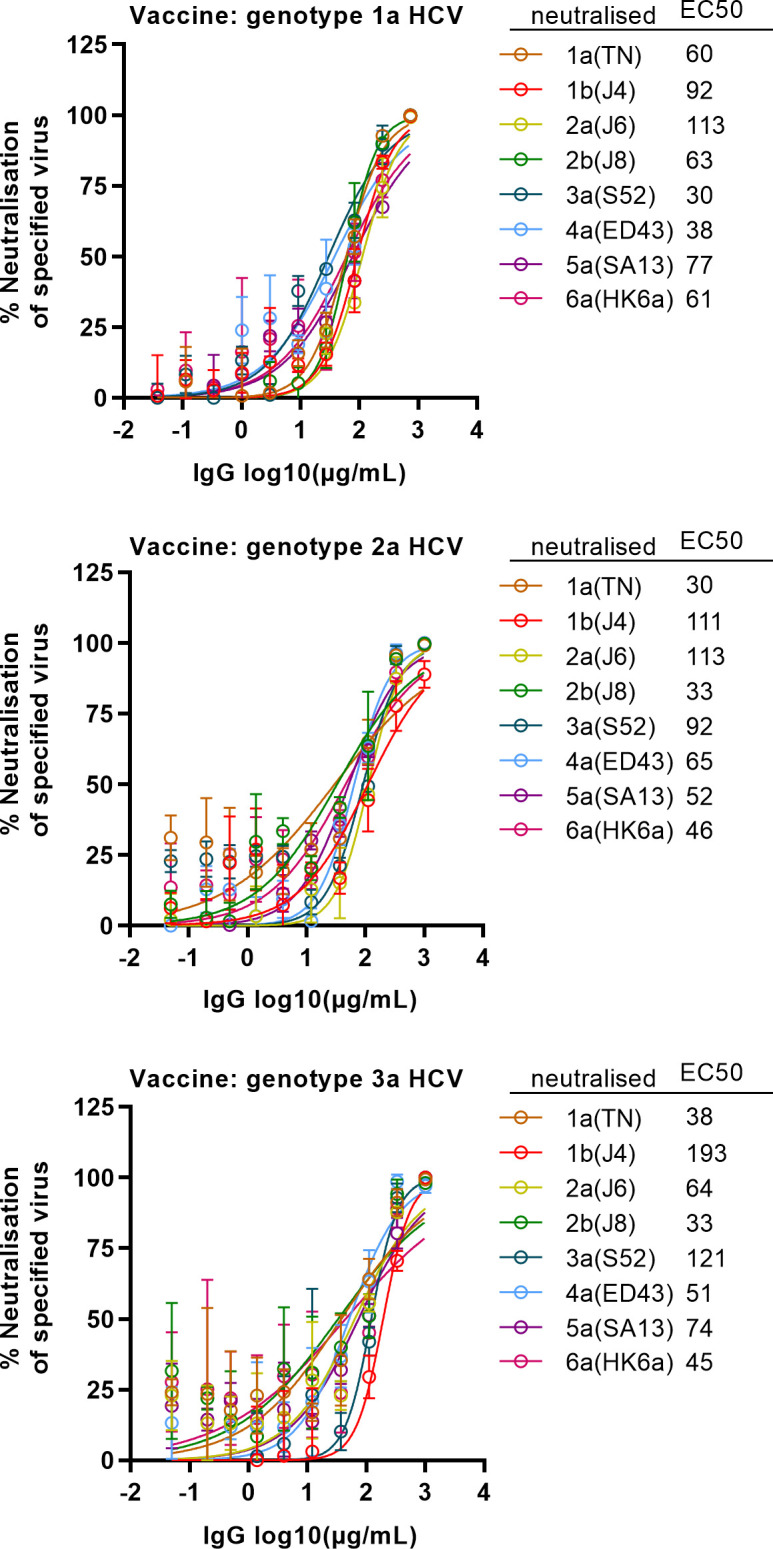
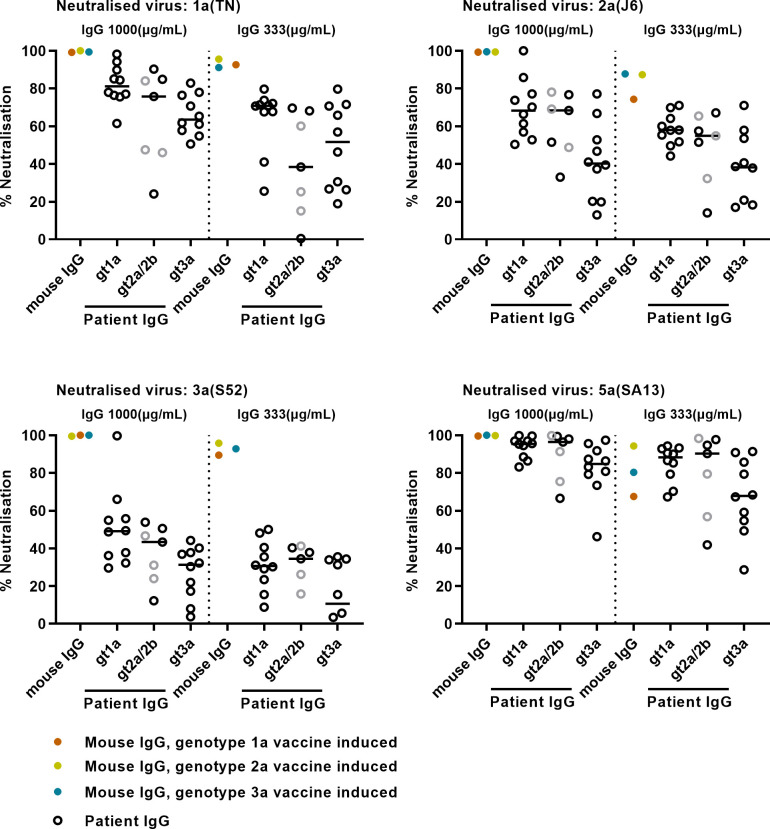
Compared with the original viruses, high-yield viruses had up to ~1000 fold increased infectivity titres (peak titres: 6-7 log10 focus-forming units (FFU)/mL) and up to ~2470 fold increased exposure of conserved neutralising epitopes. Vaccine-induced IgG broadly neutralised genotype 1-6 HCV (EC50: 30-193 µg/mL; mean 71 µg/mL), compared favourably with IgG from chronically infected patients, and bound genotype 1-3 E1/E2; immune-sera endpoint titres reached up to 32 000.
High-yield genotype 1-3 HCV could be developed as basis for inactivated vaccine candidates inducing broadly neutralising antibodies in mice supporting further preclinical development.
需要一种预防性疫苗来控制 HCV 流行,基因型 1-3 引起了全球 80%以上的感染。HCV 的异质性、病毒逃逸(包括对保守中和表位的保护)以及 HCV 细胞培养系统的效果不佳,阻碍了疫苗的开发。我们开发了基于细胞培养的失活基因型 1-3 HCV 疫苗候选物,以呈现天然折叠的包膜蛋白,从而引发中和抗体。
通过在 Huh7.5 细胞中连续传代 TNcc、J6cc 和 DBN3acc 以及下一代测序检测到的获得性突变的工程改造,开发了高产量的基因型 1a、2a 和 3a HCV。在基于细胞的中和测定中,使用人源单克隆抗体 AR3A 和 AR4A 以及多克隆抗体 C211 来确定中和表位的暴露情况。用 AddaVax(一种许可佐剂 MF-59 的同源物)对 BALB/c 小鼠进行了处理和失活的基因型 1a、2a 或 3a 病毒的免疫接种。纯化的小鼠和患者血清 IgG 用于检测中和能力;用 E1/E2 结合检测小鼠 IgG 和免疫血清。
与原始病毒相比,高产病毒的感染滴度增加了高达 1000 倍(峰值滴度:6-7 log10 焦点形成单位(FFU)/mL),并且保守中和表位的暴露增加了高达 2470 倍。疫苗诱导的 IgG 广泛中和基因型 1-6 HCV(EC50:30-193μg/mL;平均 71μg/mL),与慢性感染患者的 IgG 相比具有优势,并且结合基因型 1-3 E1/E2;免疫血清终点滴度达到 32000。
可以开发高产量的基因型 1-3 HCV,作为在小鼠中诱导广泛中和抗体的失活疫苗候选物的基础,支持进一步的临床前开发。