Department of Physical Medicine and Rehabilitation, Kaohsiung Veterans General Hospital, 386, Dazhong 1st Rd., Zuoying Dist., Kaohsiung City, 813414, Taiwan (ROC).
Department of Occupational Medicine, Kaohsiung Veterans General Hospital, 386, Dazhong 1st Rd., Zuoying Dist., Kaohsiung City, 813414, Taiwan (ROC).
BMC Public Health. 2022 Aug 2;22(1):1472. doi: 10.1186/s12889-022-13817-2.
Occupational accidents may lead laborers to lose their working capacities, affecting their physical and mental health. Occupational rehabilitation helps improve the ability of patients with occupational accidents and suggests appropriate jobs to avoid second injuries. This study aimed to identify whether any of the functional capacity evaluation (FCE) strength subtests predicted successful return to work.
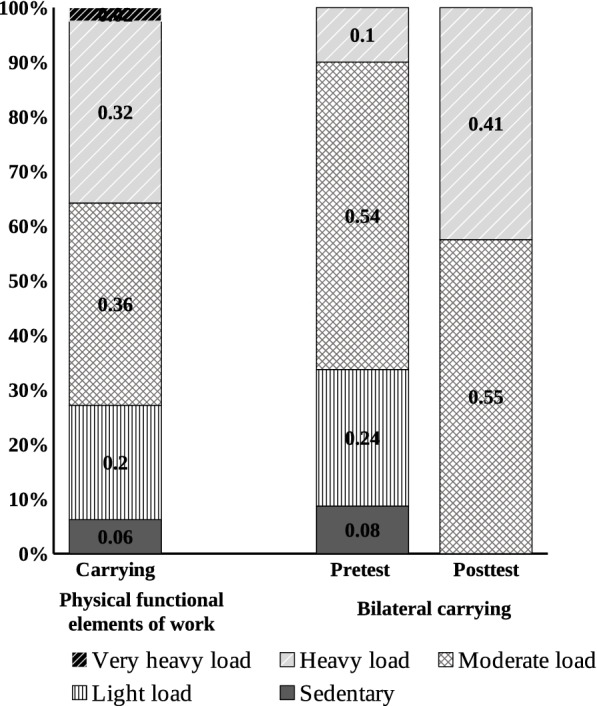
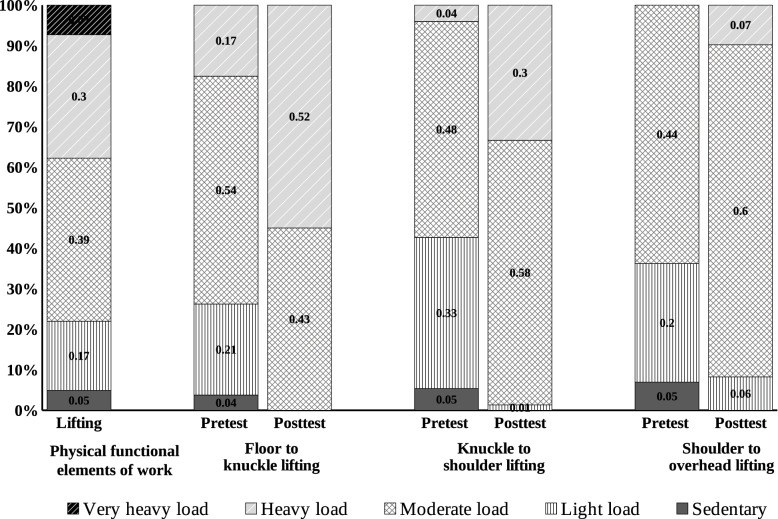
Data were collected of 84 patients receiving government-subsidized occupational rehabilitation between September 2016 and December 2018. A structured questionnaire was employed for pre- and post-training assessment, including basic information, information of the occupational accident, status of the laborer at the opening of the injury case, physical requirement for the job, and physical capacity. Eight subtests of strength were included in the physical capacity evaluation, i.e., carrying, lifting to several levels, power grip, and lateral pinch, to explore the association between the strength tests and return to work.
The unadjusted model showed that for every additional kilogram in bilateral carrying strength before work hardening training, the odds of successful return to work increased (crude odds ratio [OR] = 1.12, 95% confidence interval [CI] = 1.01-1.24, p = 0.027). After adjustment for basic demographic information and pre-accident physical functional elements of work, the odds of successful return to work increased (adjusted OR = 1.27, 95% CI = 1.04-1.54, p = 0.02) for every additional kilogram in the pre-training bilateral carrying strength. There were no statistically significant differences observed in the other seven subtests.
Through thorough evaluation and work hardening training provided in the occupational rehabilitation, patients' physical capacity can be understood and improved. However, a full evaluation of functional capacities is prolonged and time-consuming. This study provides evidence that pre-work-hardening bilateral carrying strength may be a promising predictor of return to work and we recommend to consider it as a prioritized test to assist in determining appropriate advice regarding return to work.
职业事故可能导致劳动者丧失工作能力,影响其身心健康。职业康复有助于提高职业事故患者的能力,并为其推荐合适的工作以避免再次受伤。本研究旨在确定功能能力评估(FCE)中的哪些力量测试能够预测成功重返工作岗位。
本研究收集了 2016 年 9 月至 2018 年 12 月期间接受政府补贴职业康复的 84 名患者的数据。采用结构化问卷进行培训前后评估,包括基本信息、职业事故信息、受伤案件受理时劳动者状况、工作物理要求和身体能力。身体能力评估包括 8 项力量测试,即搬运、举升到多个高度、握力和侧捏,以探讨力量测试与重返工作之间的关系。
未调整模型显示,在工作强化训练前,双侧搬运力量每增加 1 公斤,成功重返工作岗位的几率增加(未经调整的优势比[OR] = 1.12,95%置信区间[CI] = 1.01-1.24,p = 0.027)。在调整了基本人口统计学信息和事故前工作的身体功能元素后,在工作强化训练前,双侧搬运力量每增加 1 公斤,成功重返工作岗位的几率增加(调整后的 OR = 1.27,95% CI = 1.04-1.54,p = 0.02)。其他 7 项测试没有统计学上的显著差异。
通过在职业康复中进行全面的评估和工作强化训练,可以了解和提高患者的身体能力。然而,全面的功能能力评估既冗长又耗时。本研究提供的证据表明,工作强化训练前的双侧搬运力量可能是重返工作岗位的一个有前途的预测指标,我们建议将其作为一个优先测试,以协助确定重返工作岗位的适当建议。