Orritt Kyle M, Feng Lipeng, Newell Juliette F, Sutton Jack N, Grossman Scott, Germe Thomas, Abbott Lauren R, Jackson Holly L, Bury Benjamin K L, Maxwell Anthony, McPhillie Martin J, Fishwick Colin W G
School of Chemistry, University of Leeds Leeds LS2 9JT UK
Dept. Biochemistry & Metabolism, John Innes Centre Norwich Research Park Norwich NR4 7UH UK
RSC Med Chem. 2022 Jun 16;13(7):831-839. doi: 10.1039/d2md00049k. eCollection 2022 Jul 20.
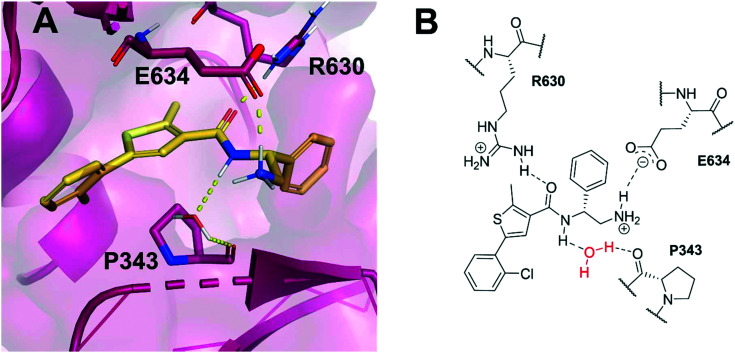
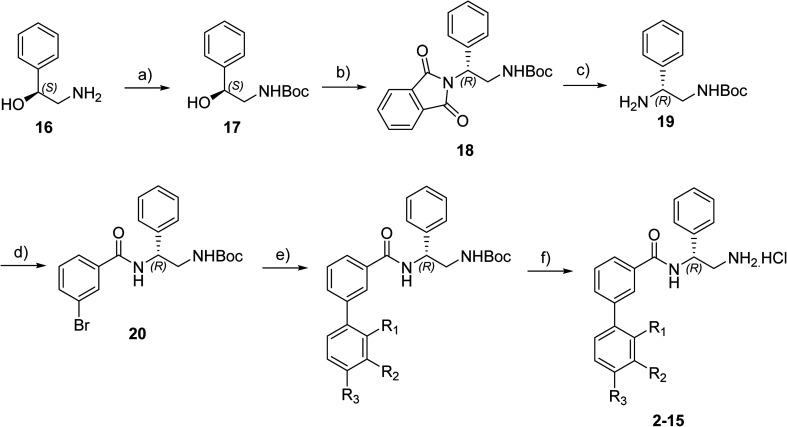
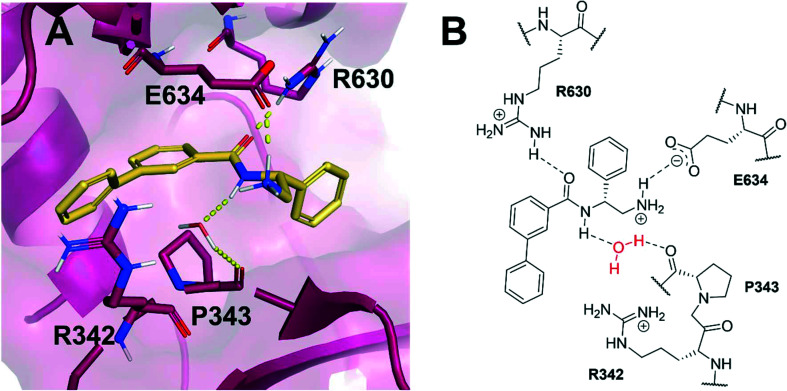
By 2050, it is predicted that antimicrobial resistance will be responsible for 10 million global deaths annually, more deaths than cancer, costing the world economy $100 trillion. Clearly, strategies to address this problem are essential as bacterial evolution is rendering our current antibiotics ineffective. The discovery of an allosteric binding site on the established antibacterial target DNA gyrase offers a new medicinal chemistry strategy. As this site is distinct from the fluoroquinolone binding site, resistance is not yet documented. Using molecular design methods, we have designed and synthesised a novel series of biphenyl-based inhibitors inspired by a published thiophene-based allosteric inhibitor. This series was evaluated against DNA gyrase and topoisomerase IV with the most potent compounds exhibiting IC values towards the low micromolar range for DNA gyrase and only ∼2-fold less active against topoisomerase IV. The structure-activity relationships reported herein suggest insights to further exploit this allosteric site, offering a pathway to overcome developing fluoroquinolone resistance.
据预测,到2050年,抗微生物药物耐药性将导致全球每年1000万人死亡,死亡人数超过癌症,给世界经济造成100万亿美元的损失。显然,由于细菌进化使我们目前的抗生素失效,解决这一问题的策略至关重要。在已确立的抗菌靶点DNA回旋酶上发现变构结合位点提供了一种新的药物化学策略。由于该位点与氟喹诺酮结合位点不同,目前尚未有耐药性的记录。我们利用分子设计方法,以一种已发表的基于噻吩的变构抑制剂为灵感,设计并合成了一系列新型的基于联苯的抑制剂。该系列化合物针对DNA回旋酶和拓扑异构酶IV进行了评估,最有效的化合物对DNA回旋酶的IC值处于低微摩尔范围,对拓扑异构酶IV的活性仅低约2倍。本文报道的构效关系为进一步开发这一变构位点提供了思路,为克服氟喹诺酮耐药性的发展提供了一条途径。