Department of General Surgery, Shengjing Hospital of China Medical University, Shenyang, Liaoning 110004, P.R. China.
Department of Ophthalmology, Fourth Affiliated Hospital of China Medical University, Shenyang, Liaoning 110005, P.R. China.
Int J Oncol. 2022 Sep;61(3). doi: 10.3892/ijo.2022.5402. Epub 2022 Aug 3.
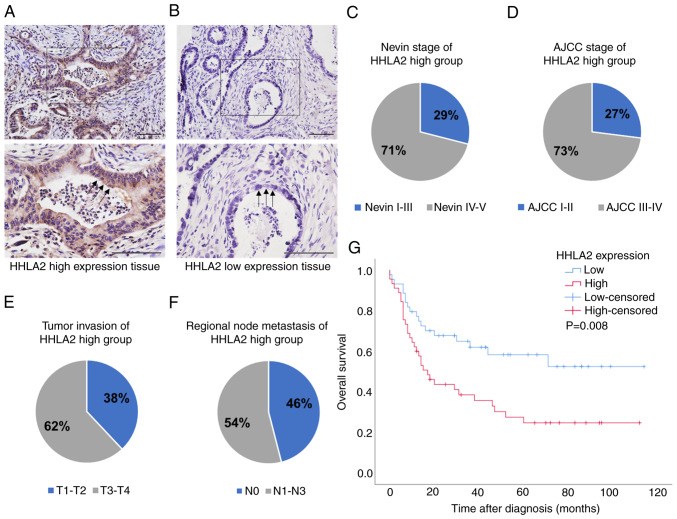
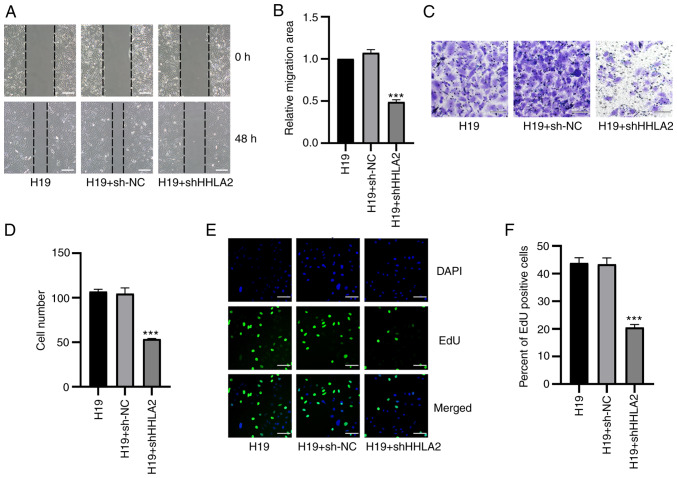
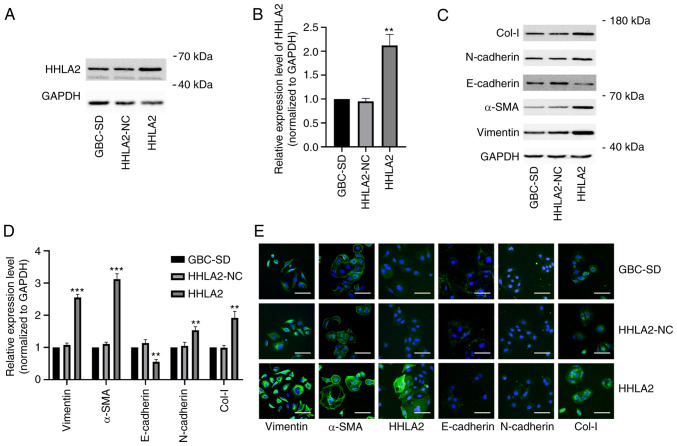
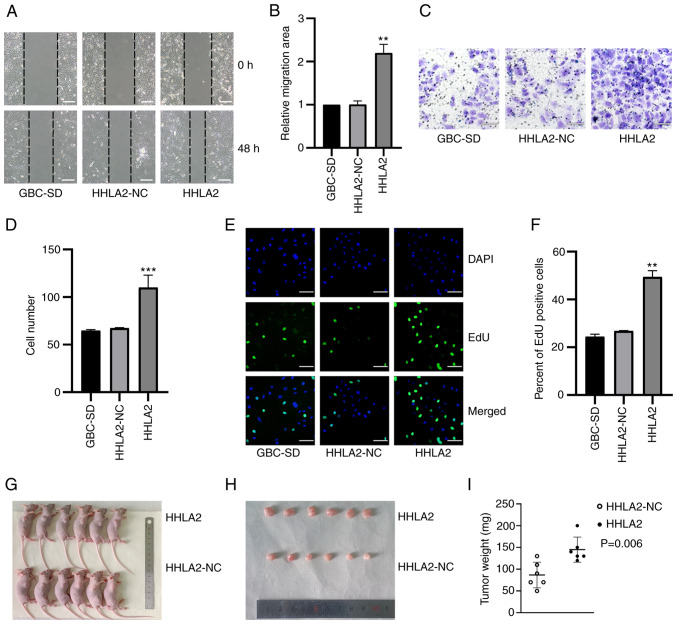
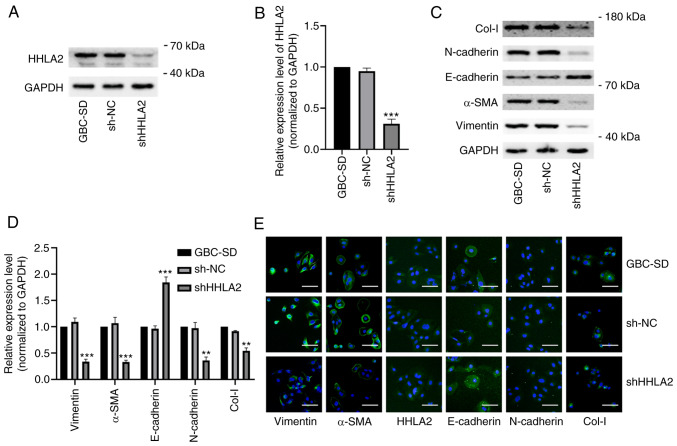
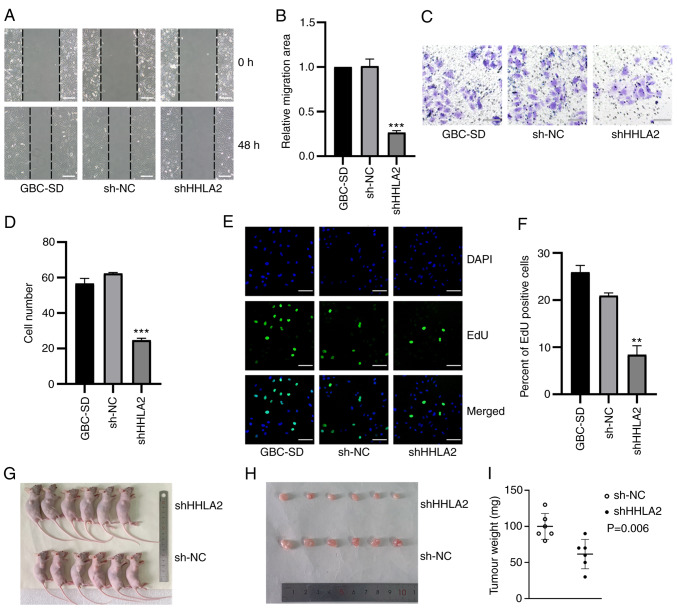
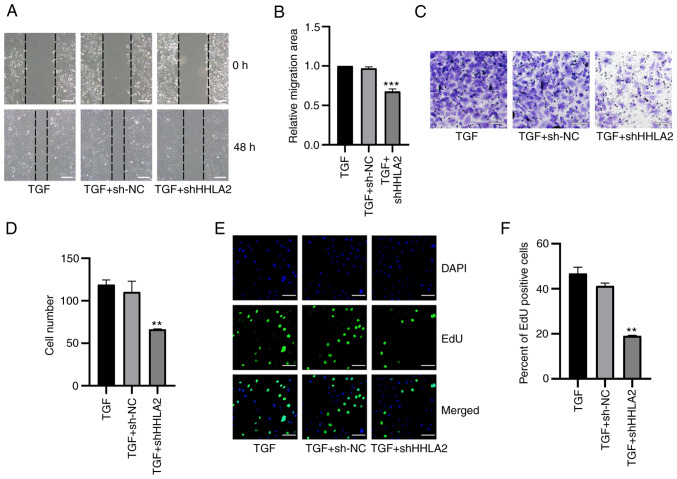
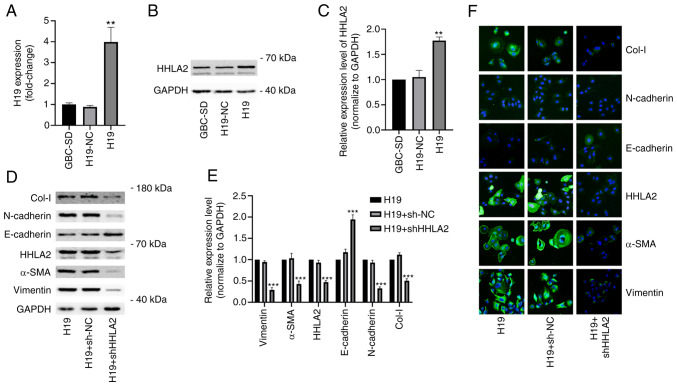
Advanced gallbladder cancer (GBC) is one of the most malignant of all types of biliary tract cancers that is associated with poor prognosis and high mortality. Accumulating evidence suggest that the B7 family of proteins serve an essential role in various types of cancers, including GBC. However, the potential function and regulatory mechanism of human endogenous retrovirus‑H long terminal repeat‑associating protein 2 (HHLA2; also known as B7‑H7 or B7H5) in GBC remain poorly understood. In the present study, immunohistochemistry was used to examine the expression pattern of HHLA2 in samples from 89 patients with GBC. The possible association between HHLA2 expression and the clinicopathological parameters, including prognosis, were then assessed. Using lentiviruses, overexpression of HHLA2 plasmid or short‑hairpin RNA (shRNA) of HHLA2 were transfected into GBC‑SD cells to overexpress or knock down HHLA2 expression, respectively. The effects of HHLA2 overexpression and knockdown on the epithelial‑mesenchymal transition (EMT) process on GBC‑SD cells were measured by the western blotting and immunofluorescence staining of collagen I, N‑cadherin, E‑cadherin, vimentin and α‑SMA. By contrast, changes in cell proliferation were measured using EdU assay. Cell invasion and migration were assessed using Transwell and wound‑healing assays, respectively. In addition, a xenograft mouse model was established to evaluate the tumorigenic ability of the GBC cell line after stable transfection with lentivirus for HHLA2 overexpression or shRNA for HHLA2 knockdown. The regulatory relationships among TGF‑β1, long non‑coding RNA (lncRNA) H19 (H19) and HHLA2 were then investigated. The mRNA expression of lncRNA H19 were assessed using reverse transcription‑quantitative PCR, whereas the expression levels of HHLA2 were detected by western blotting and immunofluorescence staining. HHLA2 expression was found to gradually increase as the stages of the GBC samples become more advanced. In addition, the expression level of HHLA2 was calculated to be positively associated with the Nevin stage, American Joint Committee on Cancer stage, tumor invasion and regional lymph node metastasis but was negatively associated with the overall patient survival (OS). experiments demonstrated that overexpression of HHLA2 promoted GBC migration, invasion, proliferation and EMT, whereas experiments found a promoting role of HHLA2 overexpression on GBC tumor growth. After transfection with lentiviruses encoding the overexpression plasmid of lncRNA H19, GBC migration, invasion, proliferation and EMT were increased. By contrast, knocking down HHLA2 expression suppressed TGF‑β1‑ or lncRNA H19 overexpression‑induced GBC migration, invasion, proliferation and EMT. In addition, HHLA2 knockdown significantly reduced the sizes of the GBC tumors . These results suggest that HHLA2 overexpression can promote GBC progression. Conversely, ablation of HHLA2 expression inhibited both TGF‑β1‑ and lncRNA H19‑induced GBC progression, suggesting that HHLA2 is a potential therapeutic target for this disease.
高级胆囊癌(GBC)是所有胆管癌中最恶性的一种,与预后不良和高死亡率有关。越来越多的证据表明,B7 家族蛋白在包括 GBC 在内的各种类型的癌症中发挥着重要作用。然而,人类内源性逆转录病毒-H 长末端重复相关蛋白 2(HHLA2;也称为 B7-H7 或 B7H5)在 GBC 中的潜在功能和调节机制仍知之甚少。在本研究中,使用免疫组织化学检测了 89 例 GBC 患者样本中 HHLA2 的表达模式。然后评估 HHLA2 表达与临床病理参数(包括预后)之间的可能关联。使用慢病毒,将 HHLA2 质粒的过表达或 HHLA2 的短发夹 RNA(shRNA)转染到 GBC-SD 细胞中,分别过表达或敲低 HHLA2 表达。通过 Western blot 和胶原 I、N-钙粘蛋白、E-钙粘蛋白、波形蛋白和α-SMA 的免疫荧光染色测量 HHLA2 过表达和敲低对 GBC-SD 细胞上皮-间充质转化(EMT)过程的影响。相反,通过 EdU 测定测量细胞增殖的变化。通过 Transwell 和划痕愈合测定分别评估细胞侵袭和迁移。此外,建立了异种移植小鼠模型,以评估稳定转染慢病毒后 GBC 细胞系过表达 HHLA2 或 shRNA 敲低 HHLA2 后的致瘤能力。然后研究了 TGF-β1、长非编码 RNA(lncRNA)H19(H19)和 HHLA2 之间的调节关系。通过逆转录-定量 PCR 评估 lncRNA H19 的 mRNA 表达,通过 Western blot 和免疫荧光染色检测 HHLA2 的表达水平。发现 HHLA2 的表达随着 GBC 样本阶段的进展逐渐增加。此外,计算 HHLA2 的表达水平与 Nevin 分期、美国癌症联合委员会分期、肿瘤侵袭和区域淋巴结转移呈正相关,与总患者生存(OS)呈负相关。实验表明,HHLA2 的过表达促进了 GBC 的迁移、侵袭、增殖和 EMT,而过表达 HHLA2 的实验发现其对 GBC 肿瘤生长有促进作用。转染慢病毒编码 lncRNA H19 的过表达质粒后,GBC 的迁移、侵袭、增殖和 EMT 增加。相反,敲低 HHLA2 表达抑制了 TGF-β1 或 lncRNA H19 过表达诱导的 GBC 迁移、侵袭、增殖和 EMT。此外,敲低 HHLA2 表达显著降低了 GBC 肿瘤的大小。这些结果表明 HHLA2 的过表达可以促进 GBC 的进展。相反,敲低 HHLA2 表达抑制了 TGF-β1 和 lncRNA H19 诱导的 GBC 进展,表明 HHLA2 是该疾病的潜在治疗靶点。