Albert Einstein College of Medicine, Division of General Internal Medicine, Department of Medicine, Montefiore Medical Center, Bronx, NY, USA.
University of Pittsburgh School of Medicine, Division of General Internal Medicine, Department of Medicine, University of Pittsburgh Medical Center, 933W 200 Lothrop St., Pittsburgh, PA, 15213, USA.
J Gen Intern Med. 2022 Oct;37(13):3465-3470. doi: 10.1007/s11606-022-07751-7. Epub 2022 Aug 3.
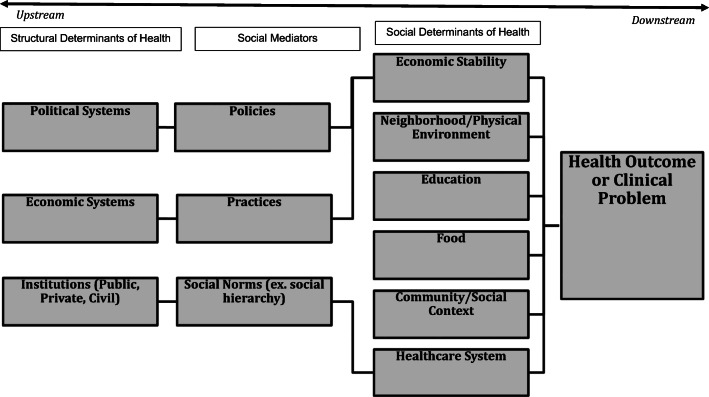
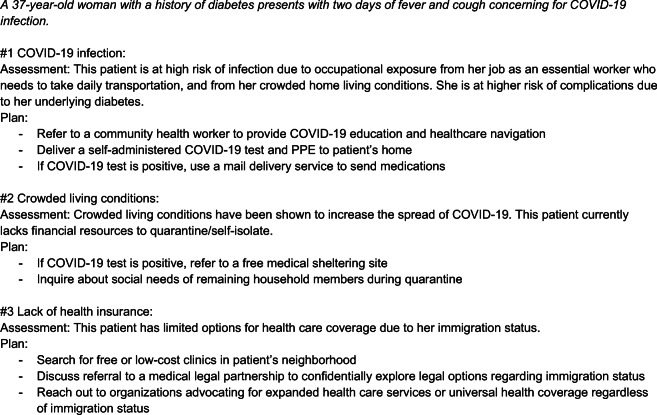
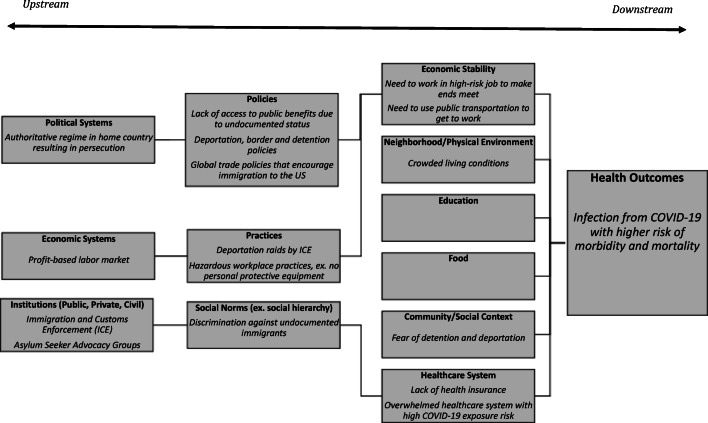
Structural and social determinants of health account for the health disparities we see along social hierarchies, and their impact has been made more evident by the recent COVID-19 pandemic. There have been increasing calls to incorporate structural competency into medical education. The structural and social context, however, has yet to be fully integrated into everyday clinical practice and little has been published on how to concretely imbed structural competency into clinical reasoning. The authors provide a framework for structural analysis, which incorporates four key steps: (1) developing a prioritized clinical problem list, (2) identifying social and structural root causes for clinical problems, (3) constructing and documenting a prioritized structural problem list, and (4) brainstorming solutions to address structural barriers and social needs. They show how structural analysis can be used to operationalize structural reasoning into everyday inpatient and outpatient clinical assessments.
健康的结构性和社会性决定因素解释了我们在社会等级制度中看到的健康差异,而最近的 COVID-19 大流行使这些差异的影响更加明显。越来越多的人呼吁将结构性能力纳入医学教育。然而,结构性和社会背景尚未完全融入日常临床实践,关于如何具体将结构性能力融入临床推理的内容也很少。作者提供了一个结构分析框架,其中包括四个关键步骤:(1)制定优先临床问题清单,(2)确定临床问题的社会和结构性根本原因,(3)构建和记录优先结构问题清单,以及(4)集思广益解决结构性障碍和社会需求的方法。他们展示了如何将结构分析用于将结构推理转化为日常住院和门诊临床评估。