Department of Intensive Care Unit, The First Affiliated Hospital of USTC, Division of Life Sciences and Medicine, University of Science and Technology of China, Hefei, 230001, Anhui, China.
Department of Physiology and Pharmacology, Loma Linda University, Risley Hall, Room 219, 11041 Campus Street, Loma Linda, CA, 92354, USA.
J Neuroinflammation. 2022 Aug 3;19(1):198. doi: 10.1186/s12974-022-02558-z.
Pyroptosis is a programmed cell death mediated by inflammasomes. Previous studies have reported that inhibition of neurokinin receptor 1 (NK1R) exerted neuroprotection in several neurological diseases. Herein, we have investigated the role of NK1R receptor inhibition using Aprepitant to attenuate NLRC4-dependent neuronal pyroptosis after intracerebral hemorrhage (ICH), as well as the underlying mechanism.
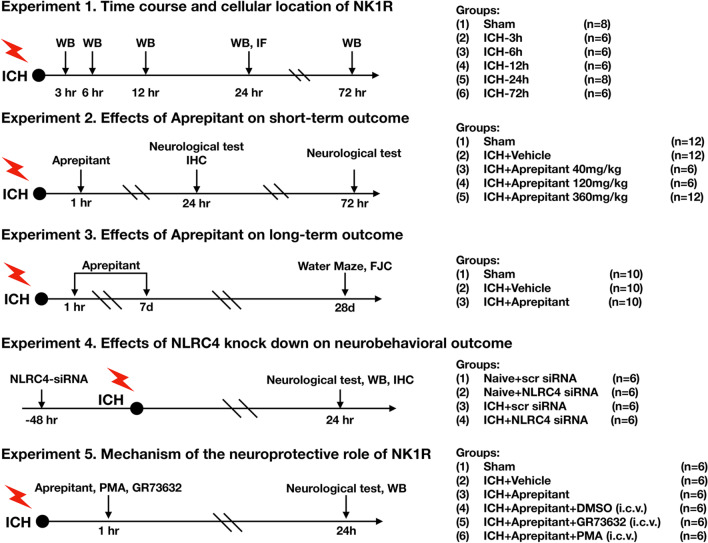
A total of 182 CD-1 mice were used. ICH was induced by injection of autologous blood into the right basal ganglia. Aprepitant, a selective antagonist of NK1R, was injected intraperitoneally at 1 h after ICH. To explore the underlying mechanism, NK1R agonist, GR73632, and protein kinase C delta (PKCδ) agonist, phorbol 12-myristate 13-acetate (PMA), were injected intracerebroventricularly at 1 h after ICH induction, and small interfering ribonucleic acid (siRNA) for NLRC4 was administered via intracerebroventricular injection at 48 h before ICH induction, respectively. Neurobehavioral tests, western blot, and immunofluorescence staining were performed.
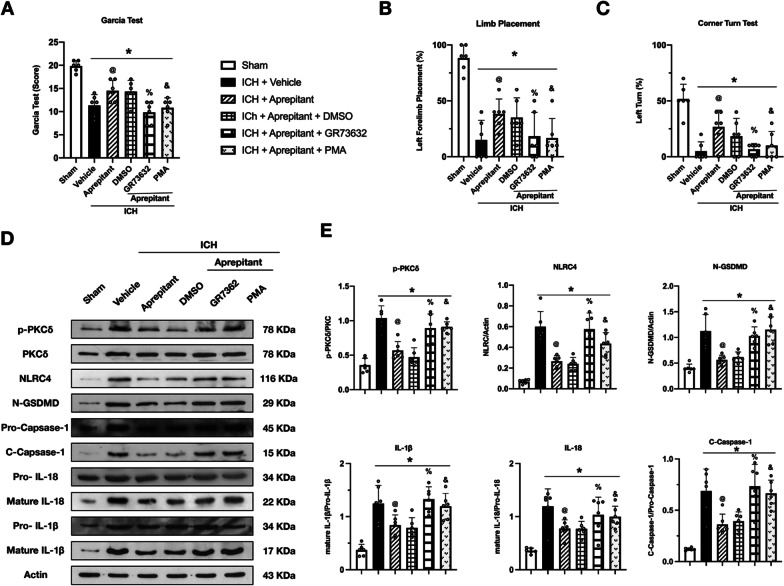
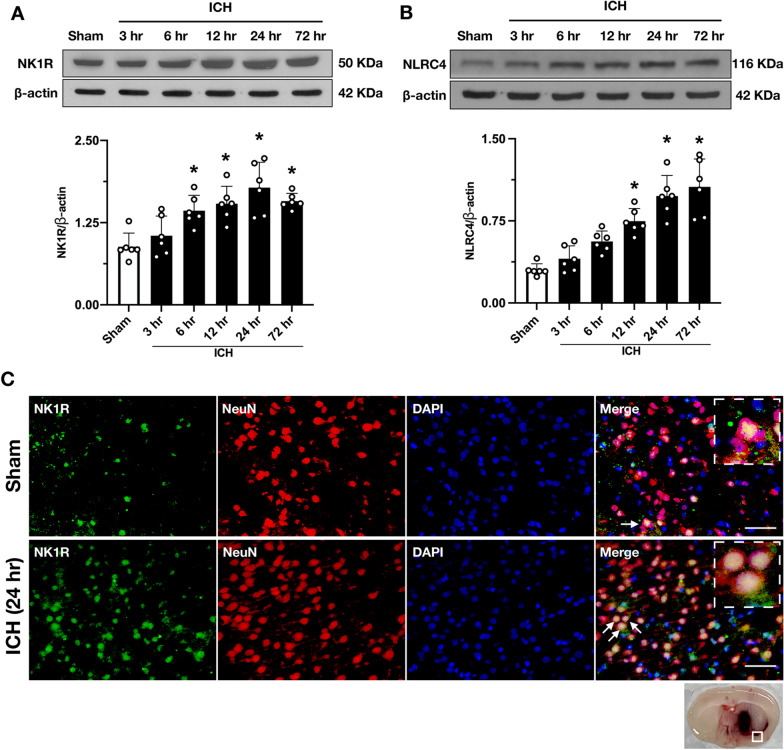
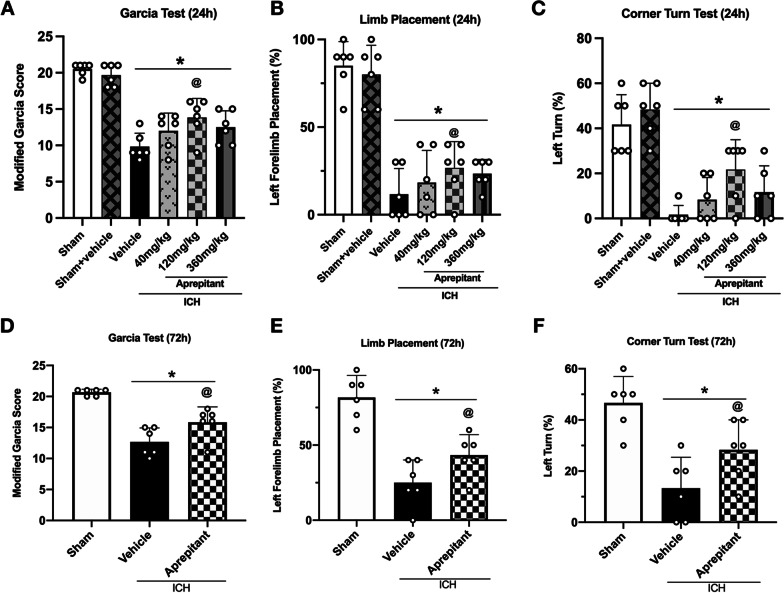
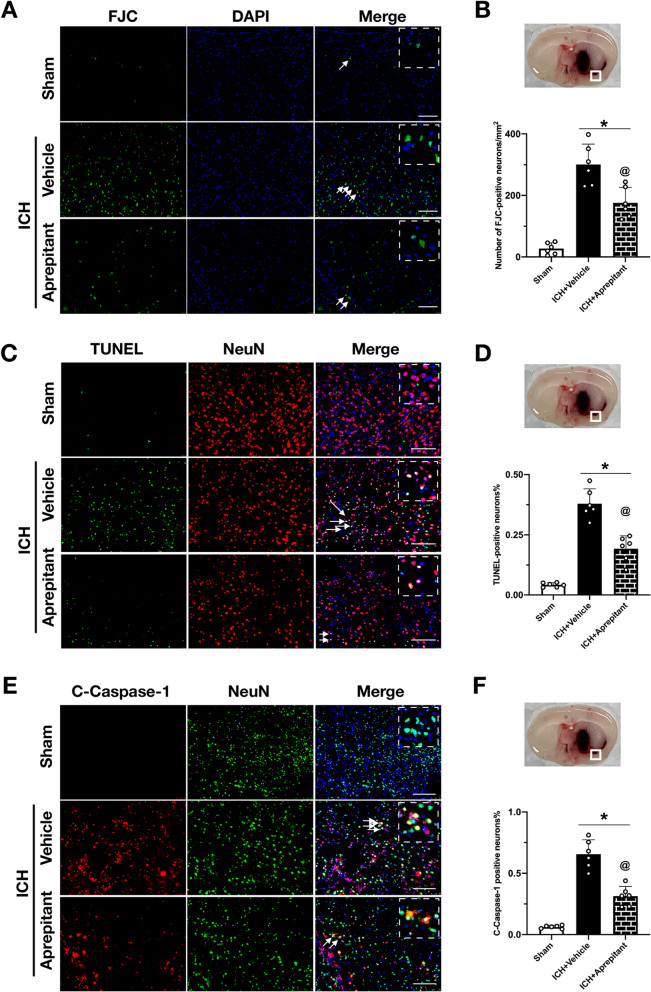
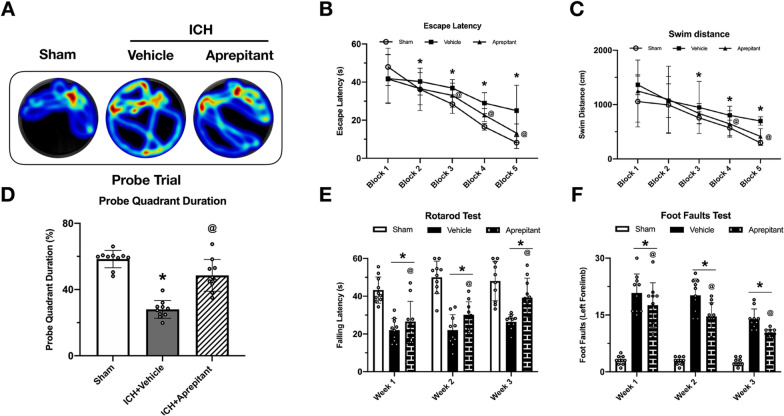
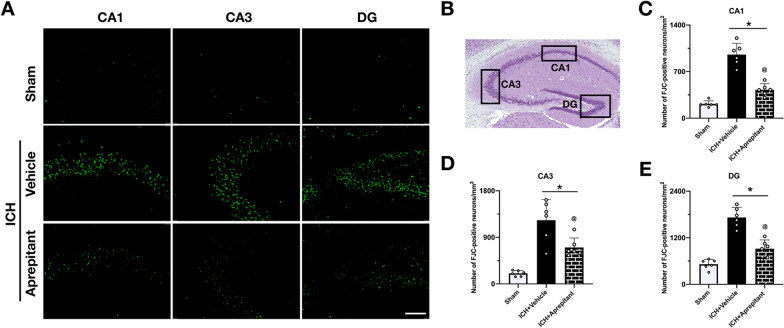
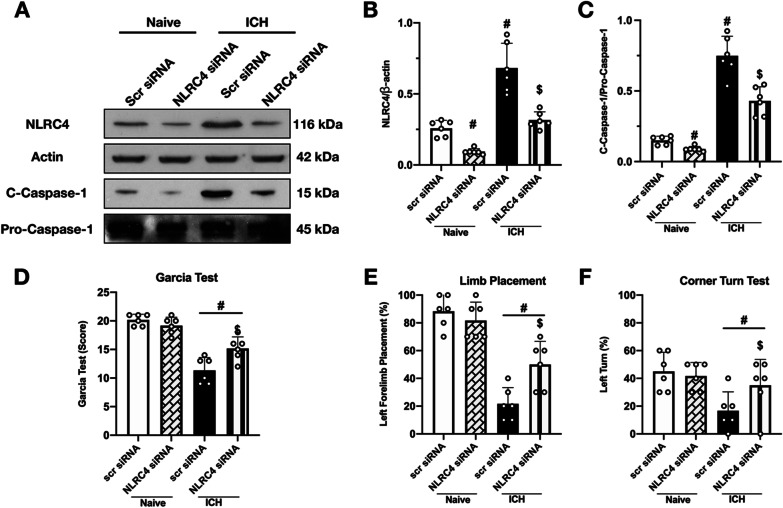
The expression of endogenous NK1R and NLRC 4 were gradually increased after ICH. NK1R was expressed on neurons. Aprepitant significantly improved the short- and long-term neurobehavioral deficits after ICH, which was accompanied with decreased neuronal pyroptosis, as well as decreased expression of NLRC4, Cleaved-caspase-1, GSDMD (gasdermin D), IL-1β, and IL-18. Activation of NK1R or PKCδ abolished these neuroprotective effects of Aprepitant after ICH. Similarly, knocking down NLRC4 using siRNA produced similar neuroprotective effects.
Aprepitant suppressed NLRC4-dependent neuronal pyroptosis and improved neurological function, possibly mediated by inhibition of NK1R/PKCδ signaling pathways after ICH. The NK1R may be a promising therapeutic target for the treatment of ICH.
细胞焦亡是一种由炎性小体介导的程序性细胞死亡。先前的研究表明,神经激肽受体 1(NK1R)抑制剂在几种神经疾病中发挥神经保护作用。在此,我们使用阿瑞匹坦(一种选择性 NK1R 拮抗剂)抑制 NK1R 受体,以减轻脑出血(ICH)后 NLRC4 依赖性神经元焦亡,并探讨其潜在机制。
共使用 182 只 CD-1 小鼠。ICH 采用自体血注入右侧基底节诱导。ICH 后 1 小时,腹腔内注射阿瑞匹坦。为了探讨其潜在机制,ICH 诱导后 1 小时,分别鞘内注射 NK1R 激动剂 GR73632 和蛋白激酶 C 德尔塔(PKCδ)激动剂佛波醇 12-肉豆蔻酸 13-乙酸盐(PMA),ICH 诱导前 48 小时,通过鞘内注射小干扰核糖核酸(siRNA)抑制 NLRC4。进行神经行为学测试、Western blot 和免疫荧光染色。
ICH 后,内源性 NK1R 和 NLRC4 的表达逐渐增加。NK1R 表达于神经元。阿瑞匹坦显著改善 ICH 后的短期和长期神经行为缺陷,伴随着神经元焦亡减少,以及 NLRC4、Cleaved-caspase-1、GSDMD(gasdermin D)、IL-1β 和 IL-18 的表达减少。ICH 后,激活 NK1R 或 PKCδ 可消除阿瑞匹坦的这些神经保护作用。同样,使用 siRNA 敲低 NLRC4 也产生了类似的神经保护作用。
阿瑞匹坦抑制 NLRC4 依赖性神经元焦亡并改善神经功能,可能通过抑制 ICH 后 NK1R/PKCδ 信号通路实现。NK1R 可能是治疗 ICH 的有前途的治疗靶点。