Department of Neurosurgery, Xuanwu Hospital, Capital Medical University, China International Neuroscience Institute (China-INI), No. 45 Changchun Street, Xicheng District, Beijing, 10053, China.
Department of Physiology and Pharmacology, Department of Neurosurgery and Anesthesiology, School of Medicine, Loma Linda University, Risley Hall, Room 219, 11041 Campus Street, Loma Linda, CA, 92354, USA.
J Neuroinflammation. 2020 May 28;17(1):168. doi: 10.1186/s12974-020-01853-x.
Neuroinflammation is an important host defense response to secondary brain injury after intracerebral hemorrhage (ICH). Triggering receptor expressed on myeloid cells 2 (TREM2) confers strong neuroprotective effects by attenuating neuroinflammation in experimental ischemic stroke. Recent studies suggest that apolipoprotein E (apoE) is a novel, high-affinity ligand of TREM2. This study aimed to investigate the effects of TREM2 activation on neuroinflammation and neuronal apoptosis in a mouse model of ICH.
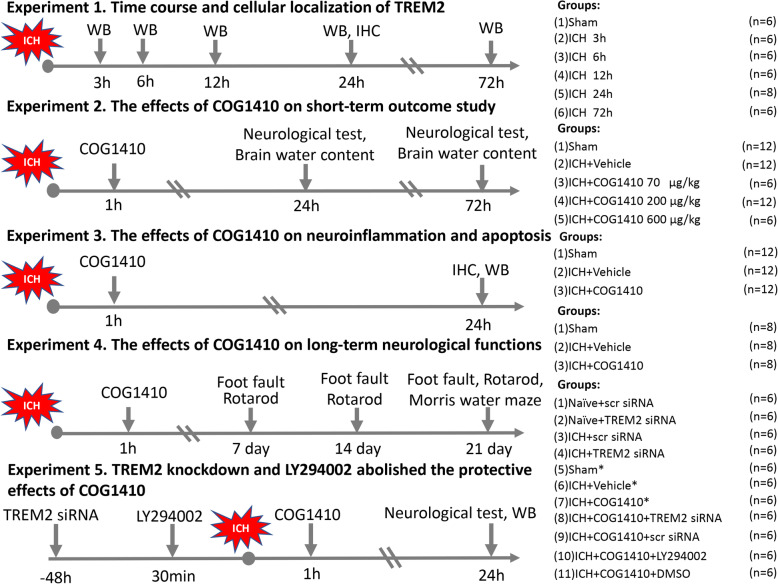
Adult male CD1 mice (n = 216) were subjected to intrastriatal injection of bacterial collagenase. The TREM2 ligand, apoE-mimetic peptide COG1410 was administered intranasally at 1 h after ICH induction. To elucidate the underlying mechanism, TREM2 small interfering RNA (siRNA) and the phosphatidylinositol 3-kinase (PI3K) inhibitor LY294002 were administered intracerebroventricularly prior to COG1410 treatment. Neurobehavioral tests, brain water content, immunofluorescence, western blotting, and Fluoro-Jade C- and terminal deoxynucleotidyl transferase dUTP nick end labeling staining were performed.
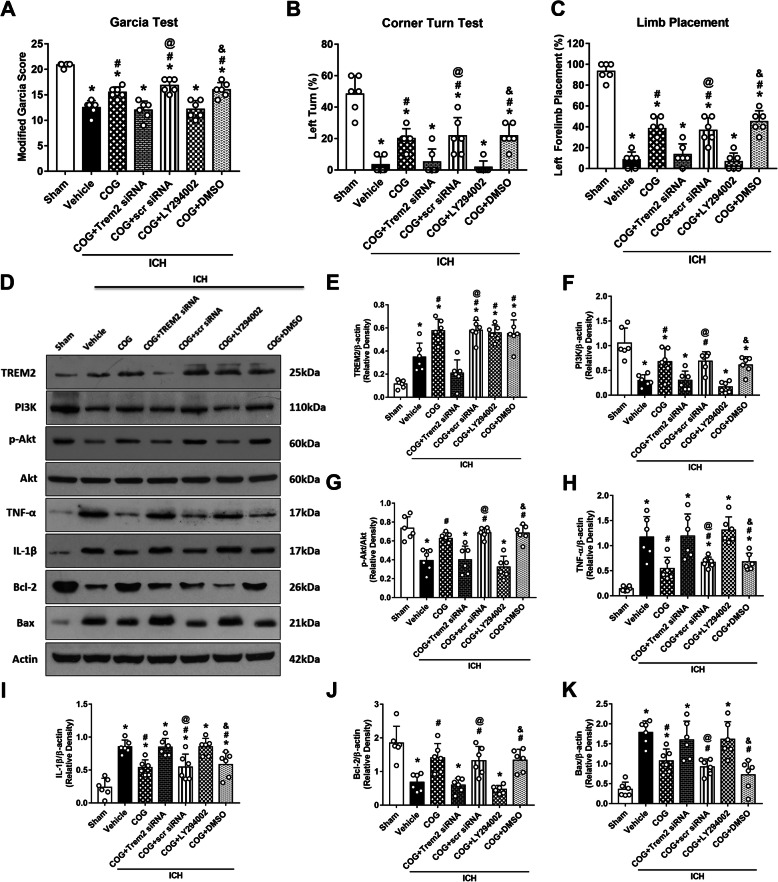
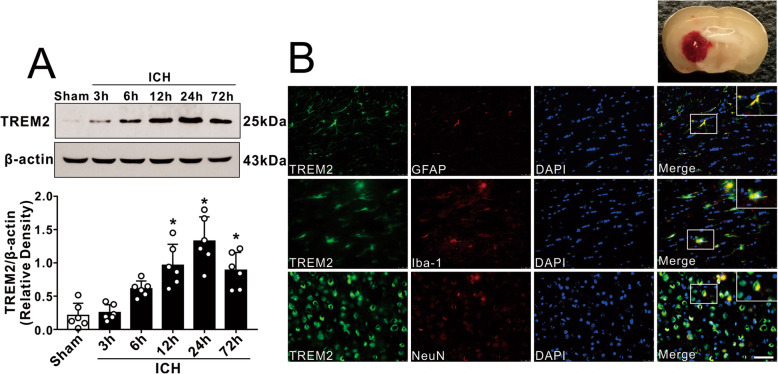
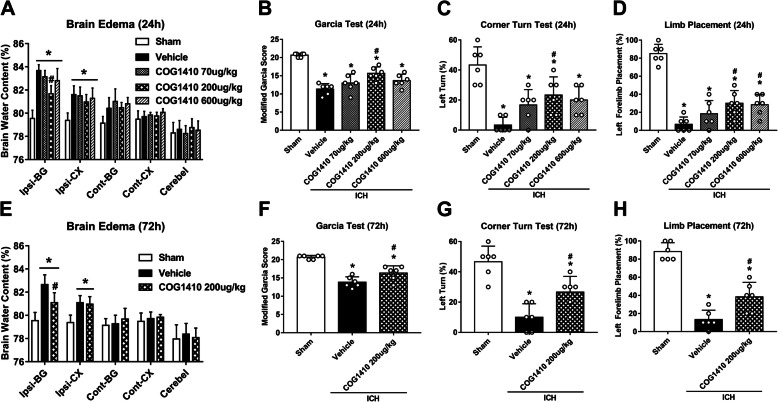
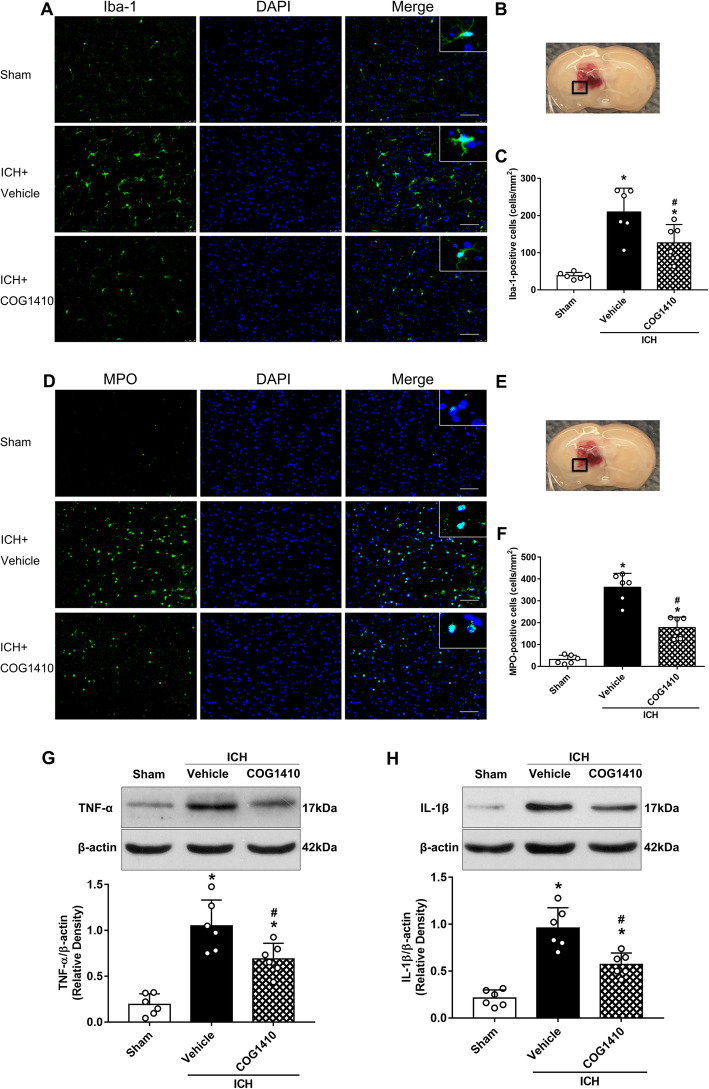
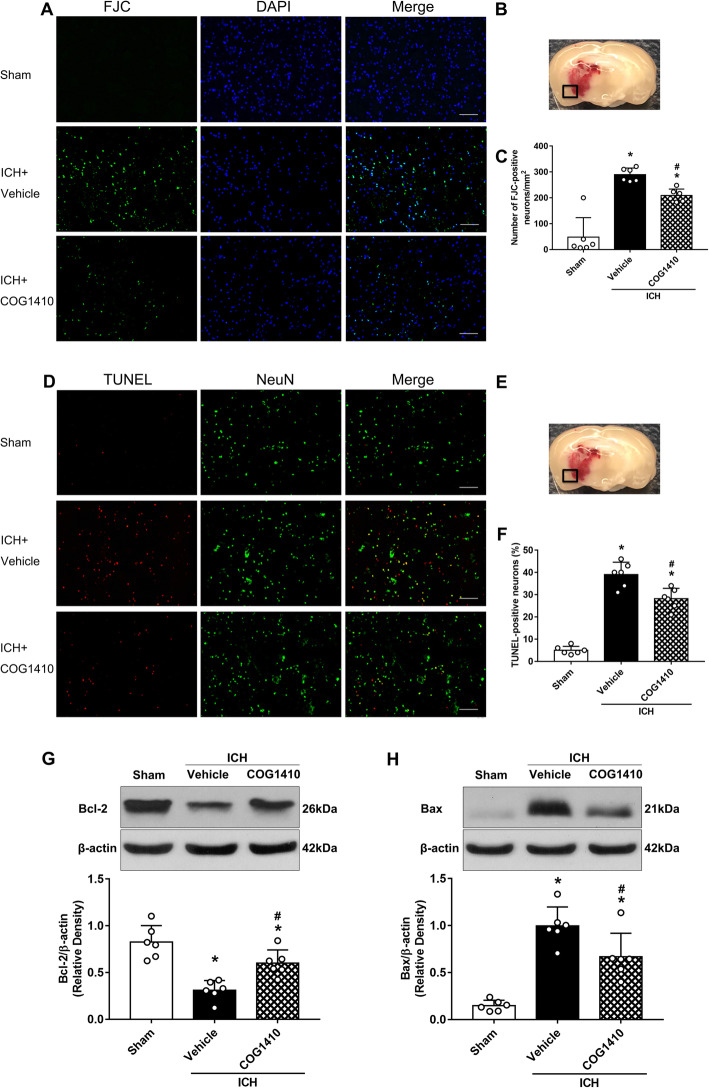
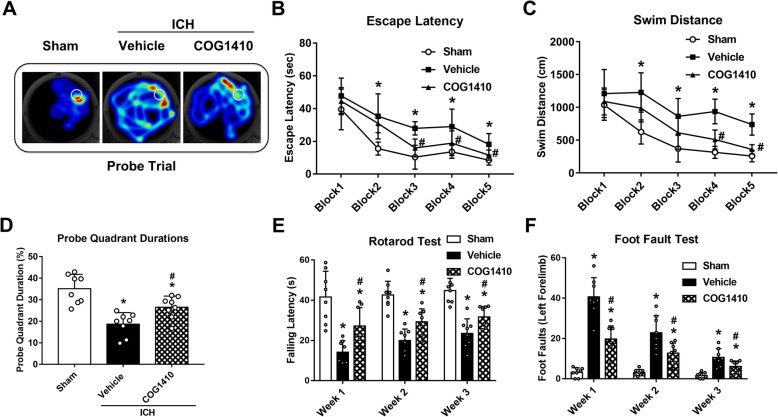
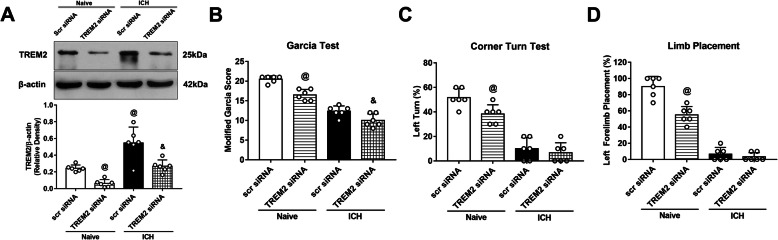
Endogenous TREM2 expression was increased and peaked at 24 h after ICH. TREM2 was expressed on microglia, astrocytes, and neurons. COG1410 improved both short-term and long-term neurological functions, reduced brain edema, inhibited microglia/macrophage activation and neutrophil infiltration, and suppressed neuronal apoptotic cell death in perihematomal areas after ICH. Knockdown of endogenous TREM2 by TREM2 siRNA aggravated neurological deficits and decreased the expression of TREM2 in naïve and ICH mice. COG1410 was associated with upregulation of TREM2, PI3K, phosphorylated-Akt, and Bcl-2 and downregulation of TNF-α, IL-1β, and Bax after ICH. The neuroprotective effects of COG1410 were abolished by both TREM2 siRNA and PI3K inhibitor LY294002.
Our finding demonstrated that TREM2 activation improved neurological functions and attenuated neuroinflammation and neuronal apoptosis after ICH, which was, at least in part, mediated by activation of PI3K/Akt signaling pathway. Therefore, activation of TREM2 may be a potential therapeutic strategy for the management of ICH patients.
神经炎症是脑出血(ICH)后继发性脑损伤的重要宿主防御反应。髓样细胞触发受体 2(TREM2)通过减轻实验性缺血性中风中的神经炎症,发挥强烈的神经保护作用。最近的研究表明,载脂蛋白 E(apoE)是 TREM2 的一种新型高亲和力配体。本研究旨在探讨 TREM2 激活对 ICH 小鼠模型中神经炎症和神经元凋亡的影响。
成年雄性 CD1 小鼠(n=216)接受纹状体内注射细菌胶原酶。ICH 诱导后 1 小时,给予 TREM2 配体 apoE 模拟肽 COG1410 经鼻内给药。为了阐明潜在机制,在 COG1410 治疗前,通过脑室内给予 TREM2 小干扰 RNA(siRNA)和磷脂酰肌醇 3-激酶(PI3K)抑制剂 LY294002。进行神经行为测试、脑水含量、免疫荧光、western blot 和 Fluoro-Jade C 和末端脱氧核苷酸转移酶 dUTP 缺口末端标记染色。
内源性 TREM2 表达在 ICH 后 24 小时增加并达到峰值。TREM2 表达于小胶质细胞、星形胶质细胞和神经元上。COG1410 改善了 ICH 后短期和长期的神经功能,减少了脑水肿,抑制了小胶质细胞/巨噬细胞激活和中性粒细胞浸润,并抑制了血肿周围区域的神经元凋亡性细胞死亡。用 TREM2 siRNA 敲低内源性 TREM2 加重了神经功能缺损,并降低了 ICH 小鼠和对照小鼠中 TREM2 的表达。COG1410 与 ICH 后 TREM2、PI3K、磷酸化 Akt 和 Bcl-2 的上调以及 TNF-α、IL-1β 和 Bax 的下调有关。COG1410 的神经保护作用被 TREM2 siRNA 和 PI3K 抑制剂 LY294002 均消除。
我们的研究结果表明,TREM2 激活改善了 ICH 后的神经功能,并减轻了神经炎症和神经元凋亡,这至少部分是通过激活 PI3K/Akt 信号通路介导的。因此,激活 TREM2 可能是 ICH 患者治疗的一种潜在治疗策略。