Du Chuang, Liu Wen-Jie, Yang Jing, Zhao Shan-Shan, Liu Hui-Xin
Institute of Life Sciences, China Medical University, Shenyang, China.
Health Sciences Institute, China Medical University, Shenyang, China.
Front Nutr. 2022 Jul 18;9:932670. doi: 10.3389/fnut.2022.932670. eCollection 2022.
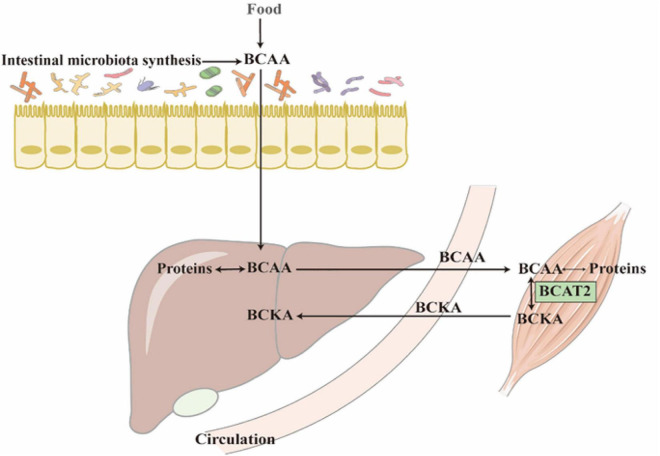
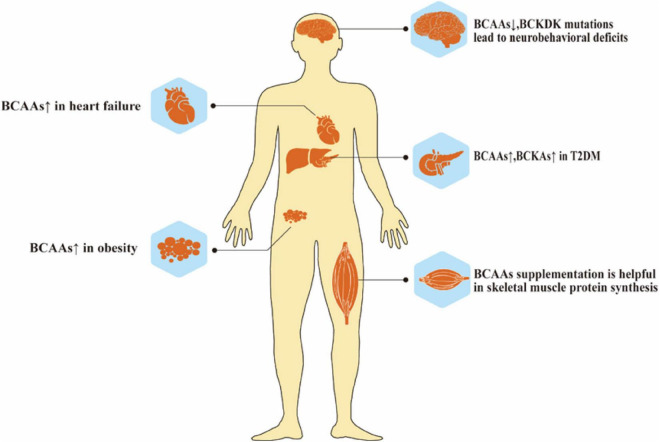
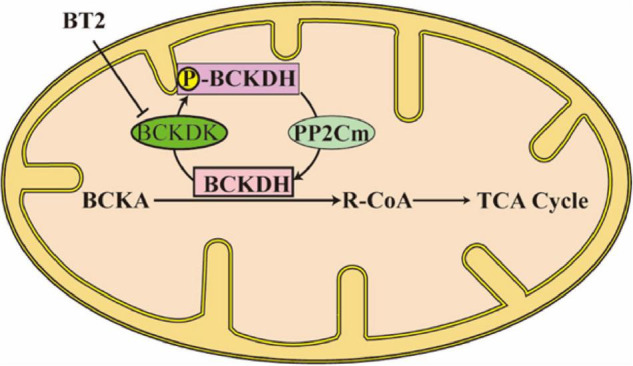
Branched-chain amino acids (BCAAs), composed of leucine, isoleucine, and valine, are important essential amino acids in human physiology. Decades of studies have revealed their roles in protein synthesis, regulating neurotransmitter synthesis, and the mechanistic target of rapamycin (mTOR). BCAAs are found to be related to many metabolic disorders, such as insulin resistance, obesity, and heart failure. Also, many diseases are related to the alteration of the BCAA catabolism enzyme branched-chain α-keto acid dehydrogenase kinase (BCKDK), including maple syrup urine disease, human autism with epilepsy, and so on. In this review, diseases and the corresponding therapies are discussed after the introduction of the catabolism and detection methods of BCAAs and BCKDK. Also, the interaction between microbiota and BCAAs is highlighted.
支链氨基酸(BCAAs)由亮氨酸、异亮氨酸和缬氨酸组成,是人体生理学中重要的必需氨基酸。数十年的研究揭示了它们在蛋白质合成、调节神经递质合成以及雷帕霉素机制靶点(mTOR)方面的作用。已发现BCAAs与许多代谢紊乱有关,如胰岛素抵抗、肥胖和心力衰竭。此外,许多疾病与BCAA分解代谢酶支链α-酮酸脱氢酶激酶(BCKDK)的改变有关,包括枫糖尿症、伴有癫痫的人类自闭症等。在本综述中,在介绍了BCAAs和BCKDK的分解代谢及检测方法后,讨论了相关疾病及相应治疗方法。此外,还强调了微生物群与BCAAs之间的相互作用。