Cao Feng, Hu Jingtao, Yuan Hongtao, Cao Pengwei, Cheng Yunsheng, Wang Yong
Department of General Surgery, The Second Hospital of Anhui Medical University, Hefei, China.
Aviation Hygiene Branch, China Eastern Airlines Co,.Ltd, Anhui Branch, Hefei, China.
Front Genet. 2022 Jul 18;13:963565. doi: 10.3389/fgene.2022.963565. eCollection 2022.
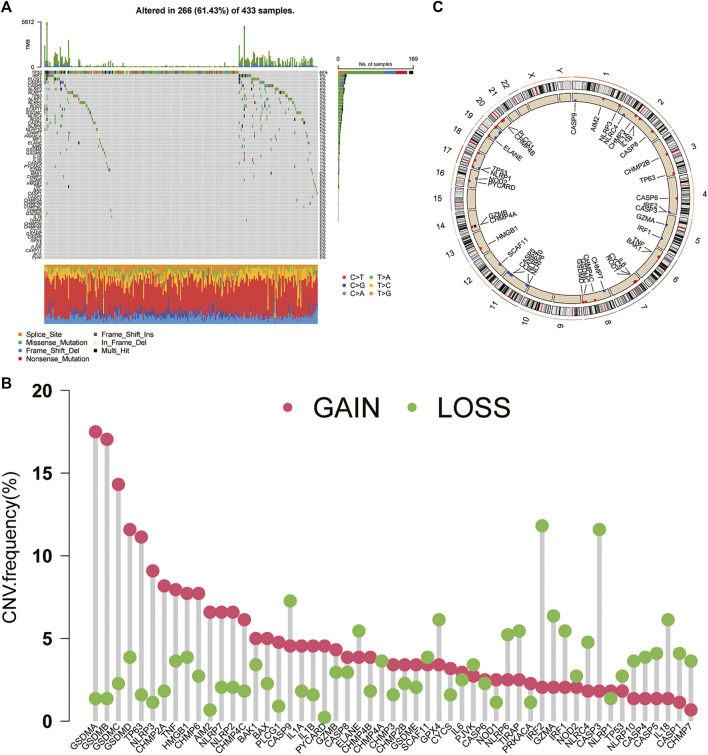
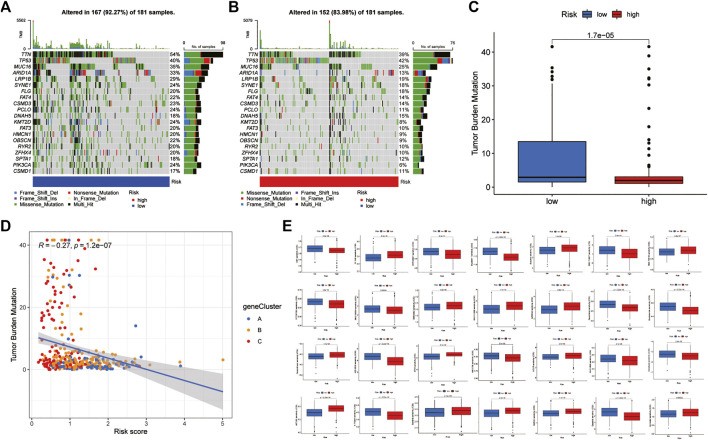
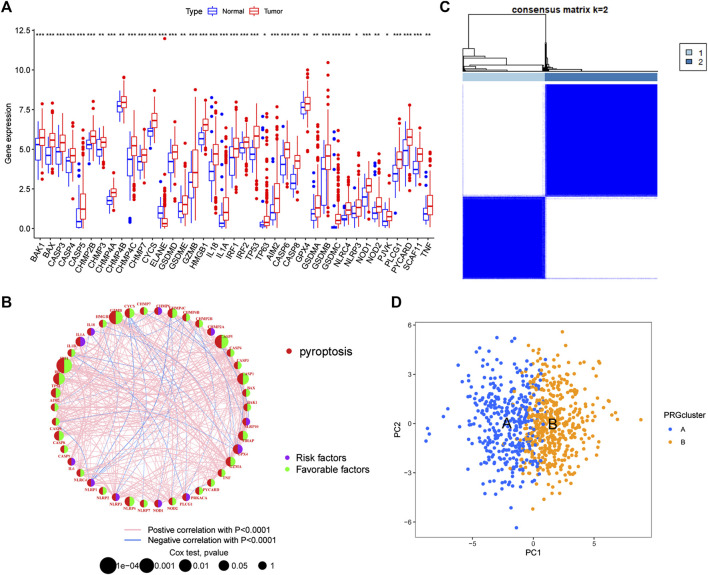
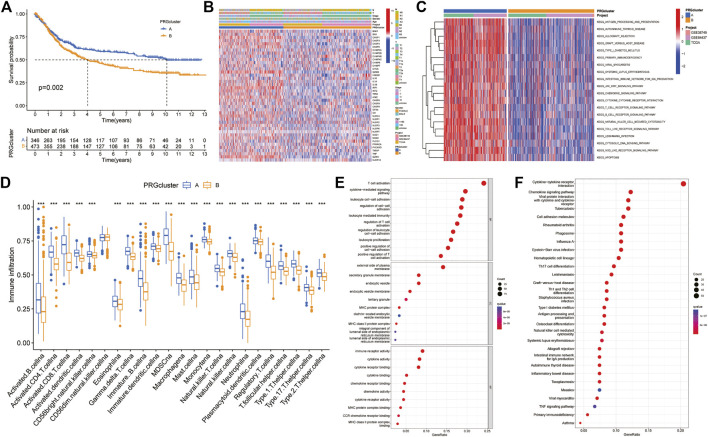
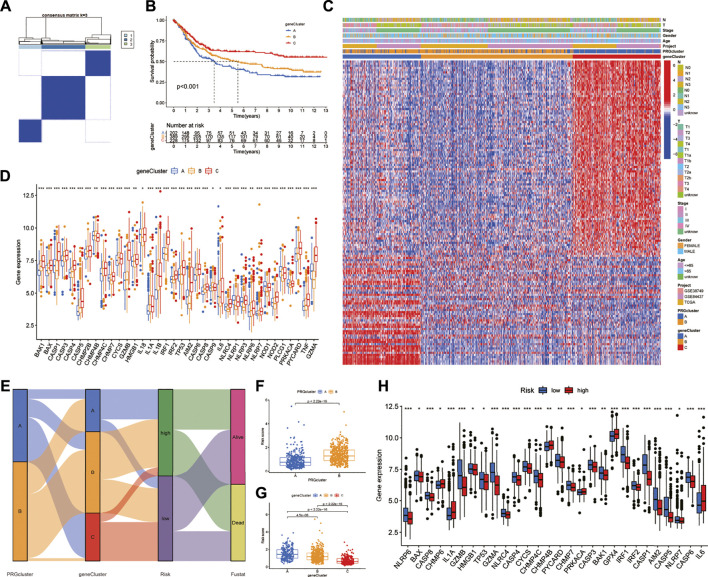
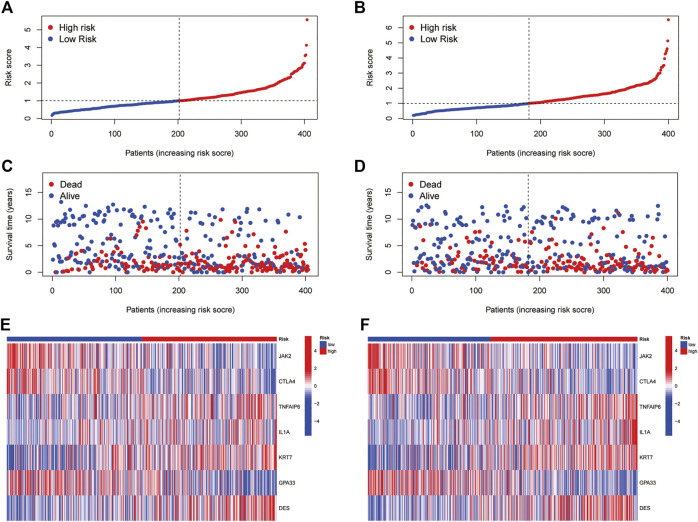
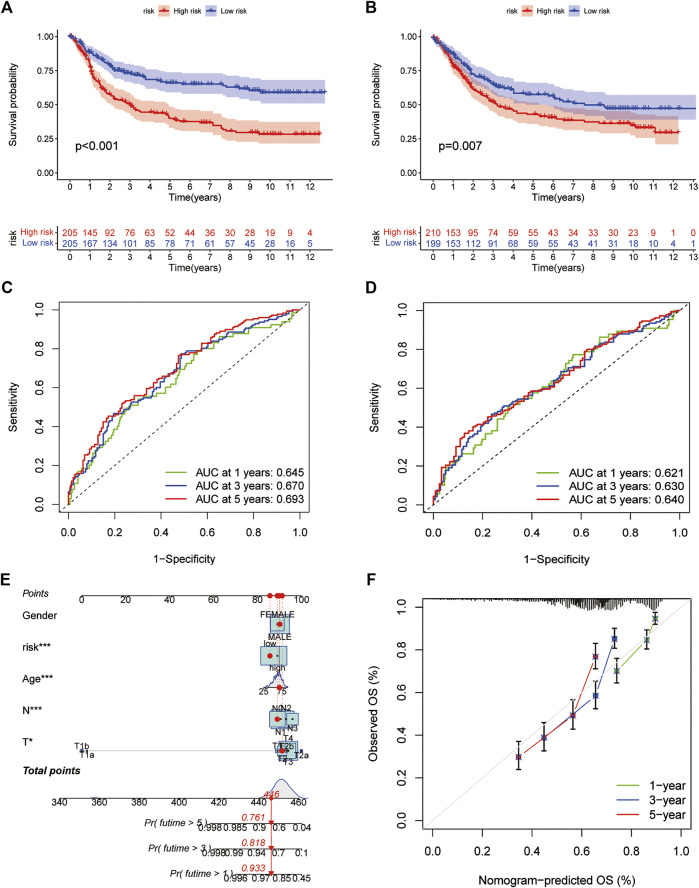
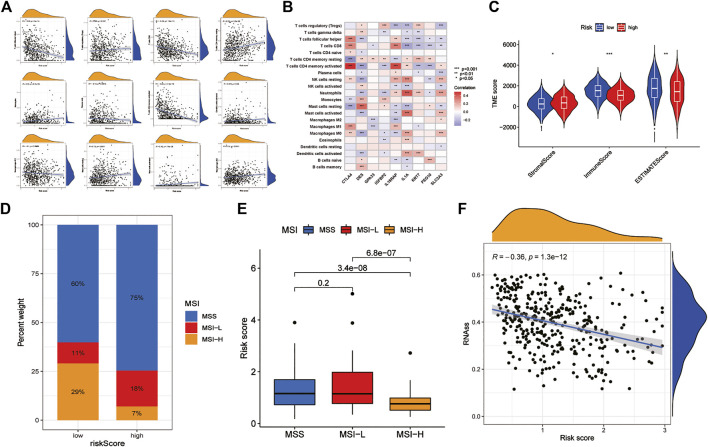
As a new programmed death mode, pyroptosis plays an indispensable role in gastric cancer (GC) and has strong immunotherapy potential, but the specific pathogenic mechanism and antitumor function remain unclear. We comprehensively analysed the overall changes of pyroptosis-related genes (PRGs) at the genomic and epigenetic levels in 886 GC patients. We identified two molecular subtypes by consensus unsupervised clustering analysis. Then, we calculated the risk score and constructed the risk model for predicting prognostic and selected nine PRGs related genes (IL18RAP, CTLA4, SLC2A3, IL1A, KRT7,PEG10, IGFBP2, GPA33, and DES) through LASSO and COX regression analyses in the training cohorts and were verified in the test cohorts. Consequently, a highly accurate nomogram for improving the clinical applicability of the risk score was constructed. Besides, we found that multi-layer PRGs alterations were correlated with patient clinicopathological features, prognosis, immune infiltration and TME characteristics. The low risk group mainly characterized by increased microsatellite hyperinstability, tumour mutational burden and immune infiltration. The group had lower stromal cell content, higher immune cell content and lower tumour purity. Moreover, risk score was positively correlated with T regulatory cells, M1 and M2 macrophages. In addition, the risk score was significantly associated with the cancer stem cell index and chemotherapeutic drug sensitivity. This study revealed the genomic, transcriptional and TME multiomics features of PRGs and deeply explored the potential role of pyroptosis in the TME, clinicopathological features and prognosis in GC. This study provides a new immune strategy and prediction model for clinical treatment and prognosis evaluation.
作为一种新的程序性死亡模式,细胞焦亡在胃癌(GC)中发挥着不可或缺的作用,具有强大的免疫治疗潜力,但其具体致病机制和抗肿瘤功能仍不清楚。我们在886例GC患者中,从基因组和表观遗传水平全面分析了细胞焦亡相关基因(PRGs)的整体变化。通过一致性无监督聚类分析,我们鉴定出两种分子亚型。然后,我们计算了风险评分并构建了预测预后的风险模型,并通过LASSO和COX回归分析在训练队列中选择了9个PRGs相关基因(IL18RAP、CTLA4、SLC2A3、IL1A、KRT7、PEG10、IGFBP2、GPA33和DES),并在测试队列中进行了验证。因此,构建了一个高度准确的列线图,以提高风险评分的临床适用性。此外,我们发现多层PRGs改变与患者的临床病理特征、预后、免疫浸润和肿瘤微环境(TME)特征相关。低风险组主要表现为微卫星高度不稳定、肿瘤突变负荷和免疫浸润增加。该组的基质细胞含量较低,免疫细胞含量较高,肿瘤纯度较低。此外,风险评分与调节性T细胞、M1和M2巨噬细胞呈正相关。此外,风险评分与癌症干细胞指数和化疗药物敏感性显著相关。本研究揭示了PRGs的基因组、转录组和TME多组学特征,并深入探讨了细胞焦亡在GC的TME、临床病理特征和预后中的潜在作用。本研究为临床治疗和预后评估提供了一种新的免疫策略和预测模型。