Integrated BioTherapeutics, Inc., Rockville, MD, United States.
Center for Musculoskeletal Research, University of Rochester Medical Center, Rochester, NY, United States.
Front Cell Infect Microbiol. 2022 Jul 18;12:876898. doi: 10.3389/fcimb.2022.876898. eCollection 2022.
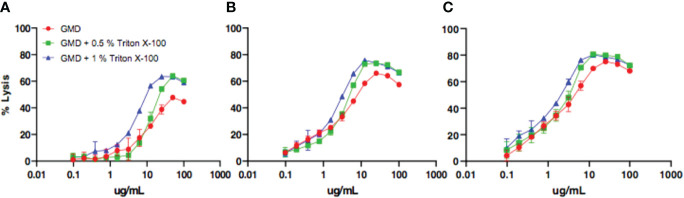
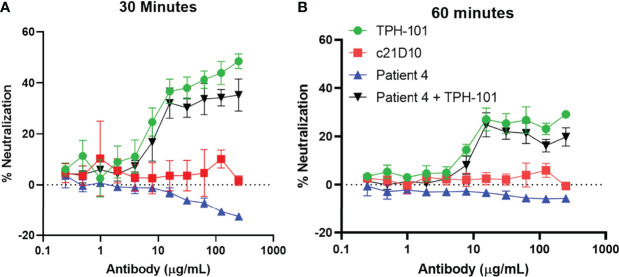
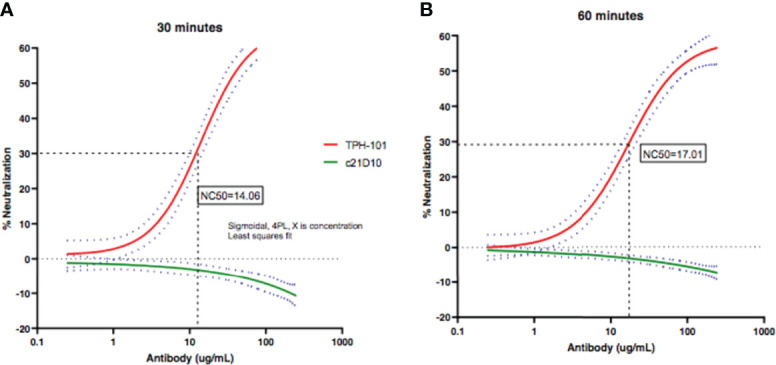
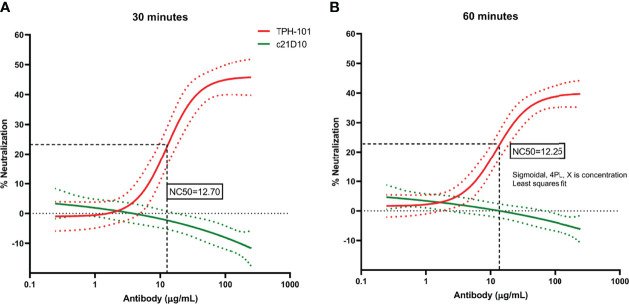
osteomyelitis remains a very challenging condition; recent clinical studies have shown infection control rates following surgery/antibiotics to be ~60%. Additionally, prior efforts to produce an effective vaccine have failed, in part due to lack of knowledge of protective immunity. Previously, we demonstrated that anti-glucosaminidase (Gmd) antibodies are protective in animal models but found that only 6.7% of culture-confirmed osteomyelitis patients in the AO Clinical Priority Program (AO-CPP) Registry had basal serum levels (>10 ng/ml) of anti-Gmd at the time of surgery (baseline). We identified a small subset of patients with high levels of anti-Gmd antibodies and adverse outcomes following surgery, not explained by Ig class switching to non-functional isotypes. Here, we aimed to test the hypothesis that clinical cure following surgery is associated with anti-Gmd neutralizing antibodies in serum. Therefore, we first optimized an assay that quantifies recombinant Gmd lysis of the cell wall and used it to demonstrate the 50% neutralizing concentration (NC) of a humanized anti-Gmd mAb (TPH-101) to be ~15.6 μg/ml. We also demonstrated that human serum deficient in anti-Gmd antibodies can be complemented by TPH-101 to achieve the same dose-dependent Gmd neutralizing activity as purified TPH-101. Finally, we assessed the anti-Gmd physical titer and neutralizing activity in sera from 11 patients in the AO-CPP Registry, who were characterized into four groups . Group 1 patients (n=3) had high anti-Gmd physical and neutralizing titers at baseline that decreased with clinical cure of the infection over time. Group 2 patients (n=3) had undetectable anti-Gmd antibodies throughout the study and adverse outcomes. Group 3 (n=3) had high titers +/- neutralizing anti-Gmd at baseline with adverse outcomes. Group 4 (n=2) had low titers of non-neutralizing anti-Gmd at baseline with delayed high titers and adverse outcomes. Collectively, these findings demonstrate that both neutralizing and non-neutralizing anti-Gmd antibodies exist in osteomyelitis patients and that screening for these antibodies could have a value for identifying patients in need of passive immunization prior to surgery. Future prospective studies to test the prognostic value of anti-Gmd antibodies to assess the potential of passive immunization with TPH-101 are warranted.
骨髓炎仍然是一种极具挑战性的疾病;最近的临床研究表明,手术后/使用抗生素的感染控制率约为 60%。此外,先前生产有效疫苗的努力失败了,部分原因是缺乏对保护性免疫的了解。之前,我们证明了抗葡糖胺聚糖酶(Gmd)抗体在动物模型中具有保护作用,但发现 AO 临床优先计划(AO-CPP)登记处中,经培养证实患有骨髓炎的患者中,只有 6.7%的患者在手术时(基线)具有基础血清水平(>10ng/ml)的抗-Gmd。我们发现一小部分患者手术后具有高水平的抗-Gmd 抗体和不良预后,这不能用免疫球蛋白类转换为无功能同种型来解释。在这里,我们旨在检验以下假设,即手术后的临床治愈与血清中的抗-Gmd 中和抗体有关。因此,我们首先优化了一种定量测定重组 Gmd 裂解细胞壁的测定方法,并使用该方法证明了人源化抗-Gmd mAb(TPH-101)的 50%中和浓度(NC)约为 15.6μg/ml。我们还证明,缺乏抗-Gmd 抗体的人血清可以通过 TPH-101 补充,以实现与纯化 TPH-101 相同的剂量依赖性 Gmd 中和活性。最后,我们评估了来自 AO-CPP 登记处的 11 名患者的血清中的抗-Gmd 物理滴度和中和活性,这些患者分为四组。第 1 组患者(n=3)在基线时具有高的抗-Gmd 物理和中和滴度,随着感染的临床治愈,滴度随时间逐渐降低。第 2 组患者(n=3)在整个研究期间均未检测到抗-Gmd 抗体,且预后不良。第 3 组(n=3)在基线时具有高滴度 +/-中和抗-Gmd,但预后不良。第 4 组(n=2)在基线时具有低滴度的非中和抗-Gmd,随后出现高滴度和不良预后。综上所述,这些发现表明,中和性和非中和性抗-Gmd 抗体都存在于骨髓炎患者中,在手术前筛选这些抗体可能对识别需要被动免疫的患者具有价值。需要进行未来的前瞻性研究,以测试抗-Gmd 抗体的预后价值,评估使用 TPH-101 进行被动免疫的潜力。