Tarricone Arthur, Gee Allen, Chen Simon, De La Mata Karla, Muser Justin, Axman Wayne, Krishnan Prakash, Perake Vinayak
SUNY Downstate Medical Center University Hospital of Brooklyn, Brooklyn, NY, USA.
Nova Southeastern University, Dr Kiran C. Patel College of Osteopathic Medicine, Nova Southeastern University, Davie, FL, USA.
Foot Ankle Orthop. 2022 Jul 26;7(3):24730114221112955. doi: 10.1177/24730114221112955. eCollection 2022 Jul.
End-stage ankle osteoarthritis often requires one of 2 major surgical procedures: total ankle arthroplasty or ankle arthrodesis. Although the gold standard has been arthrodesis, patients with diabetes represent a unique cohort that requires additional considerations because of their decreased mobility and risk factors for cardiovascular complications. The purpose of this study is to review odds of major and minor adverse events for patients with diabetes and patients without diabetes in both total ankle arthroplasty and ankle arthrodesis.
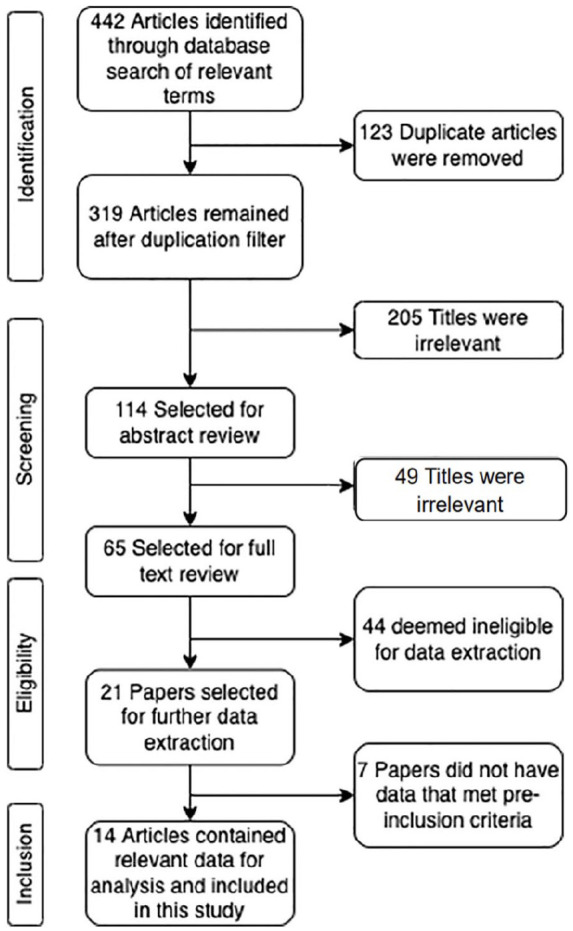
A total of 14 articles published between 2010 and 2020 were included in this review. Databases included PubMed, Scopus, MEDLINE/Embase, and Cochrane Library. Key words included ankle arthroplasty, total ankle arthroplasty, ankle arthrodesis, and diabetes.
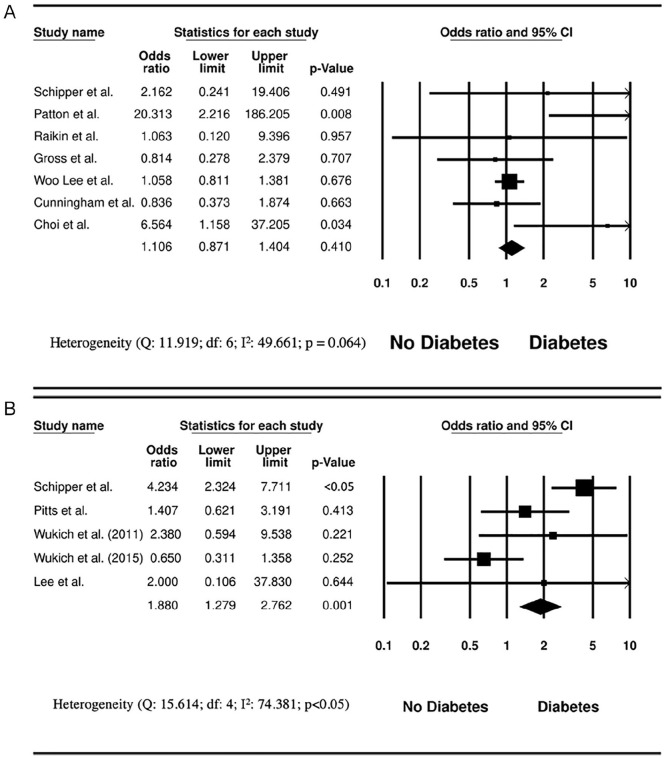
The total number of procedures was 26 287, comprising 13 830 arthroplasty and 12 457 arthrodesis procedures. There was a significant association between patients with diabetes treated with arthrodesis and major adverse events (odds ratio [OR] 1.880, 95% CI 1.279, 2.762), whereas no significant association was observed between patients with diabetes treated with arthroplasty and major adverse events (OR 1.106, 95% CI 0.871, 1.404).
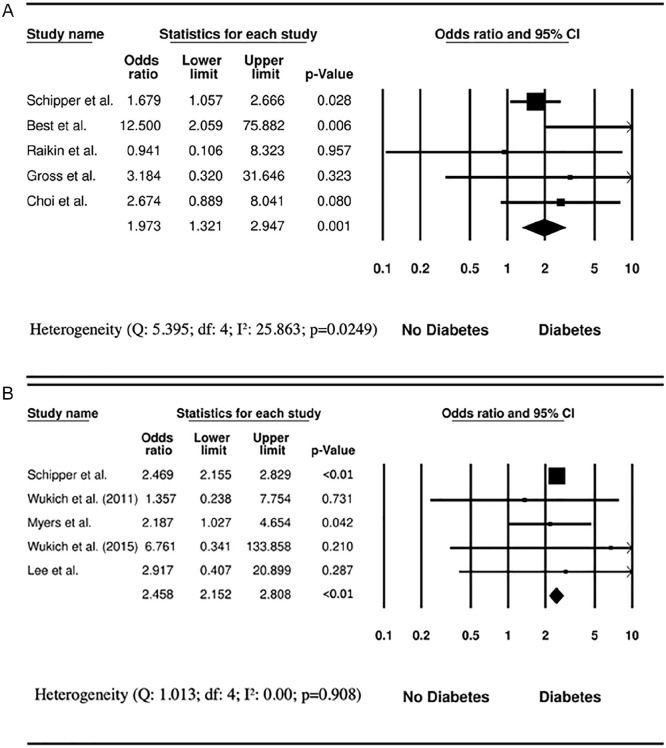
This meta-analysis suggests patients with diabetes to be at significantly higher risk for major and minor adverse events after undergoing ankle arthrodesis. However, it suggests no significant differences in major adverse events between patients with diabetes and patients without diabetes having undergone total ankle arthroplasty.
Level III, systematic review and meta-analysis.
终末期踝关节骨关节炎通常需要两种主要外科手术之一:全踝关节置换术或踝关节融合术。尽管金标准一直是踝关节融合术,但糖尿病患者是一个特殊群体,由于其活动能力下降以及心血管并发症的风险因素,需要额外考虑。本研究的目的是回顾糖尿病患者和非糖尿病患者在全踝关节置换术和踝关节融合术中发生主要和次要不良事件的几率。
本综述纳入了2010年至2020年间发表的14篇文章。数据库包括PubMed、Scopus、MEDLINE/Embase和Cochrane图书馆。关键词包括踝关节置换术、全踝关节置换术、踝关节融合术和糖尿病。
手术总数为26287例,包括13830例置换术和12457例融合术。接受融合术治疗的糖尿病患者与主要不良事件之间存在显著关联(比值比[OR]1.880,95%置信区间1.279,2.762),而接受置换术治疗的糖尿病患者与主要不良事件之间未观察到显著关联(OR 1.106,95%置信区间0.871,1.404)。
这项荟萃分析表明,糖尿病患者在接受踝关节融合术后发生主要和次要不良事件的风险显著更高。然而,这表明接受全踝关节置换术的糖尿病患者与非糖尿病患者在主要不良事件方面没有显著差异。
三级,系统评价和荟萃分析。