Wang Yue, Fang Yibing, Zhang Dan, Li Yifei, Luo Shuhua
Department of Cardiovascular Surgery, West China Hospital, Sichuan University, Chengdu, China.
Department of Cardiovascular Surgery, Southwest Hospital, Army Medical University, Chongqing, China.
Front Med (Lausanne). 2022 Jul 18;9:922347. doi: 10.3389/fmed.2022.922347. eCollection 2022.
Arrhythmogenic right ventricular cardiomyopathy (ARVC) is a heritable heart muscle disorder that predominantly affects the right ventricle. Mutations in genes that encode components of desmosomes, the adhesive junctions that connect cardiomyocytes, are the predominant cause of ARVC. A case with novel heterozygous mutation in the gene is reported here. The protein encoded by gene is the α2 chain of laminin-211 protein, which establishes a stable relationship between the muscle fiber membrane and the extracellular matrix. We explored the potential mechanism and the relationship between the mutation and ARVC.
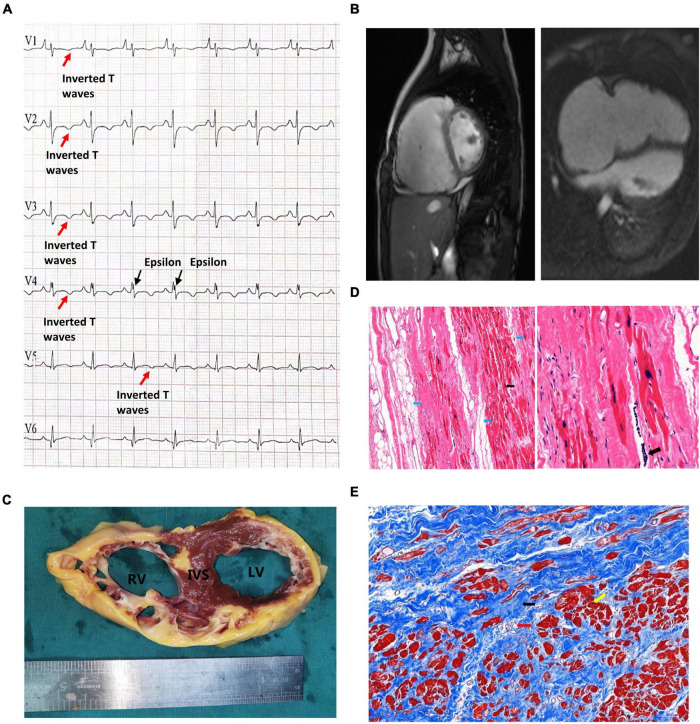
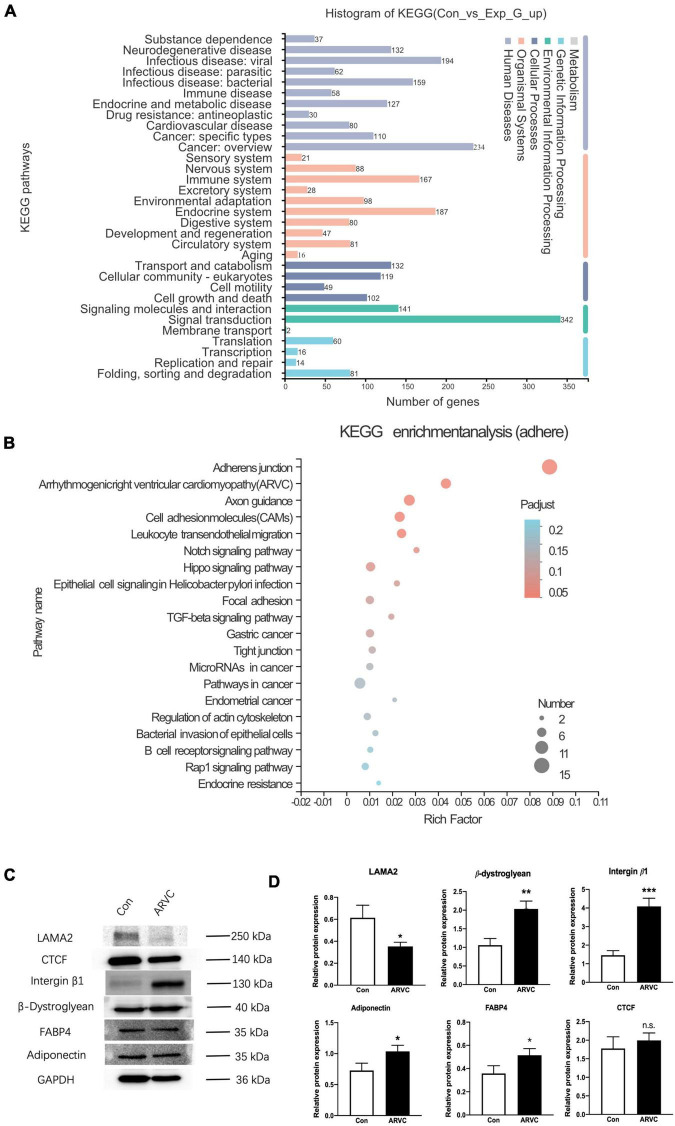
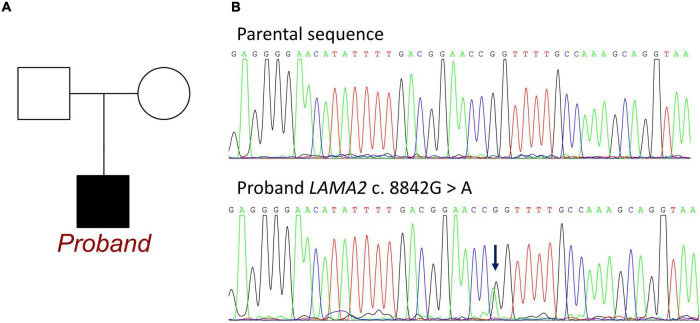
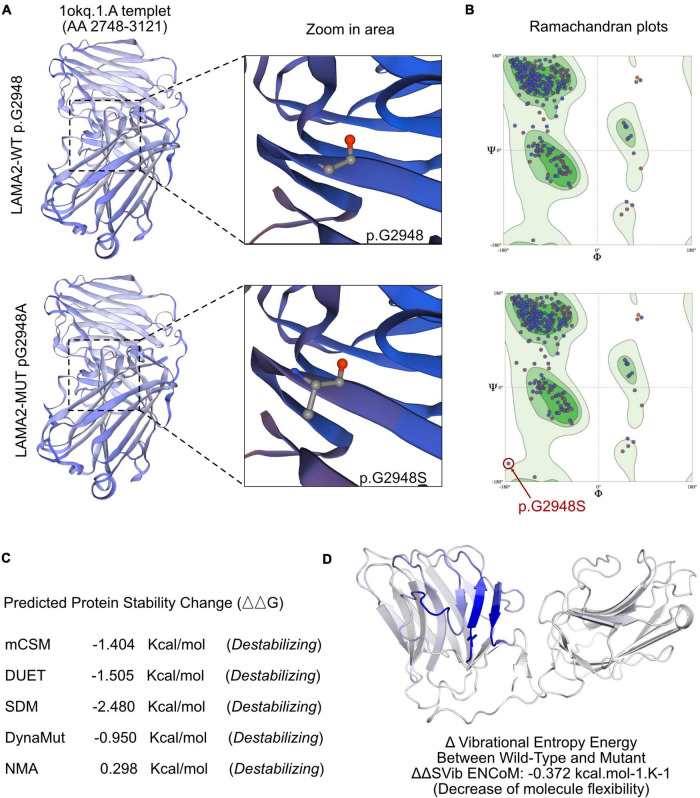
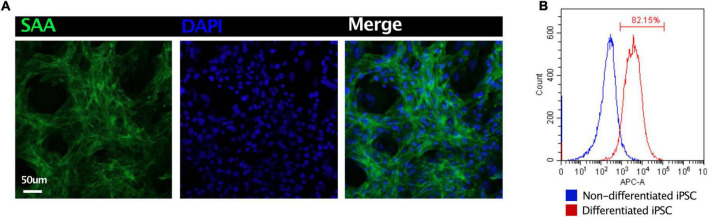
At the age of 8, the patient developed syncope and palpitation after exercise. Dynamic electrocardiogram recorded continuous premature ventricular beats, and MRI showed the right ventricle was significantly enlarged and there were many localized distensions at the edge of the right ventricular wall. The patient was diagnosed with ARVC and received heart transplantation at the age of 14 due to severe heart dysfunction. The myocardial histological pathological staining revealed a large amount of fibrosis and adipose migration. Whole exome sequencing (WES) identified the heterozygous mutation in the gene [NM_000426.3: c.8842G > A (p.G2948S)]. This is the first report of these variants. Analysis was performed on genetic disorders to reveal splice site changes and damage to protein structure. predicted unstable protein structure and impaired function. Induced pluripotent stem cell-derived cardiomyocytes (iPSC-CMs) were established. RNA-seq and the western blot were performed on IPSC-CMs to explore the ARVC-related signaling pathway.
This is the first case report to describe an ARVC phenotype in patients possessing a novel > () mutation. Our results aid in understanding of the pathogenesis of ARVC. The molecular mechanism of leading to ARVC disease still needs further study.
致心律失常性右室心肌病(ARVC)是一种遗传性心肌疾病,主要累及右心室。编码桥粒(连接心肌细胞的黏附连接)成分的基因突变是ARVC的主要病因。本文报道了1例该基因存在新型杂合突变的病例。该基因编码的蛋白质是层粘连蛋白-211蛋白的α2链,它在肌纤维膜与细胞外基质之间建立稳定关系。我们探讨了潜在机制以及该突变与ARVC的关系。
患者8岁时运动后出现晕厥和心悸。动态心电图记录到持续性室性早搏,心脏磁共振成像显示右心室明显扩大,右心室壁边缘有许多局限性扩张。患者被诊断为ARVC,14岁时因严重心功能不全接受了心脏移植。心肌组织病理染色显示大量纤维化和脂肪浸润。全外显子组测序(WES)确定该基因存在杂合突变[NM_000426.3:c.8842G>A(p.G2948S)]。这是这些变异的首次报道。对遗传性疾病进行分析以揭示剪接位点变化和蛋白质结构损伤。预测蛋白质结构不稳定且功能受损。建立了诱导多能干细胞衍生的心肌细胞(iPSC-CMs)。对iPSC-CMs进行RNA测序和蛋白质印迹分析以探索与ARVC相关的信号通路。
这是首例描述具有新型>()突变患者的ARVC表型的病例报告。我们的结果有助于理解ARVC的发病机制。导致ARVC疾病的分子机制仍需进一步研究。